Role preparation
Beginner opera arias by voice type: what the student anthologies include
Beginner opera arias by voice type, drawn from Schott's student aria anthologies and the Schirmer 24 Italian Songs and Arias, with composer and opera for each.
By Diction Desk editors · Published · Updated · Checked against 6 sources
Schott's Arias for aspiring singers volumes for soprano, mezzo-soprano/alto, tenor and baritone or bass are designed for budding voice students and give the beginning student a basis for entrance examinations1. The selection principle is effective pieces that are not too demanding1. The tables below list each volume's contents.
- Aimed at
- Budding voice students; a basis for entrance examinations1
- Selection principle
- Effective, yet not too demanding pieces1
- Soprano volume
- Includes Lascia ch'io pianga and Voi che sapete1
- Schirmer collection
- 24 Italian Songs & Arias, including Caro mio ben5
Contents
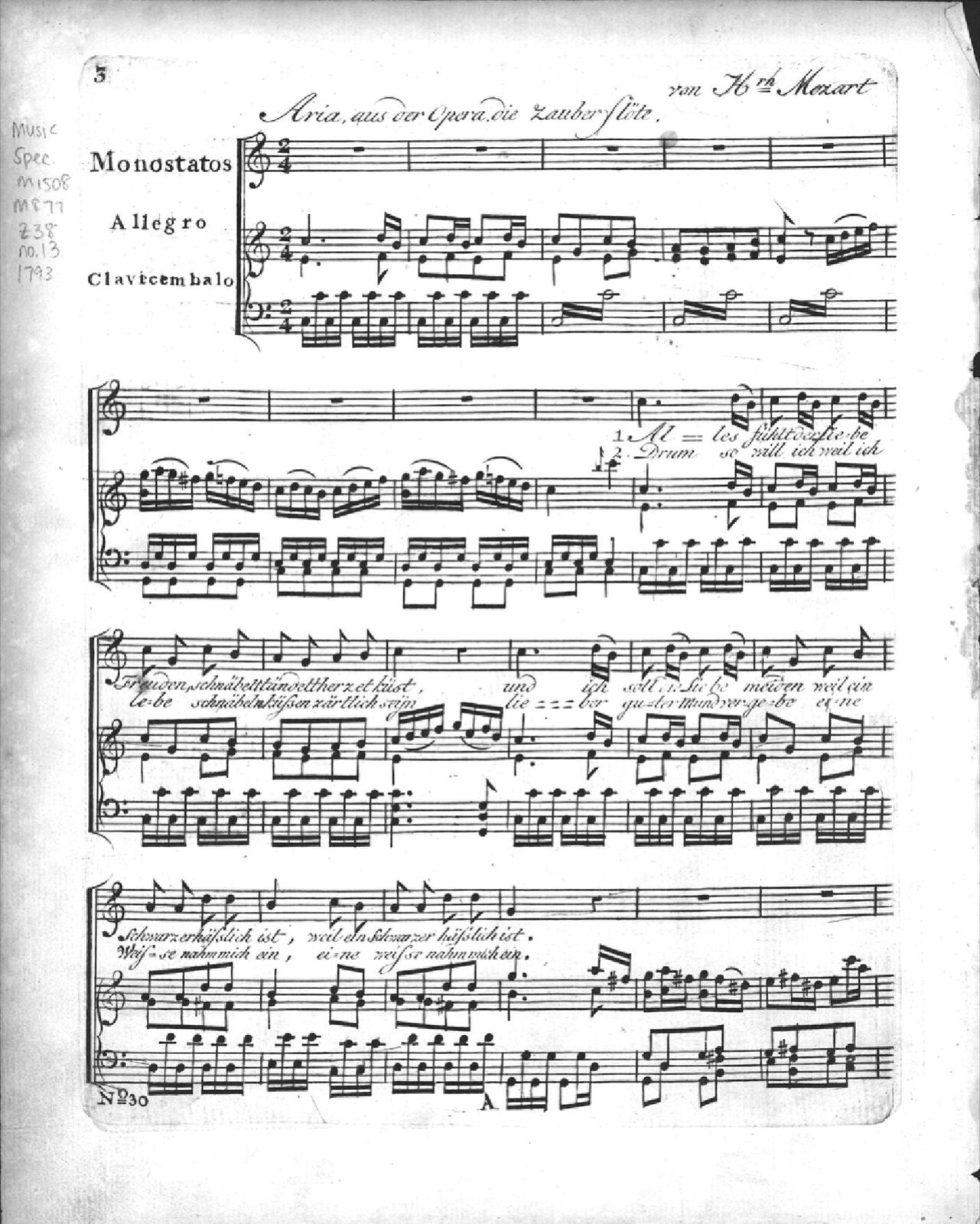
Every aria on this page comes from a named anthology. The Fach system page explains how voices are classed, and the roles section covers the rest of role preparation.
What the Schott volumes are for
Schott’s Arias for aspiring singers has a separate volume for each voice type. The soprano volume is designed as a collection of material for budding voice students and gives the beginning student a sound and balanced basis for the entrance examination1. The guiding principle of the selection was to make effective, yet not too demanding pieces available to voice students1.
The mezzo-soprano/alto volume and the tenor volume carry the same description and the same selection principle2,3. The baritone or bass volume spans many different eras and origins and is devised for budding vocal students and ambitious amateurs, with something for everybody without being too demanding4.
Soprano
The Schott soprano volume holds 27 arias from 4 centuries1. The rows below are a selection.
| Aria | Role | Opera | Composer | Anthology |
|---|---|---|---|---|
| Thrice happy lovers | Juno | The Fairy Queen | H. Purcell | Schott, soprano1 |
| Lascia ch’io pianga | Almirena | Rinaldo | G. F. Handel | Schott, soprano1 |
| Voi che sapete | Cherubino | Le nozze di Figaro | W. A. Mozart | Schott, soprano1 |
| L’ho perduta | Barbarina | Le nozze di Figaro | W. A. Mozart | Schott, soprano1 |
| Un moto di gioia | Susanna | Le nozze di Figaro | W. A. Mozart | Schott, soprano1 |
| Vedrai, carino, se sei buonino | Zerlina | Don Giovanni | W. A. Mozart | Schott, soprano1 |
| S’altro che lacrime | Servilia | La clemenza di Tito | W. A. Mozart | Schott, soprano1 |
| Gli sguardi trattieni | Amore | Orfeo ed Euridice | C. W. Gluck | Schott, soprano1 |
| Voglio marito | Angelica | Il burbero di buon cuore | V. M. y Soler | Schott, soprano1 |
| Un marito, oh Dio, vorrei | Serpetta | La finta giardiniera | W. A. Mozart | Schott, soprano1 |
Mezzo-soprano and alto
The Schott mezzo-soprano/alto volume holds 28 arias from 4 centuries2. The rows below are a selection.
| Aria | Opera | Composer | Anthology |
|---|---|---|---|
| Canzona di Cherubino | Le nozze di Figaro | W. A. Mozart | Schott, mezzo-soprano/alto2 |
| Canzone di Azucena | Il Trovatore | G. Verdi | Schott, mezzo-soprano/alto2 |
| Séguedille de Carmen | Carmen | G. Bizet | Schott, mezzo-soprano/alto2 |
| Canzone di Cenerentola | La Cenerentola | G. Rossini | Schott, mezzo-soprano/alto2 |
| Aria di Medoro | Orlando | G. F. Handel | Schott, mezzo-soprano/alto2 |
| Aria di Annio | La clemenza di Tito | W. A. Mozart | Schott, mezzo-soprano/alto2 |
| Couplet der Nicklausse | Les contes d’Hoffmann | J. Offenbach | Schott, mezzo-soprano/alto2 |
| Ariette der Fatime | Oberon | C. M. v. Weber | Schott, mezzo-soprano/alto2 |
Tenor
The Schott tenor volume is designed for budding voice students and offers effective pieces that are not too demanding3. It holds 32 arias from 4 centuries3. The rows below are a selection.
| Aria | Role | Opera | Composer | Anthology |
|---|---|---|---|---|
| Se’l cor mai ti dirà | Medoro | Orlando | G. F. Handel | Schott, tenor3 |
| In Mohrenland gefangen | Pedrillo | Die Entführung aus dem Serail | W. A. Mozart | Schott, tenor3 |
| Alles fühlt der Liebe Freuden | Monostatos | Die Zauberflöte (The Magic Flute) | W. A. Mozart | Schott, tenor3 |
| Che beltà, che leggiadria | Il Contino | La finta giardiniera | W. A. Mozart | Schott, tenor3 |
| Verdi prati, selve amene | Ruggiero | Alcina | G. F. Handel | Schott, tenor3 |
| Ah! Que j’ai bu de bon vin! | Zipperlein | L’ivrogne corrigé | C. W. Gluck | Schott, tenor3 |
| Oh Liebe, beschütz mich in dieser Gefahr! | Karl | Peter Schmoll und seine Nachbarn | C. M. v. Weber | Schott, tenor3 |
| O Colombina, il tenero fido Arlecchin | Peppe | Pagliacci | R. Leoncavallo | Schott, tenor3 |
Baritone and bass
The rows below are a selection from the Schott baritone or bass volume4.
| Aria | Role | Opera | Composer | Anthology |
|---|---|---|---|---|
| Ho capito, signor sì | Masetto | Don Giovanni | W. A. Mozart | Schott, baritone or bass4 |
| Notte e giorno faticar | Leporello | Don Giovanni | W. A. Mozart | Schott, baritone or bass4 |
| In diesen heil’gen Hallen | Sarastro | Die Zauberflöte | W. A. Mozart | Schott, baritone or bass4 |
| Der Vogelfänger bin ich ja | Papageno | Die Zauberflöte | W. A. Mozart | Schott, baritone or bass4 |
| Vecchia zimarra, senti | Colline | La Bohème | G. Puccini | Schott, baritone or bass4 |
| Hat man nicht auch Gold beineben | Rocco | Fidelio | L. v. Beethoven | Schott, baritone or bass4 |
| See, see, the heavens smile | Neptune | The Tempest | H. Purcell | Schott, baritone or bass4 |
Where the Schott volumes overlap
The four volumes share operas, so a role can appear in more than one. Cherubino from Le nozze di Figaro is in both the soprano and the mezzo-soprano/alto volumes1,2. Medoro from Handel’s Orlando is in both the mezzo-soprano/alto and the tenor volumes2,3. Mozart’s La finta giardiniera supplies Serpetta to the soprano volume and Il Contino to the tenor volume1,3. Don Giovanni gives Zerlina to the soprano volume and Masetto and Leporello to the baritone or bass volume1,4. Die Zauberflöte gives Monostatos to the tenor volume and Sarastro and Papageno to the baritone or bass volume3,4.
The Schirmer 24 Italian Songs and Arias
G. Schirmer’s 24 Italian Songs & Arias of the 17th & 18th Centuries carries the publisher’s tagline “The Essential Collection for Every Beginning Classical Singer”5. Its contents include Alma del core, Amarilli, mia bella and Caro mio ben5.
Choosing criteria from a beginner-repertoire study
A doctoral thesis from the University of Colorado Boulder studies repertoire for beginning university singers. It covers bel canto art songs, not opera arias, so use it for general selection criteria only6. Exploring less common bel canto repertoire with beginning students, the author found that different pieces were more accessible and helped with onset, legato, constant spin and vibrato6.
Two named examples show the criteria. Bellini’s art song Dolente, immagine di Fille mia has a low tessitura with stepwise and small-leap melodic motion, which the author calls ideal for beginning singers6. Tosti composed many pieces that are ideal for beginning singers6.
For audition work, the opera audition package page covers how a package is built, and young artist programs covers the programs that hear them.
Read next
Opera audition package: how many arias, which languages, what to prepare
Build an opera audition package: how many arias to carry, which languages, how to contrast the list, and what UCLA and UNCSA require of applicants.
Role preparationThe Fach system: voice types for opera singers explained
What Fach means, how opera houses use it to cast roles, the main soprano and mezzo categories, and how to use the system without being limited by it.
Role preparationOpera young artist programs compared: Merola, Santa Fe, Glimmerglass and more
Compare opera young artist programs: Merola, Santa Fe, Houston YAVA, Chautauqua, Glimmerglass and Jette Parker, with dates, eligibility and stipend.
Questions singers ask
What are some good arias for a beginner tenor?
Schott's tenor volume is designed for budding voice students3. It includes Pedrillo's In Mohrenland gefangen from Mozart's Die Entführung aus dem Serail, Ruggiero's Verdi prati, selve amene from Handel's Alcina and Peppe's aria from Leoncavallo's Pagliacci3.
What is the easiest opera song to sing for a beginner?
Schott's guiding principle is effective, yet not too demanding pieces for voice students1. G. Schirmer calls its 24 Italian Songs & Arias the essential collection for every beginning classical singer5.
Which arias are in Schott's soprano volume?
The soprano volume includes Juno's Thrice happy lovers from Purcell's The Fairy Queen, Handel's Lascia ch'io pianga, and Mozart's Voi che sapete, L'ho perduta and Un moto di gioia from Le nozze di Figaro1. Zerlina's Vedrai, carino from Don Giovanni is also included1.
Which arias are in Schott's mezzo-soprano volume?
The mezzo-soprano/alto volume includes Cherubino's canzona from Le nozze di Figaro, Azucena's canzone from Il Trovatore, Carmen's seguedille, and Cenerentola's canzone from La Cenerentola2. It also includes Annio's aria from La clemenza di Tito2.
Which arias are in Schott's baritone and bass volume?
The volume includes Leporello's Notte e giorno faticar and Masetto's Ho capito, signor sì from Don Giovanni, Sarastro's In diesen heil'gen Hallen and Papageno's Der Vogelfänger bin ich ja from Die Zauberflöte, and Colline's Vecchia zimarra, senti from La Bohème4.
Sources
- Arias for aspiring singers (soprano and piano), Schott VOCAL ED 21 / 267997 · Schott Music · schott-music.com · checked 19 October 2026
- Arias for aspiring singers (mezzo-soprano/alto and piano), Schott VOCAL ED 20897 · Schott Music · schott-music.com · checked 19 October 2026
- Arias for aspiring singers (tenor and piano), Schott VOCAL ED 21141 · Schott Music · schott-music.com · checked 19 October 2026
- Arias for aspiring singers (baritone or bass and piano), Schott VOCAL ED 21142 · Schott Music · schott-music.com · checked 19 October 2026
- 24 Italian Songs & Arias of the 17th & 18th Centuries (Medium High and Medium Low), G. Schirmer product page · G. Schirmer, Inc. (distributed by Hal Leonard) · halleonard.com · checked 20 October 2026
- Repertoire Choices for Beginning University Singers (DMA thesis, University of Colorado Boulder, via Wayback) · University of Colorado Boulder · scholar.colorado.edu · checked 19 October 2026
Image credits (1)
- Internet Archive scan / Wikimedia Commons · Public domain · source
Translations of libretto lines on this page are our own. How we check facts · Report an error.