Opera guides
The Magic Flute: synopsis, roles, arias and diction notes
Mozart's The Magic Flute (Die Zauberflöte) in one page: librettist, premiere, voice types, act-by-act synopsis, the famous arias and German diction notes.
By Diction Desk editors · Published · Updated · Checked against 7 sources
The Magic Flute (Die Zauberflöte) is an opera in two acts by Wolfgang Amadeus Mozart to a German libretto by Emanuel Schikaneder1. It is a Singspiel, where singing alternates with spoken dialogue, and premiered on 30 September 1791 in Vienna, two months before Mozart's death1. ENO calls the Queen of the Night's Act 2 aria Der Hölle Rache one of Mozart's most recognisable pieces2.
- Composer
- Wolfgang Amadeus Mozart1
- Librettist
- Emanuel Schikaneder1
- Premiere
- 30 September 1791, Theater auf der Wieden, Vienna1
- Language
- German, with spoken dialogue1
- Acts
- 21
- Form
- Singspiel1
Contents
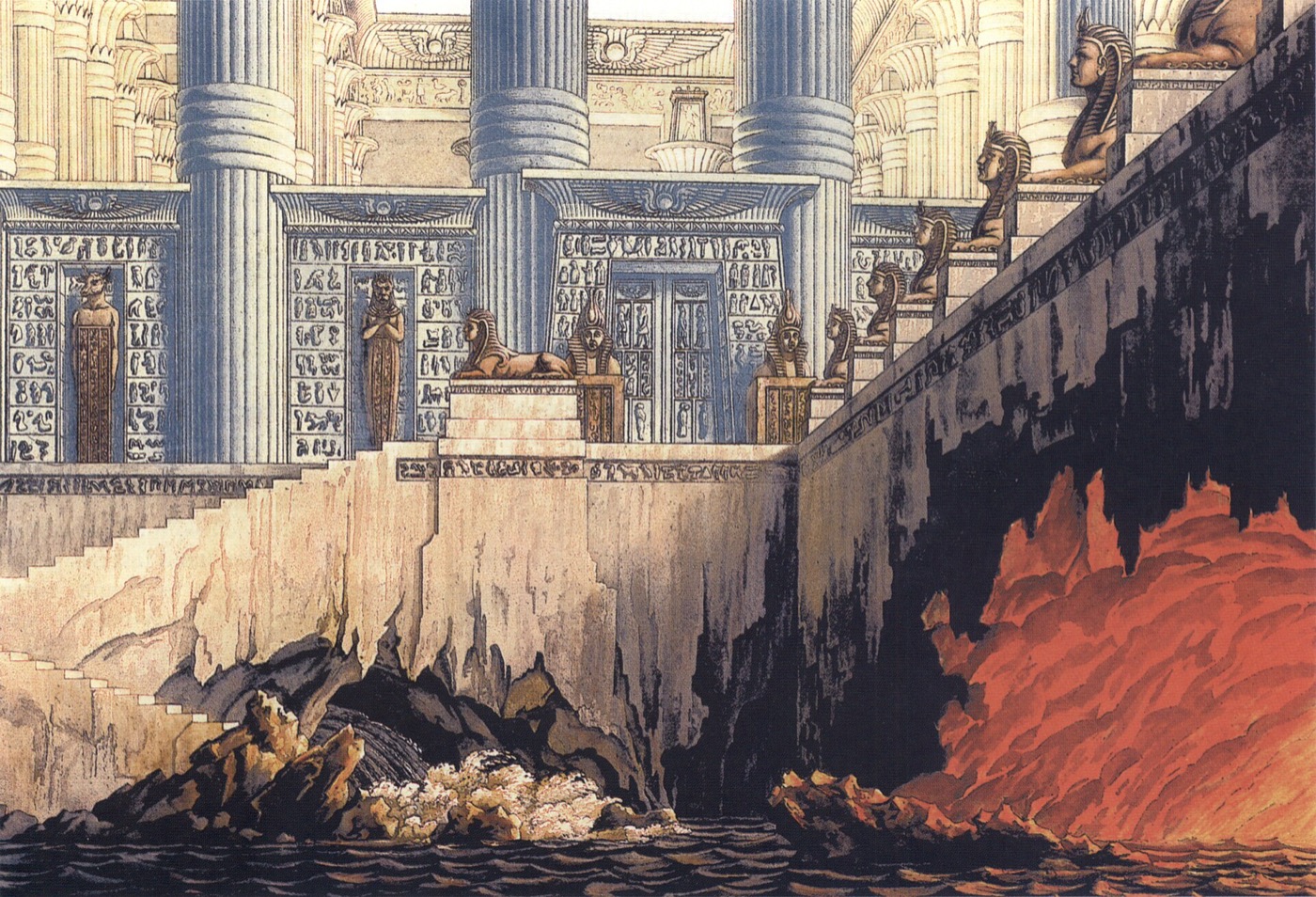
The Magic Flute sets a fairy-tale quest, a bird-catcher’s comedy and a trial by initiation in one German-language score that alternates song with speech. This page gives the facts a singer needs before opening the vocal score: roles, the plot act by act, the numbers worth learning and the German behind them. It is one of the guides in the operas section.
At a glance
Mozart wrote the opera in two acts to a German libretto by Emanuel Schikaneder1. Schikaneder (1 September 1751 to 21 September 1812) was a German impresario, dramatist, actor, singer and composer5. The work premiered on 30 September 1791 at Schikaneder’s theatre, the Theater auf der Wieden in Vienna, just two months before Mozart’s death, and it was Mozart’s last opera1. Mozart died aged 352.
The opera grew out of Mozart’s increasing involvement with Schikaneder’s theatrical troupe1. At the premiere Mozart conducted and Schikaneder himself sang Papageno6. Mozart conducted only the first two performances, and the regular leader of the orchestra then took over1.
Singspiel: song and spoken dialogue
The Magic Flute is a Singspiel, a German-language comic opera that includes both singing and spoken dialogue1,2. Like most Singspiel operas it features comedy, magic and fantastical creatures2. It is arguably one of the most popular operas of the genre3.
The libretto draws on the Hanswurst tradition of the Viennese popular theatre1. It continues a series of fairy-tale operas that Schikaneder’s troupe produced at the time1. Der Stein der Weisen, a fairy-tale opera with much the same cast, is a kind of precursor1.
Who’s who
Casting follows the actual vocal range of each part1. The premiere playbill called every female singer a soprano, so the finer labels below come from the part’s range1.
| Role | Voice type | Premiere singer |
|---|---|---|
| Tamino, a prince | Tenor | Benedikt Schack1 |
| Papageno, the bird-catcher | Baritone | Emanuel Schikaneder6 |
| Pamina, daughter of the Queen of the Night | Soprano | Anna Gottlieb6,1 |
| Queen of the Night | High coloratura soprano | Josepha Hofer6,1 |
| Sarastro, Priest of the Sun | Bass | Franz Xaver Gerl6,1 |
| Monostatos | Tenor | Johann Joseph Nouseul1 |
| Papagena | Soprano | Barbara Gerl1 |
| First Priest | Tenor | Johann Michael Kistler1 |
| Three Ladies | Sopranos and mezzo-soprano | Mlle Klöpfer and Mlle Hofmann, per the premiere playbill1 |
The first Tamino, Benedikt Schack, was a close friend of Mozart and a singer-composer of Schikaneder’s troupe1. The priest roles are written for tenor and bass1. The score also needs a four-part chorus for several numbers, notably the act finales1.
What does Papageno mean in German?
Papagei is the German word for parrot4. Our reading: the name Papageno echoes it. He enters dressed as a bird1. He is a bird-catcher, a rustic character with folksong-like arias built from simple melodies6. The Queen of the Night hates birds because they signal daybreak, when her power is weakest6.
Synopsis
The English National Opera synopsis follows Prince Tamino and the bird-catcher Papageno on their quest to rescue Pamina3. The opera is full of oppositions such as day against night and man against woman6.
Act 1
Tamino, a handsome prince lost in a distant land, is pursued by a serpent and asks the gods to save him1. He faints and is saved by the Queen of the Night’s three Ladies3. The Queen then promises that Pamina will be his wife if he rescues her from Sarastro1.
Tamino receives a magic flute that can change sorrow into joy, and Papageno receives magic bells for protection, with three boys as guides1. Papageno is prepared to go along only after the promise of a wife as his reward3. The Ladies give Papageno water and a stone and padlock his mouth as a warning not to lie1.
Tamino charms the animals with his flute1. At the Temple of Reason he is denied access by voices from within, and a priest tells him that Sarastro is benevolent, not evil, and that he should not trust the Queen1.
Monostatos and Papageno are each terrified by the other’s strange appearance and both flee, each thinking the other is the devil1. Pamina rejoices to hear that Tamino loves her, and she and Papageno reflect on marital love1. Papageno plays his bells, and Monostatos and his slaves dance off the stage1. The chimes allow the bird-catcher and Pamina to escape3.
Sarastro refuses to return Pamina to her mother, whom he describes as a proud, headstrong woman1. He announces that Tamino and Pamina must both undergo trials to be purified1.
Act 2
Sarastro invokes the gods Isis and Osiris and asks them to protect Tamino and Pamina1. The priests sing that virtue and righteousness will sanctify life and make mortals like gods1. Two priests lead Tamino and Papageno in for the first trial1.
Monostatos tries to kiss the sleeping Pamina until Sarastro enters and drives him off1,7. The Queen gives Pamina a dagger and orders her to kill Sarastro with it, threatening to disown her if she does not1. Tamino, bound by his vow of silence, cannot answer Pamina, and she begins to believe that he no longer loves her1. Her happiness dashed, she leaves in despair3.
An old woman warns Papageno that he will be imprisoned forever unless he promises at once to marry her, and she is transformed into the young Papagena1. Pamina is about to take her own life until the three boys restrain her and reassure her of Tamino’s love1. The men in armor promise enlightenment to those who overcome the fear of death1. Pamina hands Tamino the magic flute, and protected by its music they pass unscathed through fire and water1.
Papageno despairs at having lost Papagena and decides to hang himself, counting to three, more and more slowly, until the spirits stop him1,7. Papageno and Papagena then dream of the many children they will have together1.
The Queen and Monostatos attack the temple, but with thunder and lightning they are cast out into eternal night1,7. Sarastro announces the sun’s triumph over the night and the fraudulent power of hypocrites1. Papageno, who fails the trials completely, is rewarded anyway with the hand of Papagena1.
Songs: arias and ensembles
The Queen of the Night’s aria is best known for the fast repetition of a high C2. Mozart wrote the role for his sister-in-law, Josepha Hofer, who sang it for ten years2. Every other lead has a different musical profile, and the profiles are worth knowing before you choose a number6:
- Papageno’s arias are folksong-like, built from simple melodies6.
- Tamino’s lyrical arias are more romantic in style6.
- The music for the Armed Men uses fugues and harks back to the baroque era6.
- Sarastro’s music is deep, stately and almost hymn-like, which reflects his character as a spiritual leader6.
| Number (first line) | Character | Act | Gloss |
|---|---|---|---|
| Zu Hilfe | Tamino | Act 1 | Opens the opera and segues into the trio Stirb, Ungeheuer1 |
| Der Vogelfänger bin ich ja | Papageno | Act 1 | Yes, I am the fowler1 |
| Dies Bildnis ist bezaubernd schön | Tamino | Act 1 | Tamino sees Pamina’s portrait1 |
| Wie stark ist nicht dein Zauberton | Tamino | Act 1 | How strong your magic tone is, sung after he plays the flute and hears Papageno’s pipes offstage1 |
| Bei Männern, welche Liebe fühlen | Pamina and Papageno | Act 1 | The joys of marital love1 |
| O Isis und Osiris | Sarastro, with the priests | Act 2 | Sarastro invokes Isis and Osiris to protect Tamino and Pamina1 |
| Der Hölle Rache kocht in meinem Herzen | Queen of the Night | Act 2 | Hell’s retribution simmers in my heart1 |
| In diesen heil’gen Hallen | Sarastro | Act 2 | In these hallowed halls1 |
| Ein Mädchen oder Weibchen | Papageno | Act 2 | The birdcatcher wishes for a wife1 |
| Alles fühlt der Liebe Freuden | Monostatos | Act 2 | Sung as he ogles the sleeping Pamina1 |
| Nur stille, stille | Monostatos, the Queen and her three ladies | Act 2 | They plot to destroy the temple1 |
| Der, welcher wandert | Two men in armor | Act 2 | He who walks this path weighed down with cares; the armed men promise enlightenment to those who overcome the fear of death1 |
| Ach, ich fühl’s | Pamina | Act 2 | Pamina thinks Tamino is gone1 |
| Soll ich dich, Teurer, nicht mehr sehn? | Pamina, with Sarastro and Tamino | Act 2 | A farewell trio1 |
| Bald prangt, den Morgen zu verkünden | Three boys and Pamina | Act 2 | A quartet that heralds the morning1 |
| Papagena! Papagena! Papagena! | Papageno and Papagena | Act 2 | A duet built on repeated “Pa-Pa-Pa” syllables1 |
The overture opens with a solemn three-chord sequence from the brass, associated with the Priests of the Temple of Wisdom1. Halfway through the overture there is a false ending1. The overture was composed after the other parts of the opera were complete1. The Papageno-Papagena duet is similar to a Cucuzze cavatina in Salieri’s Prima la musica e poi le parole, and both centre on humorous bird-like utterances of pseudo-Italian words1.
In the original
Three lines every singer meets early, set out for study. The translation is ours and literal.
| Original | Our translation |
|---|---|
| Der Vogelfänger bin ich ja1 | Yes, I am the fowler |
| Dies Bildnis ist bezaubernd schön1 | What a spellbinding beauty this likeness shows |
| Der Hölle Rache kocht in meinem Herzen1 | Hell’s retribution simmers in my heart |
Background and early history
Many scholars acknowledge an influence of Freemasonry on the work, although some hold that it is exaggerated1. Schikaneder and Mozart were Freemasons, and English National Opera places them in the same Masonic lodge2. Ignaz Alberti, engraver and printer of the first libretto, was a Freemason too1. The original production was set in Egypt, the land Masonry traces its origins to, and Tamino’s trials resemble the initiation of Masons of the day2. The number three is highly significant in Freemasonry1. The opera was never presented as a Masonic work3.
The libretto links to many sources, among them Jean Terrasson’s novel Life of Sethos and Chrétien de Troyes’s medieval romance Yvain1. Some read the Queen of the Night as a dangerous form of obscurantism, others as Empress Maria Theresa1. Papageno’s whistle is based on a motif borrowed from Salieri’s Concerto for Clavicembalo1. Charles Rosen judged that the score has the greatest variety of orchestral color the eighteenth century was to know1.
The opera was an immediate hit with audiences6. Mozart wrote that the silent approval of the audience gave him the most pleasure, and he went to hear his opera almost every night1. It drew immense crowds and reached hundreds of performances during the 1790s1. Mozart died on 5 December 1791, and the opera celebrated its 100th performance in November 17921. Its first performance outside Vienna took place on 21 September 1792 in Lemberg, and it then made a triumphal progress through Germany’s opera houses1. Early performances were often highly altered versions of the opera1. Nikolaus Simrock published the first full-score edition in Bonn in 18141. On 28 December 1791, three and a half weeks after Mozart’s death, his widow Constanze offered a manuscript score to the Bonn court1.
Today it is the third most frequently performed opera worldwide6. The first complete recording was a live performance at the 1937 Salzburg Festival with Arturo Toscanini conducting1. The first studio recording followed in 1938, with Sir Thomas Beecham conducting the Berlin Philharmonic1.
Mozart asked for a stromento d’acciaio to play Papageno’s magic bells1. Modern scholars think it was a keyed glockenspiel, which modern performances usually replace with a celesta1. Karl Friedrich Schinkel designed a stage set for an 1815 production1. Modern productions strongly reflect the creative preferences of the stage director1.
Language and diction notes
The sung text is German, so work through German diction for singers before you learn any number. The score alternates sung numbers with spoken German dialogue1.
Der Hölle Rache, Ein Mädchen oder Weibchen and Bei Männern all carry umlauts. The Papageno-Papagena duet is built on repeated “Pa-Pa-Pa” syllables1. To place these roles by voice type, read the Fach system guide.
Where to go next
Mozart’s Le nozze di Figaro is the natural comparison: a Mozart score in Italian rather than German. For a second Italian comic score, try Il barbiere di Siviglia.
