Opera guides
Pagliacci: synopsis, roles, arias and the play within the play
Leoncavallo's Pagliacci for singers: what the title means, roles and voice types, act-by-act synopsis, Vesti la giubba and the other arias, and history.
By Diction Desk editors · Published · Updated · Checked against 6 sources
Pagliacci, literally Clowns, is an Italian opera in a prologue and two acts by Ruggero Leoncavallo, who also wrote the libretto1. It premiered on 21 May 1892 at the Teatro Dal Verme in Milan, conducted by Arturo Toscanini1. Its most famous aria is the tenor's Vesti la giubba1,2.
- Composer and librettist
- Ruggero Leoncavallo1
- Premiere
- 21 May 1892, Teatro Dal Verme, Milan1
- Language
- Italian1
- Structure
- A prologue and two acts1
- Length
- Roughly 1 hour 15 minutes, often without an interval3
- Setting
- Calabria, near Montalto, between 1865 and 18701
- Title means
- Clowns1
Contents
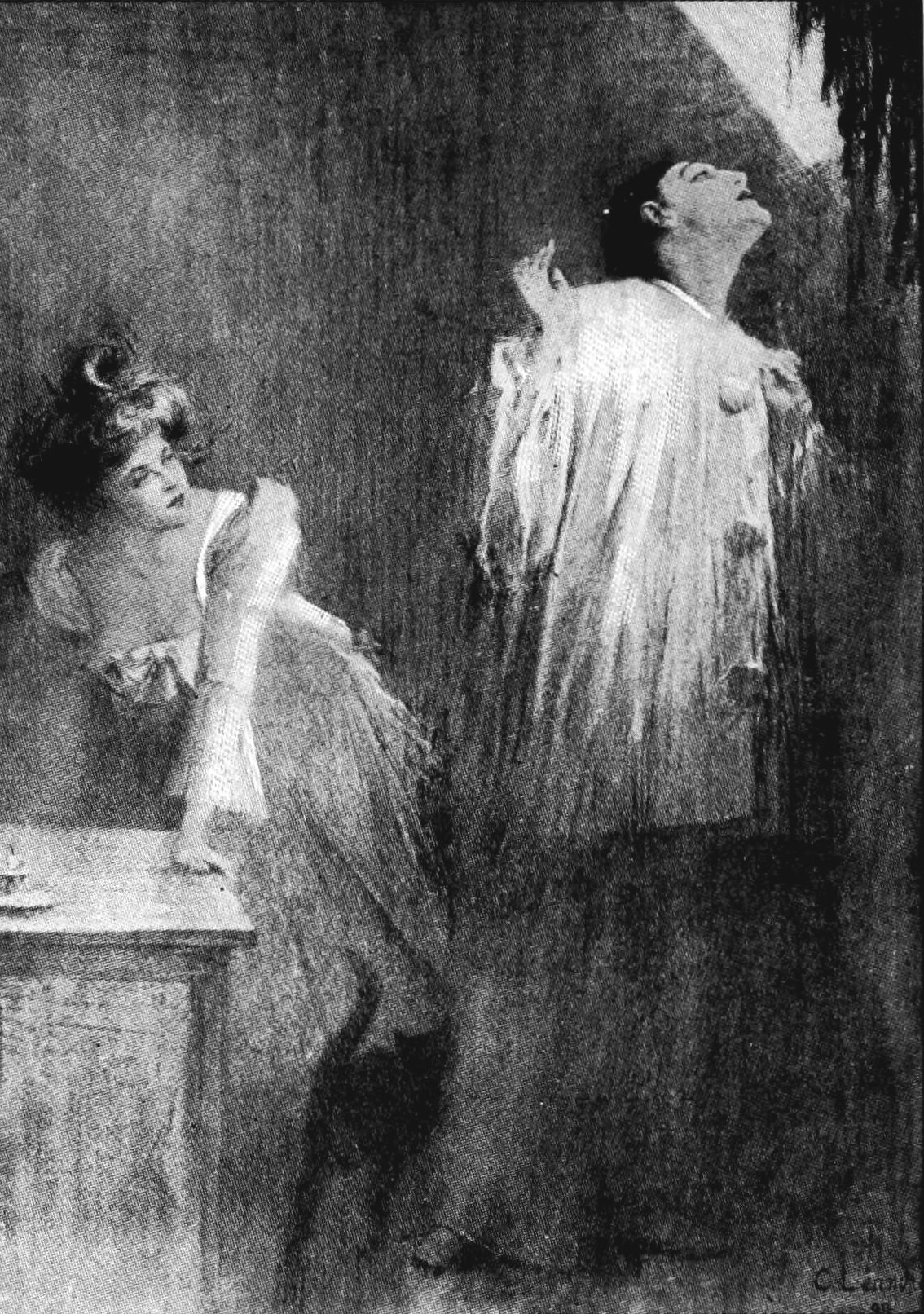
Pagliacci is a tragedy told inside a comedy troupe, and it moves fast: a prologue, two acts and a murder played in front of an on-stage audience. It is one of the guides in the operas section.
At a glance
Ruggero Leoncavallo wrote both the music and the libretto1. He lived from 1857 to 19194, a contemporary of Giacomo Puccini, and Pagliacci is the only Leoncavallo opera still widely performed2. The setting is Calabria, near Montalto, on the Feast of the Assumption, with the action placed between 1865 and 18701. A performance runs roughly 1 hour 15 minutes and is often given without an interval3. There are five characters, and all but one of them are members of the troupe5. The exception is the baritone Silvio, a villager5.
Roles and voice types
| Role | Voice type | Premiere singer | Role in the play |
|---|---|---|---|
| Canio | Tenor | Fiorello Giraud1 | Head of the troupe; plays Pagliaccio (Pierrot), Colombina’s husband1 |
| Nedda | Soprano | Adelina Stehle1 | Canio’s wife; plays Colombina, in love with Arlecchino in the play1,5 |
| Tonio | Baritone | Victor Maurel1 | Actor with a physical deformity; plays Taddeo, Colombina’s servant1 |
| Beppe (Peppe) | Tenor | Francesco Daddi1 | Actor; plays Arlecchino, Colombina’s lover1 |
| Silvio | Baritone | Mario Ancona1 | Nedda’s lover; the villager outside the company1,5 |
The premiere cast was Stehle as Nedda, Giraud as Canio, Maurel as Tonio and Ancona as Silvio1. Maurel, a French baritone, created the role of Tonio1. The principal roles are Canio the tenor, Nedda the soprano and Tonio the baritone2.
The play within the play
The story is the tragedy of a jealous husband in a commedia dell’arte troupe6. Canio leads the troupe and portrays Pagliaccio in the performance1. Nedda is his wife, and she plays Colombina5. Tonio becomes Taddeo, Colombina’s servant, in the play1. Pagliacci is verismo, a late 19th century style that focuses on real-life subjects1. The verismo movement in opera is characterized by realistic, gritty depictions of everyday life2.
Synopsis
Prologue
During the orchestral introduction, Tonio, dressed as his commedia dell’arte character Taddeo, pokes his head through the curtain, advances and addresses the audience1. The baritone apologizes for interrupting the orchestra5. He reminds the audience that actors have feelings too, and that the show is about real people1. The Prologue explains, as part of the show, the concept of verismo2.
Act 1
At three o’clock in the afternoon, the commedia troupe enters the village to the cheering of the villagers1. Canio, the director, is eaten up with jealous suspicion of his wife, the leading lady Nedda2. In real life he will not tolerate other men making advances to Nedda1. Silvio asks Nedda to elope with him after the performance and, though she is afraid, she agrees1.
Tonio, who has been eavesdropping, leaves to inform Canio so that he might catch Silvio and Nedda together1. Canio chases Silvio, but does not catch him and does not see his face1. He threatens Nedda with a knife, but Beppe disarms him1. Tonio tells Canio that her lover will give himself away at the play1. A heartbroken Canio is left alone to put on his costume and prepare to laugh1. He sings Vesti la giubba as he puts on his clown make-up2,6.
Act 2
The performance is a play within the play. Canio portrays Pagliaccio (Pierrot), and Nedda portrays Pierrot’s unfaithful lover Columbina1. Colombina’s husband Pagliaccio has gone away until morning, and Taddeo is at the market1. Arlecchino gives Colombina a sleeping potion to use later1.
Canio hears Colombina speak a line and, now as Canio, exclaims in anger1. Nedda, trying to continue the play, admits that she has been visited by the innocent Arlecchino1. Nedda swears she will never tell him the name of her lover, and it becomes apparent that they are not acting1. Canio, grabbing a knife from the table, stabs Nedda1. As she dies, she calls out for Silvio to help1. Silvio attacks Canio, but Canio kills him as well1. The horrified audience then hears the celebrated final line, La commedia è finita1.
Who sings the final line?
In the original manuscript Tonio sings the final line, and the appropriation of it by Canio dates back to 18951. In the present day, giving the line to Canio has continued to be standard1. The line can be sung by Canio or by Tonio2. One scholar argues that Tonio shows more deliberate control in his manipulation of the other characters to obtain his revenge upon Nedda, which makes the line fit him1.
The famous arias
| Aria | Character | Act |
|---|---|---|
| Si può? Signore! Signori! (Prologue) | Tonio | Prologue1 |
| Qual fiamma avea nel guardo | Nedda | Act 11 |
| Stridono lassù | Nedda | Act 11 |
| Vesti la giubba | Canio | Act 16 |
| No! Pagliaccio non son! | Canio | Act 21 |
Vesti la giubba is the best known of the opera’s two big hits2. It is a tenor aria for Canio, sung in Italian6. In it Canio sings because the people pay and want to laugh2. Tonio’s Prologue is the baritone showpiece of the score2. In the arietta No! Pagliaccio non son!, Canio sings that if his face is pale, it is not from the stage makeup but from the shame she has brought him1. In Stridono lassù the birdsong comforts Nedda1.
Leoncavallo died in 1919, so his text is long in the public domain4. The Italian below is his, and the English glosses are ours.
| Original | Our translation |
|---|---|
| Si può? Signore! Signori!1 | May I? Ladies and gentlemen! |
| Qual fiamma avea nel guardo1 | What fire was in his gaze |
| Stridono lassù1 | They shriek up there |
| Vesti la giubba1 | Put on the jacket. |
| No! Pagliaccio non son!1 | No! I am not Pagliaccio! |
| La commedia è finita1 | The comedy is over. |
Background, premiere and reception
Leoncavallo lived and worked in Paris, where he met the baritone Victor Maurel5. He lived in Paris from 1882 to 18881. The opera was written in imitation of the sensational success in 1890 of Mascagni’s Cavalleria rusticana5. Leoncavallo decided to write an opera in response: one act composed in the verismo style1. He claimed that the story was based on a real incident from his own childhood2, the 1865 murder of a family servant, with his father, a judge, presiding as magistrate over the criminal investigation1.
The Prologue was written for Maurel “as an afterthought”1. Maurel also asked Leoncavallo to change the title from the singular Il pagliaccio to the plural Pagliacci, to broaden dramatic interest from Canio alone to include Tonio1. The French author Catulle Mendès sued Leoncavallo for plagiarism after learning of the plot, because he thought it resembled his 1887 play La Femme de Tabarin1. Mendès dropped his lawsuit1.
Pagliacci premiered at the Teatro Dal Verme in Milan on 21 May 1892, conducted by Arturo Toscanini1. Soon after, it played in London with Nellie Melba as Nedda1. The United States premiere followed a month later at the Grand Opera House in New York on 15 June 18931. The Met first staged the work on 11 December 18931 and again as a double bill with Cavalleria rusticana on 22 December 18931. The Belgian premiere, in a French translation, took place on 14 February 18951. Today the two operas, each in one act, are most often performed together2. The other half of the pairing is Cavalleria rusticana.
Recordings built its reputation. Enrico Caruso’s 1902 recording of Vesti la giubba became the first ever million-selling record2. Caruso recorded Vesti la giubba again on 17 March 19071. In 1907 the opera became the first to be recorded in its entirety, and in 1931 it became the first complete opera filmed with sound2. The 1907 complete recording had the Puerto Rican tenor Antonio Paoli as Canio and was made under Leoncavallo’s personal supervision1. Franco Zeffirelli directed his 1981 La Scala production with Plácido Domingo and Teresa Stratas1. The opera was also recorded in English in 1997 and released commercially in 19981. Pagliacci has become a symbol of a tragic clown3.
Language and diction notes
The libretto is Italian, so the rules in Italian diction for singers apply throughout. The G is silent in Pagliacci3. Learn the names as Italian words: Pagliaccio is the singular clown Canio plays, Pagliacci is the plural title, and Colombina and Taddeo are the stage names of Nedda and Tonio1. Leoncavallo wrote his own libretto, so the text and the music share one author1. For translating a text like this line by line, see how to read a libretto. Fuller synopses: Opera North, USUO, English National Opera.
For another Italian tragedy of jealousy and a murder on stage, try Tosca.
