Lyric diction
Italian diction for singers: vowels, consonants, IPA and double-consonant rules
Italian lyric diction in one page: the 7 vowels, open and closed E and O, the c and g rules, gli, gn, sc, double consonants and the rolled r.
By Diction Desk editors · Published · Updated · Checked against 8 sources
Italian has 7 vowel sounds written with 5 letters; only E and O can be open or closed, and only under stress2,4. Vowels are pure, with no glide and no schwa3. Consonants are softer than English, r is rolled or flipped, and double consonants are held longer3.
- Vowel sounds
- 7, spelled with 5 letters2
- Open or closed
- Only stressed E and O4
- Unstressed vowels
- Always closed4
- The r
- Rolled or flipped; the American r does not exist3
- Double consonants
- Longer and sharper; they shorten the vowel before them4
Contents
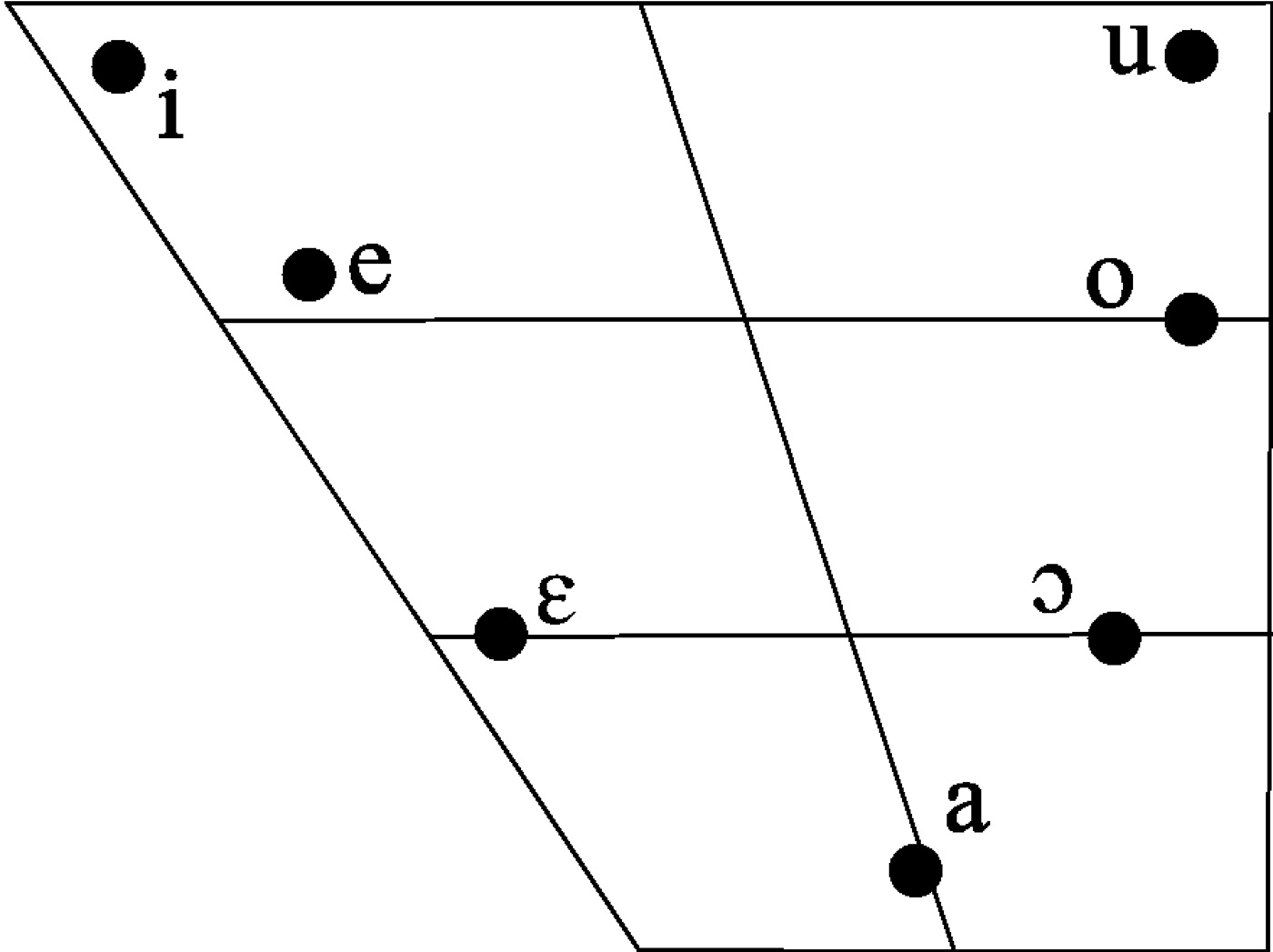
Italian spelling hides one rule that trips beginners: c and g are hard before a consonant or before a, o or u, and soft before e or i3. Italian is often the starting language that singing teachers use when teaching vocal technique3. Other languages are in the diction section.
The seven vowels
Italian has 7 vowel sounds spelled with 5 letters2. A, I and U have one sound each; E and O have two3.
| Spelling | IPA | Example |
|---|---|---|
| e (open) | [ɛ] | terra3 |
| e (closed) | [e] | fidele3 |
| a | [a] | caro3 |
| i | [i] | mio3 |
| o (closed) | [o] | ombra3 |
| u | [u] | fuggire3 |
| o (open) | [ɔ] | notte3 |
The most striking difference from English is purity. A sound written with a single letter has one unchanged sound3. In English the sound often changes from one pure sound to another, and the Italian vowel does not3. Unaccented English vowels drift toward schwa, and this does not happen with Italian vowels3. Vowels in Italian diphthongs stay closed or bright, where the second vowel of an English diphthong is open8. One easy pitfall for American singers is to pronounce each a differently3.
Open and closed E and O
Only the vowel carrying the tonic accent can be open or closed4. Unstressed vowels are always closed4, and closed e is very common in open syllables too8. Open [ɛ] is always stressed8. A word holds only one open e or o: when the stressed one is open, every other e and o in the word is closed8. The distinction between close-mid and open-mid vowels is neutralised in unstressed position2. Word-final stressed /ɔ/ occurs in only a few words2.
Two tendencies help when a dictionary is not at hand:
- Monosyllables are often open on the o and closed on the e4.
- Proparoxytone words (parole sdrucciole, stressed on the third syllable from the end) often have an open tonic vowel4.
Every dictionary reports the phonetic transcription of the words4. The rules here follow standard Italian lyric diction, based mostly on Florentine Italian, as the Northern Colorado lyric diction handbook lays them out8.
Stress and written accents
Every Italian word has one stressed vowel, and it lies on a vowel even when no accent is written4. A written accent is not compulsory in Italian4. When it is written, an acute accent gives a closed sound and a grave accent an open one4. Most Italian words are parole piane, stressed on the penultimate syllable4. If a word fits no other pattern, stress the penultimate syllable8. Words ending in -abile, -obile and -ibile stress the antepenultimate syllable8. A written accent on the final vowel marks stress on the last syllable, and IPA does not transcribe the accent8.
Vowels in stressed open syllables are normally long, unless word-final2. Final stressed vowels are short by nature2.
| Accent | Meaning | Accent | Meaning |
|---|---|---|---|
| affètto | love (noun)4 | affétto | to slice (verb affettare)4 |
| arèna | amphitheater4 | aréna | sand4 |
| accètta | accept (verb accettare)4 | accétta | axe (noun)4 |
A change of accent changes the meaning of the word4. Most pronunciation and comprehension errors occur between sounds that share an articulation point, and practising the sounds in direct opposition helps4.
Consonants
Italian consonants are sounded much softer than English. The letter h is silent8. D, t and n are dentalized: the tongue sits behind the upper teeth3. Several consonants share a symbol with the letter, which makes them easy for English speakers; the others need work3.
| Spelling | IPA | Example |
|---|---|---|
| c before a, o, u; ch | [k] | caro, che3 |
| c before e, i | [tʃ] | cielo3 |
| g before e, i | [dʒ] | giuro3 |
| sc before e, i | [ʃ] | lasciatemi3 |
| gli | [ʎ] | voglio3 |
| gn | [ɲ] | sogno3 |
| n before a k or g sound | [ŋ] | velar n before k or g1 |
| r (single, flipped) | [ɾ] | caro3 |
Between vowels, [ʎ], [ɲ] and [ʃ] are always doubled1, so the gli in voglio and the gn in sogno are sung long1,3.
C and g. Each is hard before a consonant or before a, o or u, and soft before e or i3. An h after g or c forces the hard sound: che is [ke]3.
Silent i. In cielo the i is silent, used up in softening the consonant3. The same applies to the group sci plus a vowel: do not dwell on the i; the following vowel is what you hear4.
Sc. Soft sc sounds like English sh3.
Gli and gn. Gn sounds like the ny of onion3. It is the palatal /ɲ/, not a dental n plus g4, and the pair canna and cagna shows the contrast4. Transcriptions always double gli and gn8. Gn and gli are always geminate between vowels, including across word boundaries, and so are /ʃ/, /dz/ and /ts/2. /ɲ/ and /ʎ/ are alveolo-palatal2.
Z and s. Z is [ts] or [dz], and a dictionary settles which8. The contrast between s and z is neutralized before consonants and at the beginning of words2.
Double consonants and the single versus double r
Double consonants are longer and sharper4. In IPA, gemination is written by doubling the symbol: fatto is [ˈfatto] and mezzo is [ˈmɛddzo]1. The stressed vowel is longer before a single consonant and shorter before a double one4. Geminate consonants shorten the preceding vowel, so fato has a long vowel and fatto a short one2. Doubling often radically changes the meaning of the word4. Only /j/, /w/ and /z/ cannot be geminated2.
Syntactic gemination adds a wrinkle. After stressed vowels and certain prepositions and conjunctions, word-initial consonants also become geminated1. It is the normal native pronunciation in central Italy2. In parlò portoghese [parˈlɔpportoˈɡeːze] (he or she spoke Portuguese) the p doubles after the stressed final vowel2. The k of a casa (homeward) is transcribed [akˈkaːza]2. This is not a purely phonological process: the article la in la casa cues no gemination2.
The r follows the same logic. The Italian r is rolled or flipped, and the American r does not exist3. A single r between vowels is flipped, and rr is rolled8. The geminate rr is a trill with three to seven contacts2. A single r between vowels is a trill with one or two contacts2, and some literature treats the single-contact trill as a tap2.
Sung versus spoken
Spoken pronunciation is not always the same as sung pronunciation8. Double consonants are either lengthened (m, n, s, l) or stopped between the consonants when sung3. When you sing a double consonant, take a little time away from the preceding vowel3. In fatto the vowel is short before the double t2.
Phrasal doubling, the doubled consonant after certain words in mid-phrase, is part of Italian practice and belongs in performance8. A word-final n before m, p, b, f, v or another alveolar, dental or labial consonant may be pronounced m in performance8. When a word ends in the vowel the next word starts with, the final vowel drops and the consonant carries over8. Good lyric diction and singing technique are linked3.
Perfect Italian Diction for Singers and Timothy Cheek
Perfect Italian Diction for Singers: An Authoritative Guide provides the steps and tools for singing beautifully and expressively in Italian5. Timothy Cheek and Anna Toccafondi wrote it, with a foreword by Lawrence Brownlee and Thomas Hampson5. Rowman & Littlefield published the book5. Cheek has also written books on Czech lyric diction and opera (Google Books)7. The book covers the pitfalls of non-native singers and how to overcome them, and chapters on Italian style and legato5.
Common mistakes for English speakers
- Gliding vowels. Letting a vowel drift to another sound. Keep one pure sound3.
- Schwa in unstressed syllables. Unaccented Italian vowels do not reduce3, and unstressed vowels are always closed4.
- Opening an unstressed e or o. Only the stressed vowel can be open4.
- The American r. It does not exist in Italian; flip or roll3.
- Singles for doubles. Sing fatto as fato and you have changed the word2,4.
- Hard c where it should be soft. Cielo starts with [tʃ], and the i is not sounded3.
- Two open vowels in one word. Only one e or o per word is open8.
- Sounding the h. It is silent8.
- Hard English consonants. Soften them, and put d, t and n behind the upper teeth3.
Cantante and next steps
Cantante is the Italian word for singer6. Learn the symbols in IPA for singers, then compare Italian with the Church Latin rules in Latin pronunciation for singers. The open textbooks from Kansas State University Libraries and the European Opera Academy supply the same rules3,4. For a full score, work through La traviata.
Read next
IPA for singers: what the International Phonetic Alphabet is and how to use it
The International Phonetic Alphabet for singers: why one symbol equals one sound, the marks that matter, singers' charts and where to find IPA texts.
Opera guidesLa traviata: synopsis, roles, arias and diction notes
Verdi's La traviata in one page: librettist, premiere, Violetta and Alfredo, act-by-act synopsis, the famous arias with Italian first lines and diction notes.
Lyric dictionLatin diction for singers: Italianate (Church) vs Germanic pronunciation and IPA
Latin lyric diction in one page: Italianate versus Germanic pronunciation, ae and oe, the ti rule, v, double consonants and Classical differences.
Questions singers ask
What is the C rule in Italian?
C and g are hard before a consonant or before a, o or u, and soft before e or i3. Soft c sounds like English ch, as in cielo3. An h after c or g keeps it hard, as in che3.
Why do singers study Italian first?
Italian is often the starting language that singing teachers use when teaching vocal technique3. Perfect Italian Diction for Singers provides the steps and tools for singing beautifully and expressively in Italian5.
How many vowels does Italian have?
Italian has 7 vowel sounds: one each for a, i and u, and two each for e and o2,3. Only stressed E and O can be open or closed4.
Do I pronounce double consonants in Italian?
Yes. Double consonants are longer and sharper, and doubling can radically change the meaning of a word4. In singing, m, n, s and l are lengthened; other doubles are stopped between the consonants3.
What is the Italian word for singer?
Cantante is the Italian word for singer6.
Sources
- Help:IPA/Italian · Wikipedia · en.wikipedia.org · checked 19 October 2026
- Italian phonology · Wikipedia · en.wikipedia.org · checked 19 October 2026
- Diction – Vocal Techniques for the Instrumentalist, Appendix III (Italian diction) · Kansas State University Libraries (open textbook) · kstatelibraries.pressbooks.pub · checked 19 October 2026
- Italian for Singers – Open Source Materials from EOALAB (Prof.sa Roberta Faroldi) · European Opera Academy · europeanopera.academy · checked 19 October 2026
- Perfect Italian Diction for Singers - Juilliard Store · Juilliard Store · juilliardstore.com · checked 20 October 2026
- Italian pronunciation for singers - Cliff Lamere · clifflamere.com · clifflamere.com · checked 20 October 2026
- A Lyric Diction Handbook: Italian diction · University of Northern Colorado, Digital UNC (open textbook) · digscholarship.unco.edu · checked 20 October 2026
- Perfect Italian Diction for Singers - Google Books · Google Books · books.google.com · checked 20 October 2026
Photos (1)
- Aeusoes1, Public domain

Translations of libretto lines on this page are our own. How we check facts · Report an error.