Opera guides
Die Fledermaus: synopsis, roles, numbers and diction notes
Strauss's Die Fledermaus: what the title means, premiere, roles and voice types, the plot act by act, the famous numbers, and notes on the spoken dialogue.
By Diction Desk editors · Published · Updated · Checked against 7 sources
Die Fledermaus is an operetta composed by Johann Strauss II to a German libretto by Karl Haffner and Richard Genée1. It premiered on 5 April 1874 at the Theater an der Wien in Vienna1. The title means The Bat, and the numbers are joined by spoken dialogue, including the comic speaking role of the jailer Frosch1,2,3.
- Composer
- Johann Strauss II1
- Librettists
- Karl Haffner and Richard Genée1
- Premiere
- 5 April 1874, Theater an der Wien, Vienna1
- Form
- Komische Operette in three acts4
- Title
- The Bat in English3
- Language
- German, with spoken dialogue2
Contents
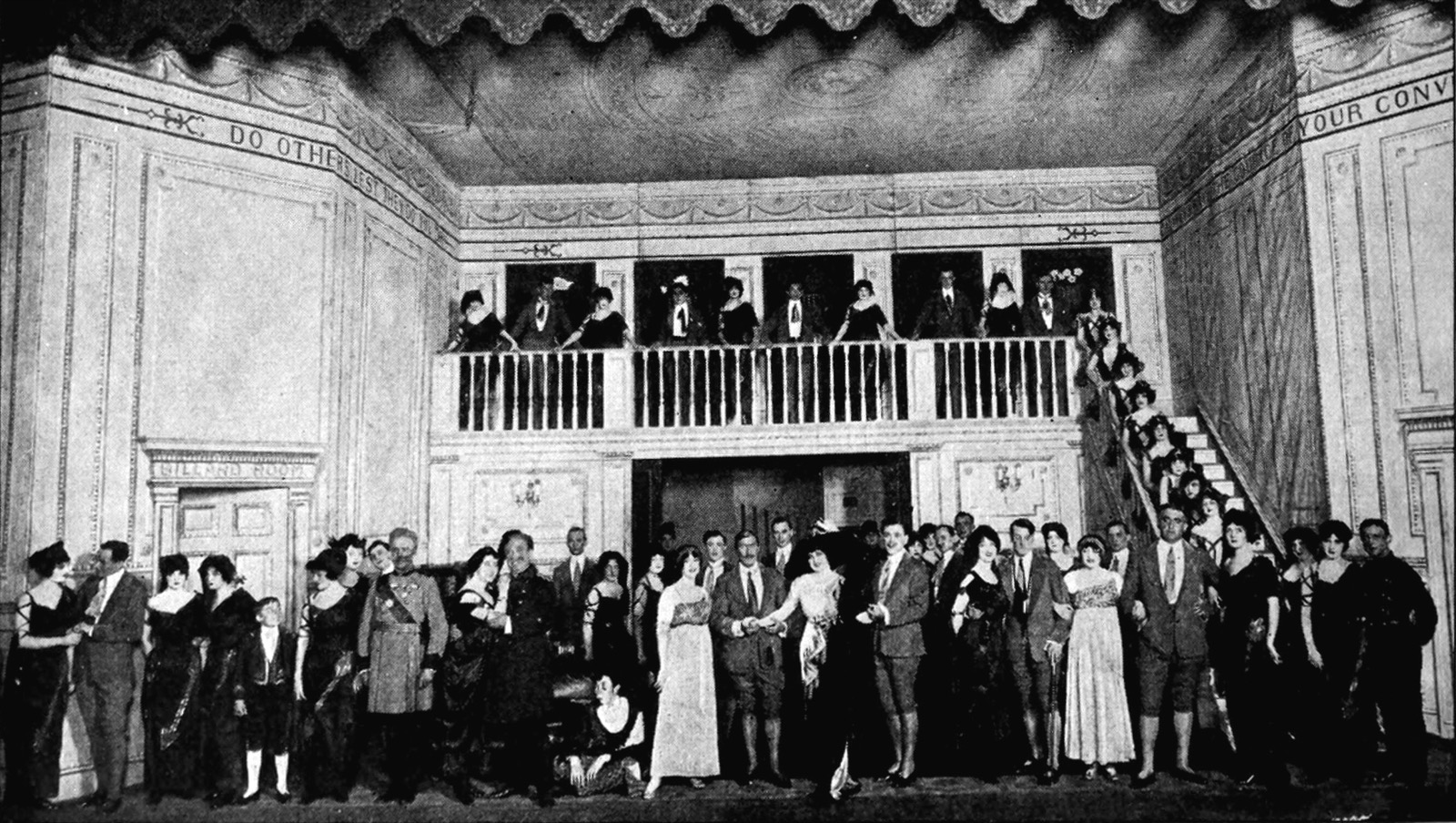
A masked ball, a prison full of party guests and one light-hearted revenge: the operetta runs on mistaken identities1,2,4. This guide gives the roles, the plot act by act and the numbers by act and character; more guides are in the operas section.
Composition and sources
The original literary source for Die Fledermaus was Das Gefängnis, a farce by Julius Roderich Benedix1. Benedix’s farce premiered in Berlin in 18511. A three-act French vaudeville play by Henri Meilhac and Ludovic Halévy, Le Réveillon, opened at the Théâtre du Palais-Royal on 10 September 18721. Karl Haffner translated it into German for Vienna as a non-musical play, at the instigation of Max Steiner1. The libretto, credited to Haffner and Richard Genée, is based on that vaudeville2.
The French New Year’s Eve réveillon was not considered to provide a suitable setting for the Viennese theatre, so a ball replaced it1. The translation was then passed to the playwright and composer Richard Genée, who completed the libretto1. He had provided some of the lyrics for Strauss’s Der Karneval in Rom the year before1.
The operetta premiered on 5 April 1874 at the Theater an der Wien in Vienna1,3. Strauss conducted; Marie Geistinger sang Rosalinde, Caroline Charles-Hirsch sang Adele and Jani Szika sang Eisenstein1. Two years later it had already been performed more than 200 times all over the world6. It has been part of the regular repertoire ever since1. In 1894 it achieved court opera honors in Vienna, and since 1900 it has almost always been performed there on New Year’s Eve4.
Roles and voice types
Eisenstein was originally written for a tenor but is now frequently sung by a baritone1. Orlofsky is a trouser role, usually performed by a mezzo-soprano, sometimes by a countertenor and occasionally, an octave lower, by a tenor1. Recordings exist with the tenors Rudolf Christ, Gerhard Stolze and Wolfgang Windgassen as Orlofsky1. Frosch is a comedy speaking role1.
| Role | Voice or type | Character |
|---|---|---|
| Gabriel von Eisenstein | Tenor, now often baritone | A Viennese man-about-town sentenced to eight days in prison for insulting a civil servant1 |
| Rosalinde | Soprano | Eisenstein’s wife1 |
| Adele | Coloratura soprano | Rosalinde’s maid1 |
| Ida | Soprano | Adele’s sister1 |
| Alfred | Tenor | Rosalinde’s former lover, a singing teacher1 |
| Dr. Falke | Baritone | A notary1 |
| Dr. Blind | Tenor | A lawyer1 |
| Frank | Baritone | A prison governor1 |
| Prince Orlofsky | Mezzo-soprano, en travesti | A Russian prince1 |
| Yvan | Speaking role | The prince’s valet1 |
| Frosch | Speaking role | A jailer, with a lengthy drunken soliloquy in act 31 |
English versions vary the names: Ida, for example, is called Sally in the Schirmer translation1. Adele receives a forged letter, allegedly from her sister, inviting her to Prince Orlofsky’s ball1.
Synopsis
Act 1
The act is set in Eisenstein’s apartment1. A lovely tenor voice is heard outside the dwelling of the wealthy Gabriel von Eisenstein7. It is Alfred, serenading Rosalinde; they became acquainted while visiting a spa7. Eisenstein has been sentenced to eight days in prison for insulting a civil servant, partly because of the incompetence of his attorney, Dr. Blind1. Falke arrives to invite him to the ball, where Falke plans a light-hearted revenge for an earlier practical joke1.
After Eisenstein leaves, Alfred, his former friend and Rosalinde’s former lover, serenades Rosalinde1. In order not to compromise Rosalinde, Alfred agrees to pretend to be Eisenstein and to accompany the prison governor Frank1.
Act 2
The act is set in a summer house in the Villa Orlofsky1. Falke promises Orlofsky an entertainment called The Revenge of the Bat5. At the ball, Rosalinde pretends to be a masked Hungarian countess1. Eisenstein goes by the name Marquis Renard, while Frank is the Chevalier Chagrin1. Adele, who has borrowed one of Rosalinde’s dresses, pretends she is an actress, and she is introduced as Olga, a Russian countess1,7.
Eisenstein and Frank, both posing as Frenchmen, repeat common French phrases to each other, to Orlofsky’s great amusement1. Rosalinde succeeds in extracting a valuable watch from her husband’s pocket, to use later as evidence of his impropriety1. She sings a sentimental dancing-song, the Czardas, to convince the party that she is Hungarian1. Orlofsky toasts champagne in the finale, and Eisenstein and Frank dash off as the clock strikes six in the morning1. The masquerade and trickery end with the entire group of partygoers in prison2.
Act 3
Act 3 takes place in the prison offices of Warden Frank1. The prison is given a dubious touch by the bailiff Frosch, who is never sober4. Frosch is a jailer who has been tippling in the absence of the warden7. Alfred, still in jail in Eisenstein’s place, irritates the other prisoners by singing operatic arias1. Eisenstein takes the place of the notary Dr. Blind in disguise and thus discovers the events of the night4. Eisenstein, Rosalinde and Alfred sing a trio in which Eisenstein angrily claims the right of vengeance, until Rosalinde produces his watch1.
Falke explains that the whole thing was payback for Eisenstein’s practical joke on him three years before1. Eisenstein tells Rosalinde that his misbehavior was caused by the champagne, and she forgives him unconditionally1. Orlofsky promises to finance Adele’s acting career, and the company joyfully reprises the Champagne song from act 21.
Numbers and arias
The party of act 2 allows productions to insert a variety of additional entertainment acts, such as music, comedy or dance1. The numbers below are the ones the sources place by act and character; the English is our own gloss.
| Number | Character | Act | Meaning |
|---|---|---|---|
| Da schreibt meine Schwester Ida | Adele | Act 11 | Here is what my sister Ida writes; she uses the letter to ask for the evening off1 |
| Komm mit mir zum Souper | Falke and Eisenstein, duet | Act 11 | Come along with me to supper1 |
| O Gott, wie rührt mich dies! | Trio of Eisenstein’s farewell | Act 11 | Dear God, how this moves me1 |
| Täubchen, das entflattert ist | Alfred, serenading Rosalinde | Act 11 | Little dove that has flown away1 |
| Glücklich ist, wer vergisst | Finale, drinking song | Act 11 | Lucky is the man who forgets1 |
| Mein schönes, großes Vogelhaus | Frank, in the finale | Act 11 | My handsome big aviary1 |
| Ein Souper heut’ uns winkt | Chorus | Act 21 | A supper beckons us tonight1 |
| Ich lade gern mir Gäste ein | Prince Orlofsky | Act 21 | I like to invite guests to my house1 |
| Mein Herr Marquis | Adele, Adele’s Laughing Song | Act 21,2 | My dear Marquis1 |
| Klänge der Heimat (Czardas) | Rosalinde | Act 21 | Strains of the homeland; a sentimental dancing-song, sung to pass as Hungarian1 |
| Dieser Anstand, so manierlich | Rosalinde and Eisenstein, the Watch duet | Act 21 | Such poise, so proper1 |
| Im Feuerstrom der Reben | Orlofsky and the company, the Champagne song | Act 21 | In the fiery stream of the vine1 |
| Brüderlein, Brüderlein und Schwesterlein | Canon in the finale | Act 21 | Little brothers and little sisters1 |
| Ha, welch ein Fest, welche Nacht voll Freud’ | Waltz finale | Act 21 | Ha, what a feast, what a night full of joy1 |
| Unter Donner und Blitz | Dance number | Act 24 | The Wiener Staatsoper credits its act 2 choreography to this number4 |
| Spiel ich die Unschuld vom Lande | Adele, couplets | Act 31 | If I play the innocent country girl1 |
| Ja, ich bin’s, den ihr betrogen | Eisenstein, Rosalinde and Alfred, trio | Act 31 | Yes, it is I you deceived1 |
The Semperoper names the Watch duet, the Czardas and Adele’s Mein Herr Marquis as the classic numbers2. The majority of the numbers have a dance character: waltz, polka, cancan, gallop and csárdás4. The score draws on almost the entire European dance repertoire, including Spanish, Russian and Polish dances4. It also carries Alpine folk influences: yodeling and vocal polyphony4.
Strauss writes with lightness and transparent orchestral sound, with a wealth of woodwind combinations, and his invention is primarily instrumental4. He adopts buffo elements from Italian opera in the figure of Dr. Blind, but there are no traces of bel canto4.
What the title means
Die Fledermaus means The Bat in English, and the operetta is sometimes called The Revenge of the Bat1,3. After a costume party, Eisenstein abandoned Falke, very drunk and dressed in a bat costume, in the center of town, exposing him to ridicule the next day1. That is why Falke’s nickname is Dr. Fledermaus5. Falke stages his revenge at the ball1.
The joke dates from three years before the ball in the standard plot1 and from two years before in Cincinnati Opera’s updated staging5. We follow the standard plot.
Performance history
The German premiere took place at Munich’s Gärtnerplatztheater in 18751. Die Fledermaus was performed in New York under Rudolf Bial at the Stadt Theatre on 21 November 18741. It was sung in English at London’s Alhambra Theatre on 18 December 1876, with its score modified by Hamilton Clarke1. The first London performance in German did not take place until 18951. Twenty years after the Vienna production, Gustav Mahler raised the work’s artistic status by producing it at the Hamburg Opera House1. The Paris version of 1877, La Tzigane, was not a success; it found success only in 1904 in a version based on Meilhac and Halévy’s play1.
The Royal Opera House staged the work on 6 May 1930 with the Grand Opera Syndicate, and The Royal Opera’s company premiere was on 31 December 19773. In Vienna, director Otto Schenk re-staged the Wiener Staatsoper production on 31 December 20114. Günter Krämer’s production has been performed at the Semperoper Dresden since 20032.
Running time depends on the staging. The Wiener Staatsoper lists 50 minutes for act 1, 55 for act 2 and 50 for act 3, with two 25-minute intermissions4. The Finnish National Opera lists 3 h 10 min with one 30-minute interval6, and Cincinnati Opera lists about 2 hours, 20 minutes with one intermission5.
Strauss’s music has been adopted for other works. Nightbirds, with lyrics by Gladys Unger, opened at the Lyric Theatre, London, on 30 December 19111. A Wonderful Night opened at the Majestic Theatre on October 31, 1929, the first Broadway musical to open after the Wall Street crash of 19291. Erich Wolfgang Korngold’s adaptation Gay Rosalinda was produced in London in 19451. Ernst Lubitsch directed the silent film The Merry Jail in 1917, and Michael Powell and Emeric Pressburger made Oh… Rosalinda!! in 19551.
Language and diction notes
The title is pronounced [diː ˈfleːdɐˌmaʊs]1. The operetta is performed in German at the Semperoper Dresden, with German and English surtitles2. The spoken dialogue is not translated word for word in those surtitles2. Other houses localize the sung text: the Finnish National Opera performs it in Finnish, with surtitles in Finnish, Swedish and English6, and Cincinnati Opera sings it in English with projected titles5.
Frosch is a speaking role1, and the German rules in German diction for singers apply to the dialogue as well as the numbers.
Further reading: Semperoper Dresden, Wiener Staatsoper and Utah State University Opera.
Where to go next
Two more German-language guides are Der Rosenkavalier and Hänsel und Gretel. The sounds behind the text start in IPA for singers.
Read next
Der Rosenkavalier: synopsis, roles, arias and diction notes
Strauss's Der Rosenkavalier in one page: librettist, premiere, voice types, the silver rose plot act by act, key musical numbers and German diction notes.
Opera guidesHänsel und Gretel: synopsis, roles, arias and diction notes
Humperdinck's Hänsel und Gretel: premiere cast, voice types, synopsis, the Abendsegen and other famous numbers with first lines, and German diction notes.
Opera guidesAida: synopsis, roles, arias and diction notes
Verdi's Aida: librettist, Cairo premiere, premiere cast and voice types, synopsis by act, the famous arias with first lines, and diction notes for singers.
Questions singers ask
Can you provide a brief summary of the plot of Die Fledermaus?
Gabriel von Eisenstein is sentenced to eight days in prison but escapes his fate by going to Prince Orlofsky's ball1,4. Dr. Falke has arranged the evening as revenge for an earlier practical joke, and the masquerade and trickery end with the entire group of partygoers in prison1,2.
Who are the roles in the opera Die Fledermaus?
The main roles are Gabriel von Eisenstein, his wife Rosalinde, the maid Adele, Prince Orlofsky, Dr. Falke, the prison governor Frank, Rosalinde's former lover Alfred and the jailer Frosch1. Eisenstein is a tenor role now often sung by a baritone, and Orlofsky is a trouser role for a mezzo-soprano1.
What does Die Fledermaus mean?
Die Fledermaus means The Bat in English1,3. The title refers to a practical joke: Eisenstein left a drunken Falke to sleep it off in a public square dressed as a bat5.
Is Die Fledermaus good?
It has been part of the regular repertoire ever since its 1874 premiere1. It was performed more than 200 times within two years6, and it achieved court opera honors in Vienna in 18944. It is a masterpiece of Viennese operetta2.
Sources
- Die Fledermaus - Wikipedia · Wikipedia · en.wikipedia.org · checked 20 October 2026
- Die Fledermaus - Semperoper Dresden · Semperoper Dresden · semperoper.de · checked 20 October 2026
- Die Fledermaus - Performance Database - Royal Ballet and Opera Collections · Royal Ballet and Opera Collections · rohcollections.org.uk · checked 20 October 2026
- Die Fledermaus - Wiener Staatsoper · Wiener Staatsoper · wiener-staatsoper.at · checked 20 October 2026
- Die Fledermaus Synopsis - Cincinnati Opera · Cincinnati Opera · cincinnatiopera.org · checked 20 October 2026
- Die Fledermaus - The Finnish National Opera and Ballet · Finnish National Opera and Ballet · oopperabaletti.fi · checked 20 October 2026
- Synopsis: Die Fledermaus by Johann Strauss, Jr. - Utah State University Opera · Utah State University Opera · usuo.org · checked 20 October 2026
Image credits (1)
- Internet Archive Book Images / Wikimedia Commons · No restrictions · source

Translations of libretto lines on this page are our own. How we check facts · Report an error.