Opera guides
Der Rosenkavalier: synopsis, roles, arias and diction notes
Strauss's Der Rosenkavalier in one page: librettist, premiere, voice types, the silver rose plot act by act, key musical numbers and German diction notes.
By Diction Desk editors · Published · Updated · Checked against 6 sources
Der Rosenkavalier is a German-language opera by Richard Strauss to a libretto by Hugo von Hofmannsthal, premiered on 26 January 1911 in Dresden under Ernst von Schuch1. It is set in 1740s Vienna and turns on a silver rose carried to a bride-to-be by a young count, sung by a mezzo-soprano en travesti1,5.
- Composer
- Richard Strauss, 1864 to 19496
- Premiere
- 26 January 1911, Dresden, conducted by Ernst von Schuch1
- Language
- German1
- Setting
- Vienna in the 1740s, early in the reign of Maria Theresa1
- Octavian
- A mezzo-soprano en travesti, aged 17 in the story1
Contents
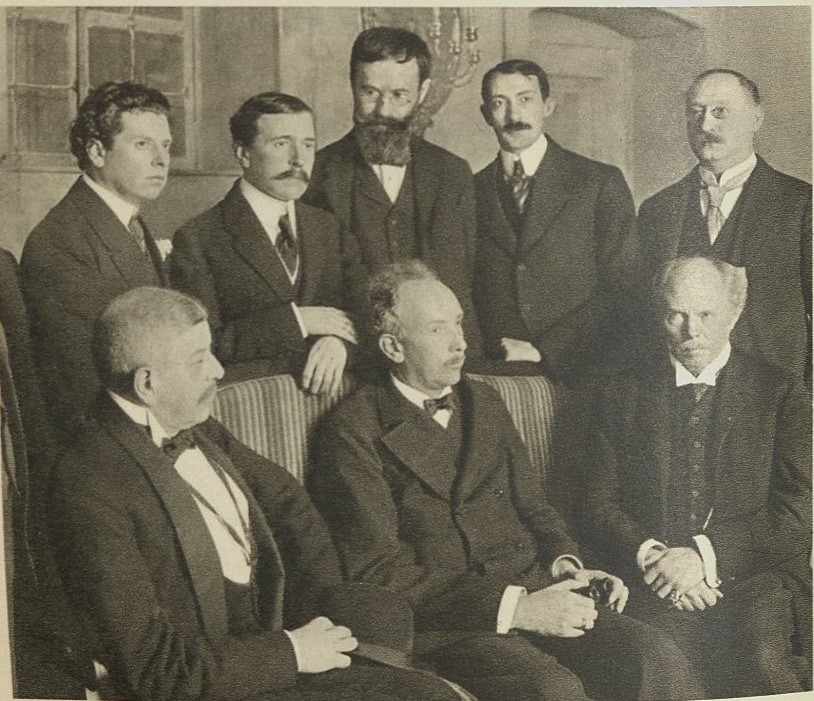
Der Rosenkavalier is a comic opera with weighty themes: infidelity and aging, carried by the Marschallin’s arc1. This page covers the roles, the plot act by act, the key numbers and the German in the libretto, one of the guides in the operas section.
At a glance
Richard Strauss, a German composer and conductor, lived from 1864 to 19496. His librettist Hugo von Hofmannsthal was an Austrian novelist, librettist, poet and dramatist who lived from 1874 to 19292. The libretto is in German1. The opera is set in Vienna in the 1740s, in the first years of the reign of Empress Maria Theresa1. Until the premiere the working title was Ochs auf Lerchenau1.
The story is a complex tangle of machinations to pair the young lovers Octavian and Sophie while distracting the oafish and predatory Baron Ochs4. Strauss’s opening music is also a wry look at Wagner4. Strauss plays with the Tristan chord in the third act4.
The English title
Der Rosenkavalier is translated as The Knight of the Rose or The Rose-Bearer1. The title names the well-born messenger who presents a perfumed silver rose to a bride-to-be5. Houston Grand Opera’s amorous facts about Der Rosenkavalier give more background4.
Who’s who
| Role | Voice type | Premiere singer | Notes |
|---|---|---|---|
| The Marschallin, Princess Marie Therese von Werdenberg | Soprano | Margarethe Siems | Octavian’s lover1 |
| Octavian, Count Rofrano | Mezzo-soprano (en travesti) | Eva von der Osten | Her 17-year-old lover, known as Quinquin1 |
| Baron Ochs auf Lerchenau | Bass | Karl Perron | The Marschallin’s overbearing and crude cousin1,5 |
| Sophie von Faninal | High soprano or soubrette | Minnie Nast | The young woman Ochs intends to marry1,5 |
| Herr von Faninal | High baritone | Karl Scheidemantel | Sophie’s rich parvenu father1 |
| Valzacchi | Tenor | Hans Rüdiger | An intriguer1 |
| Annina | Contralto | Erna Freund | Valzacchi’s niece and partner1 |
The three leads are written for women: Sophie is a light lyric soprano, Octavian a mezzo-soprano and the Marschallin a mature dramatic soprano. They share several duets and a trio at the emotional climax1. Some singers have performed two or even all three of these roles over the course of their careers1.
Ochs is a nobleman with little money, and he intends to marry the rich bourgeois Sophie5. The first scene is set in the Marschallin’s bedroom, as the La Monnaie synopsis lays out5.
Synopsis
Act 1
The Marschallin and her young lover Octavian have spent the night together; the Glyndebourne synopsis starts there3. Octavian reappears disguised as a chambermaid, “Mariandel”, just before Ochs arrives3. Ochs has two favors to ask: he wants to borrow his cousin’s notary to write the marriage contract, and he wants her to recommend a young nobleman to serve as his Rosenkavalier1. The Marschallin recognizes the voice of her overbearing and crude cousin5. Ochs must find a well-born messenger to present a perfumed silver rose to his bride, and the Marschallin mischievously recommends Count Rofrano, Octavian, for the job5. Ochs agrees5. He attempts to bully the notary into writing out a marriage contract5.
A busy reception follows. A tenor sent by the Portuguese ambassador serenades the Marschallin1. Valzacchi and Annina, two Italian intriguers, offer scandal sheets for sale, and she coldly declines1. Ochs propositions “Mariandel”, who evades him and flees as soon as possible3.
Left alone, the Marschallin ponders her waning youth and the unhappiness of her forced marriage1. She sends Octavian away and then realizes she has forgotten to kiss him goodbye3.
Act 2
Octavian arrives with great pomp, dressed all in silver, and presents the silver rose to Sophie1. Sophie smells the scented oil of the silver rose in the Presentation of the Rose scene4. Octavian and Sophie fall in love on the spot1. Sophie already knows Octavian’s full name, and she knows his nickname, Quinquin, which only intimate friends, including the Marschallin, use1.
Once Ochs leaves the room with Faninal to finalize the marriage contract, Sophie and Octavian quickly agree that she will not marry the Baron under any circumstances1. Octavian challenges the Baron to a duel1. Ochs scratches his arm on the point of Octavian’s drawn sword and screams so that Faninal and the household come rushing in1. Annina then brings Ochs a letter signed by “Mariandl”, asking for a tryst1.
Act 3
The setting is a private room in a shabby inn1. Fed up with the Baron, Valzacchi and Annina help Octavian prepare a trap for the next evening1. Ochs arrives with “Mariandel”, ready for a cozy dinner at a table set for two1. He attempts to seduce the chambermaid but is unnerved by her resemblance to Octavian3. Annina, in disguise, enters with a gaggle of children and claims that Ochs is her husband3. Octavian secretly lets the Police Inspector in on the plot3.
The Police Inspector greets the Marschallin before clearing the room, and she explains to the Baron that he has been fooled1. Octavian emerges in his own clothes, and Ochs finally comprehends the truth3. The Marschallin introduces herself to Sophie, recognizing that the day she feared has come, and releases Octavian to be with the woman he loves1. Ochs ingloriously departs, pursued by children and bill collectors1.
The famous numbers
| Number | Role | Act | First line |
|---|---|---|---|
| Opening duet | Marschallin, Octavian | Act 1 | Wie du warst! Wie du bist1 |
| Italian tenor aria at the reception | Singer sent by the Portuguese ambassador | Act 1 | Di rigori armato il seno1,5 |
| Monologue on waning youth | Marschallin | Act 1 | Da geht er hin…1 |
| Time monologue | Marschallin | Act 1 | Die Zeit, die ist ein sonderbar Ding1 |
| Presentation of the Rose | Octavian | Act 2 | Mir ist die Ehre widerfahren…1 |
| Duet | Sophie, Octavian | Act 2 | Mit Ihren Augen voll Tränen1 |
| Trio | Marschallin, Sophie, Octavian | Act 3 | Marie Theres’! / Hab’ mir’s gelobt1 |
| Final duet | Sophie, Octavian | Act 3 | Ist ein Traum / Spür’ nur dich1 |
| Original | Our translation |
|---|---|
| Wie du warst! Wie du bist1 | How you were! How you are. |
| Da geht er hin…1 | There he goes… |
| Die Zeit, die ist ein sonderbar Ding1 | Time is a strange thing. |
| Mir ist die Ehre widerfahren…1 | The honor has fallen to me… |
| Mit Ihren Augen voll Tränen1 | With your eyes full of tears |
| Marie Theres’!1 | Marie Theres’! (her own name, shortened) |
| Hab’ mir’s gelobt1 | I swore it to myself. |
| Ist ein Traum1 | It is a dream. |
| Di rigori armato il seno1 | His breast armed against severity |
The Italian aria makes time stand still for a moment amid the Marschallin’s hectic morning ritual5. Hofmannsthal died on 15 July 1929, so the lines quoted here are in the public domain2.
Composition, premiere and reception
Strauss first met Hofmannsthal in 1899 in Berlin1. He was impressed by Hofmannsthal’s play Elektra (1903) and adapted it into an opera that premiered on 25 January 19091. Their partnership is often likened to Mozart’s three operas with Lorenzo da Ponte4. Strauss and Hofmannsthal were among the five founders of the Salzburg Festival in 19204. Hofmannsthal was born on 1 February 1874 and died on 15 July 1929 at Rodaun, Austria, at age 552.
After the dark and dramatic style of Elektra, Strauss tried to use lighter music with a more lyrical style in this opera1. Frequent Viennese waltz rhythms are a distinctive feature of the score1. They are anachronistic: the story takes place in the 1740s, and the waltz only became famous in Vienna during the early 19th century1. Strauss used the waltz on purpose, to create the nostalgic atmosphere of imperial Vienna instead of strict historical realism1. Strauss and Hofmannsthal commissioned Alfred Roller to design sets and costumes1. Strauss finished the music of the final act on 26 September 19101.
Der Rosenkavalier premiered on 26 January 1911 in Dresden under Ernst von Schuch, and tickets reportedly sold out almost immediately1. Within two months of the premiere the work was translated into Italian and performed at La Scala1. The Vienna Court Opera gave the Austrian premiere on the following 8 April1. The United Kingdom premiere took place at the Royal Opera House in London on 29 January 19131. The Metropolitan Opera gave the United States premiere on the following 9 December, conducted by Alfred Hertz1. It was the most popular opera of Strauss’s lifetime and remains a staple of the repertoire1. Compare the Mozart model in Le nozze di Figaro.
Language and diction notes
Hofmannsthal’s libretto uses various forms of the German language1. Members of the nobility speak in a refined and courteous mode that fits the 1740s setting1. Octavian as Mariandl and the other non-noble characters sing an Austrian dialect whose connotations are difficult for non-native speakers to grasp1. Ochs makes clumsy, mannered attempts at refined language, using non-German words and phrases1. The German of the Italians, Valzacchi and Annina, is very broken and marked by Italian accentuations1. Some productions include a glossary in the programme for the contextual meaning of the language1.
The rules in German diction for singers apply from the first line. The Italian tenor aria needs a switch to Italian diction for one number. Octavian sings en travesti, so the mezzo-soprano plays a young man and, in Acts 1 and 3, a chambermaid disguise on top of that1,3.
For another German-language opera, try Hansel und Gretel.
