Opera guides
Hänsel und Gretel: synopsis, roles, arias and diction notes
Humperdinck's Hänsel und Gretel: premiere cast, voice types, synopsis, the Abendsegen and other famous numbers with first lines, and German diction notes.
By Diction Desk editors · Published · Updated · Checked against 7 sources
Hänsel und Gretel is a Märchenoper (fairy-tale opera) by Engelbert Humperdinck, with a libretto by his sister Adelheid Wette after the Grimm fairy tale1. It was first performed at the Hoftheater in Weimar on 23 December 1893, conducted by Richard Strauss1. One of its most famous themes is the Abendsegen1.
- Composer
- Engelbert Humperdinck1
- Librettist
- Adelheid Wette, the composer's sister1
- Premiere
- 23 December 1893, Hoftheater, Weimar1
- Language
- German1
- Genre
- Märchenoper (fairy-tale opera)1
- Conductor at premiere
- Richard Strauss1
Contents
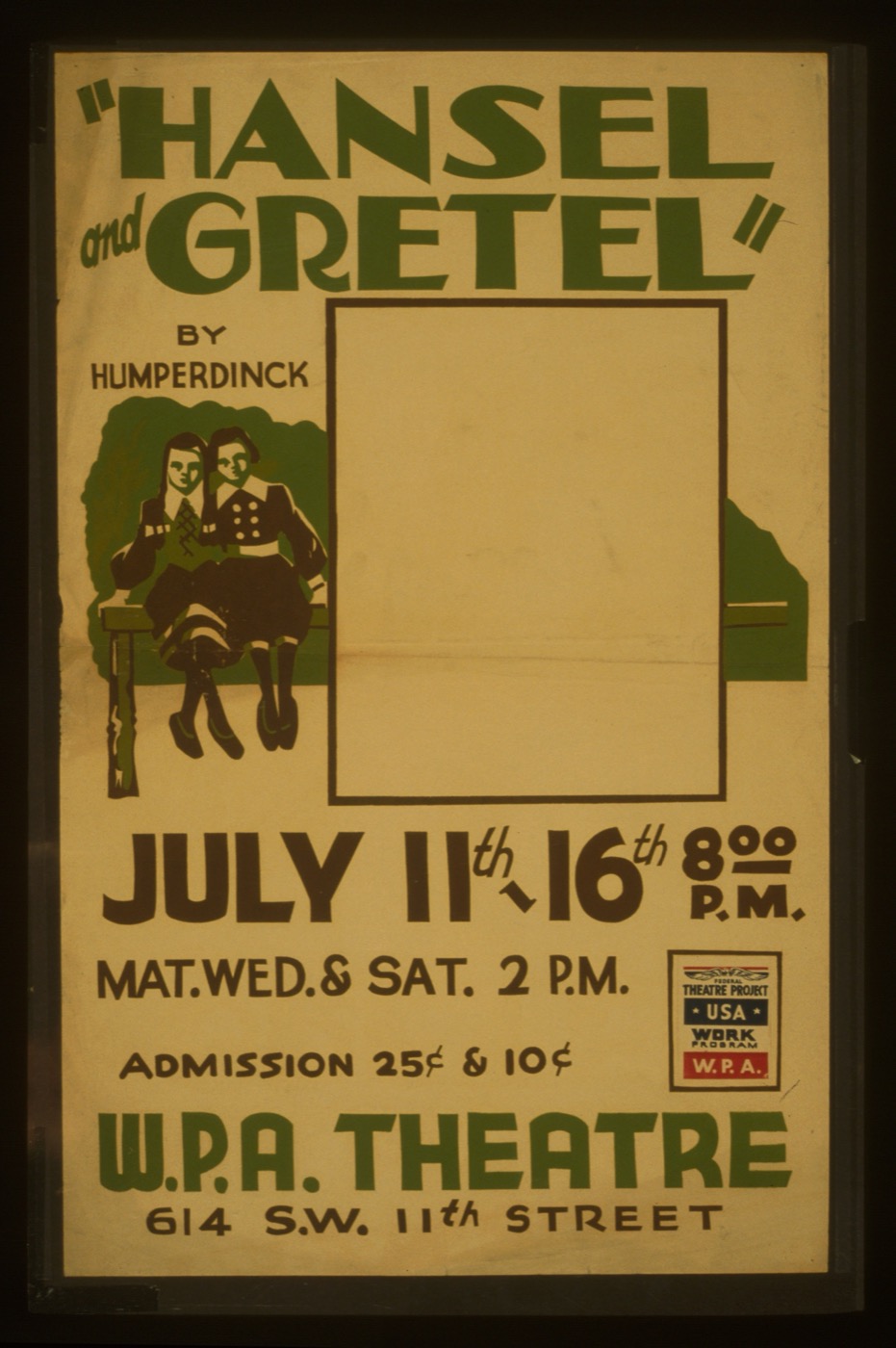
Hänsel und Gretel is based on the well-loved fairy tale collected by the Brothers Grimm2; Opera North’s guide gives the short version. It sits in the operas section beside the other role and aria guides.
At a glance
Humperdinck described the work as a Märchenoper, a fairy-tale opera1. The libretto was written by his sister, Adelheid Wette, based on the Grimm brothers’ fairy tale of the same name1. The idea for the opera was proposed to Humperdinck by his sister1. It began life in 1890 as a handful of songs, written at Wette’s request to accompany a Christmas play2.
The opera was first performed at the Hoftheater in Weimar on 23 December 1893, conducted by Richard Strauss1. The Hamburg premiere followed on 25 September 1894, conducted by Gustav Mahler1. The work has been associated with Christmas since its earliest performances1. It remained Humperdinck’s one and only big hit2.
Humperdinck’s score is full of folk-music-inspired themes2. The opening number, Suse, liebe Suse, is an authentic folksong from the German region of Brandenburg and serves as the musical basis for the opening scene4. Houston Grand Opera’s top five musical moments walks through the best-known numbers.
Who’s who
| Role | Voice type | Premiere singer | Notes |
|---|---|---|---|
| Peter | Baritone | Ferdinand Wiedey1 | A broom-maker, the children’s father1,2 |
| Gertrud | Mezzo-soprano | Luise Tibelti1 | Peter’s wife1 |
| Hänsel | Mezzo-soprano | Ida Schubert1 | Their son1 |
| Gretel | Soprano | Marie Kayser1 | Their daughter1 |
| The Gingerbread Witch | Mezzo-soprano; sometimes a tenor | – | Lures children with cakes and sweets, then pushes them into her oven1 |
| The Sandman | Soprano | Frl. Hartwig1 | Sends the children to sleep2 |
| The Dew Fairy | Soprano | Frl. Hartwig1 | Awakens the children2 |
The Witch is sometimes sung by a tenor1. The parents have names in the score, but those names are never said on stage; the characters are always “Father” and “Mother”, even when they speak to each other1.
Synopsis
Act 1
The first scene discloses a wretched homestead7. At home Gretel stitches a stocking, and Hänsel is making a broom1. Gretel reminds him of what father always says: “When the need is greatest, God the Lord puts out His hand”1. She cheers him up with a secret: a neighbor has given mother a jug of milk, and tonight she will make a rice blancmange1.
Mother comes in furious that they have not worked1. As she threatens to beat them with a stick, she knocks over the jug of milk1. She sends Hänsel and Gretel to the haunted Ilsenstein forest to look for strawberries1.
Father bursts in, roaring drunk, and surprises mother by taking from his pack a feast that includes fourteen eggs1. Then he asks where the children are, and learns they are in the Ilsenstein forest, the home of the evil Gingerbread Witch, the “Nibbling Witch”1.
Act 2
Act 2 shows a forest with the Ilsenstein in the background at sunset7. It opens in the forest, where Hänsel searches for strawberries1. Gretel weaves a crown of flowers, and Hänsel calls her the Queen of the Wood1. She allows him to taste a strawberry7. When they lose the path in the dark, a chorus of echoes answers their calls: “Who’s there?” brings back “He’s there!”1. The Sandman turns out to be the little man who calms the frightened children by telling them that he loves them dearly1. He is the benevolent magical force who sends them to sleep2, and he sings them to slumber7. He puts grains of sand into their eyes, and the children pray and fall asleep1. In the dream pantomime, fourteen angels arrange themselves around the children to protect them as they sleep1.
The prelude to this act is called the Witch-ride1. It is a wild orchestral depiction of the Witch flying about hunting for children4. Humperdinck borrowed its swirling string runs from Wagner4.
Act 3
The Dew Fairy comes to wake the children and sprinkles dew on them1. The scene is the witch’s house, with a fence of gingerbread figures7. The English libretto calls her the Dawn Fairy, who shakes dewdrops on the children7. Suddenly they notice a glorious gingerbread house1. Its roof is slated with cakes, its windows are liquorice, and its walls are decorated with cookies1. A voice calls out, “Nibbling, nibbling, little mouse! Who’s nibbling on my little house?”1. The witch introduces herself as Rosine Leckermaul1. The Witch takes out her wand and calls out “Stop!”; Hänsel and Gretel are frozen to the spot1. The Gingerbread Witch lures children with cakes and sweets, pushes them into her oven, where they turn to gingerbread1. The witch calls Gretel out and opens the oven door7.
Hänsel holds out a bone instead of his finger1. Gretel steals the wand from the witch’s pocket and frees him1. Hänsel and Gretel shove the witch into the oven1. Then Hänsel takes the wand and frees the gingerbread children from the spell1. The children pull the witch, now turned to gingerbread, from the ruins of the oven1.
The famous arias
| Aria | Role | Act | First line |
|---|---|---|---|
| Suse, liebe Suse (duet) | Hänsel and Gretel | 15 | Suse, liebe Suse, was raschelt im Stroh5 |
| Ein Männlein steht im Walde | Gretel | 24 | Ein Männlein steht im Walde4 |
| Der kleine Sandmann bin ich | The Sandman | 21,5 | Der kleine Sandmann bin ich5 |
| Abends will ich schlafen gehn (Abendsegen) | Hänsel and Gretel | 21,4 | Abends will ich schlafen gehn4,5 |
| Hokus pokus Hexenschuss | The Witch | 35 | Hokus pokus Hexenschuss5 |
| Hurr hopp hopp hopp | The Witch | 34 | Hurr hopp hopp hopp4 |
Gretel’s Ein Männlein steht im Walde has a text by the German poet August Heinrich Hoffmann, which is actually a riddle4. The Witch’s Hurr hopp hopp hopp is a peppy, polka-like dance4. The Evening Benediction is the children’s bedtime prayer, and its heavenly harmonies rise as they ask for angels to guard them4.
Wette died on 9 August 1916, so her text is in the public domain6. These lines come from the public-domain Project Gutenberg libretto, each with our own plain translation:
| Original | Our translation |
|---|---|
| Suse, liebe Suse, was raschelt im Stroh7 | Suse, dear Suse, what is rustling in the straw |
| Der kleine Sandmann bin ich7 | I am the little Sandman |
| Ein Männlein steht im Walde7 | A little man stands in the woods |
Background and reception
Adelheid Wette was a German author, composer and folklorist, born on 4 September 1858 in Siegburg and the youngest sister of the composer6. She is best remembered today as the librettist of her brother6.
Humperdinck lived from 1854 to 19213. He was a protégé of Richard Wagner and assisted him with the preparations for the premiere of Parsifal at Bayreuth in 18802. He composed Hänsel und Gretel in Frankfurt in 1891 and 18921.
The first performance outside Germany was in Basel on 16 November 18941. London followed at Daly’s Theatre on 26 December 1894, and New York on 8 October 18951. The opera is most often performed at Christmas time today1.
In English-speaking countries it is most often sung in English1. The longtime standard English translation was by Constance Bache1. The Metropolitan Opera used a Norman Kelley translation for its 1967 production1. In 1987 the English National Opera staged a darkly comic production in David Pountney’s translation1.
Language and diction notes
The title and the text are in German1, so the rules in German diction for singers apply throughout.
Where to go next
Two more German-language scores to study are Der Rosenkavalier and The Magic Flute. For the sounds behind your transcription, start with IPA for singers.
