Libretti
Nico Castel: Met diction coach, tenor and creator of the IPA libretti series
Nico Castel (1931-2015) was a Met comprimario tenor, staff diction coach for three decades and the translator behind the IPA libretti series.
Diction Desk editors · Checked 19 October 2026 against 5 sources
Nico Castel was a Portuguese-born comprimario tenor and diction coach who gave nearly 800 performances at the Metropolitan Opera and was its staff diction coach from 1979 to 20091. He translated a series of opera libretti with the IPA pronunciation of every word and died on May 31, 2015, aged 831,2.
- Born
- Portugal; raised in Venezuela1
- Met performances
- Nearly 8001
- Met diction coach
- 1979 to 20091
- Languages
- Seven, with native or near-native fluency1
- Died
- May 31, 2015, aged 832
Contents
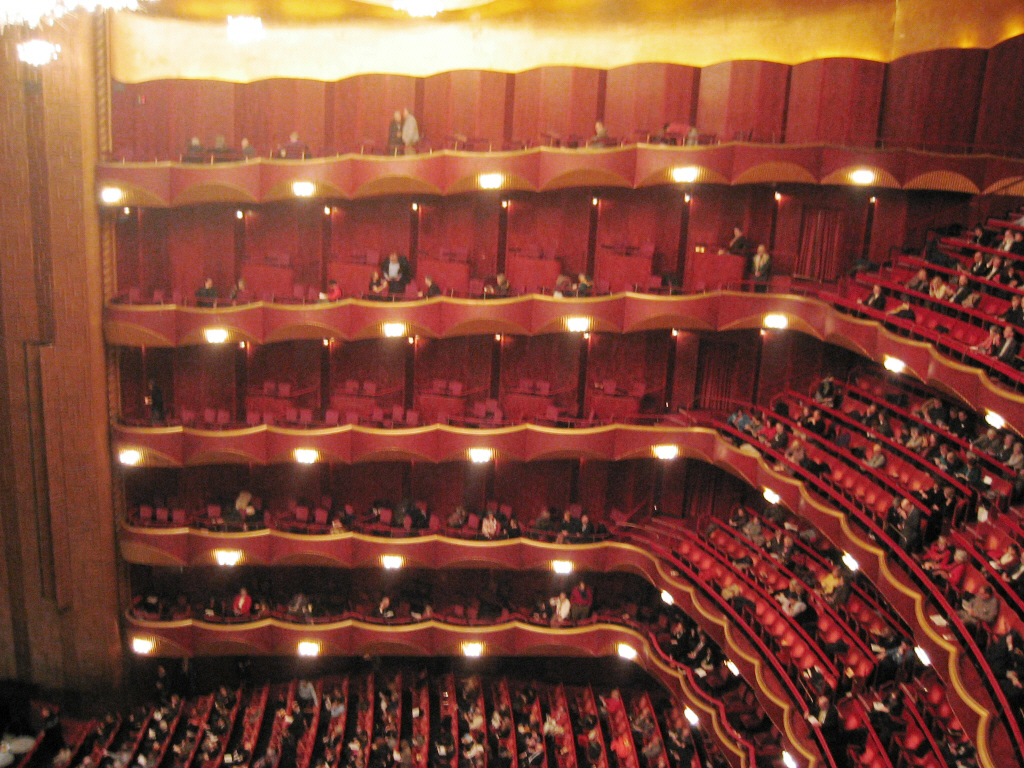
Nico Castel worked on both sides of the footlights: first as a working singer, then for three decades as the person who prepared the Metropolitan Opera’s singers in their languages. This page gives the outline of his career in order; more guides to translated texts are in the libretti section.
Early life and training
Castel was born in Portugal and raised in Venezuela by multilingual parents and a German nanny1. He attended a French school in Caracas1. The mix of languages around him shaped everything he did later.
At 16 he moved to the United States to sing and to study romance languages at Temple University1. In the early 1950s he served in the United States Army as a translator in Germany1. In 1958 he became the first winner of the “Joy in Singing” award, which launched his career with a recital at The Town Hall in New York City1,3.
Singing career and the Met
Castel sang as a comprimario tenor, a singer of supporting character roles, and he had a vast repertoire of them1,4. He had over 200 operatic roles in his repertoire1. He was also a gifted linguist4.
In June 1958 he made his debut with Santa Fe Opera as Fenton1. In 1965 he first sang with the New York City Opera, as Jacob Glock in The Flaming Angel1. Among his recordings are Manon and The Tales of Hoffmann, the latter with Sills and Norman Treigle1.
He made his Met debut on March 30, 1970, as Don Basilio in Mozart’s The Marriage of Figaro, and he performed with the company until 1997, toward the end singing speaking roles such as Pasha Selim2. In all he gave nearly 800 performances there1. Reviewers praised his rich dramatic characterizations, his sensitive musicianship and his impeccable diction2.
Away from the stage he was also a recitalist, translator, cantor and whisky importer2.
Diction coach at the Metropolitan Opera
Castel was the Met’s staff diction coach from 1979 until his retirement in 20091. The New York Times called him the Henry Higgins of the Metropolitan Opera2. In 1985 Will Crutchfield, writing in the same paper, called him “the Metropolitan’s resident standard-setter for linguistic flavor”2. As a coach he warned singers against “swarms of seething sibilants”2.
He spoke English, Spanish, Portuguese, French, German, Italian and Ladino with native or near-native fluency1,2,3. Ladino, the language of Sephardic Jews, has its own page in the diction section.
The libretti series
Castel’s best-known legacy for singers is a series of translated libretti. He published a vast series of French, German and Italian opera librettos, marking the pronunciation of every word with the International Phonetic Alphabet2. Each carries phonetic pronunciation guides in the opera’s original language3. Singers, teachers and conservatories throughout North America and Europe use them1.
He completed the operatic libretti of Giacomo Puccini, in two volumes, with the exception of Turandot5. The volumes show the layout. Each line of the libretto is set three ways: the IPA spelling of the libretto on the first line, the original Italian on the middle line, and a word-for-word translation on the third5. A fourth line, in a more literary translation, is given where a passage needs it5. Each volume includes synopses of the entire operas, vocal categories, cast names and translations of the stage directions5. Volume I contains La Bohème, Edgar, La Fanciulla del West, Madama Butterfly and Manon Lescaut5; the publisher is Leyerle Publications5.
To learn how to use a libretto of this kind, read how to read a libretto. For the symbols themselves, see IPA for singers.
What the series gave singers
A singer learning a role in Italian needs the meaning of each word and its sound together. Castel’s layout puts both on the page, line by line: the IPA, the Italian and the English word for word5. The fourth, literary line appears where a word-for-word rendering is hard to follow5.
His coaching ran on the same attention to sound: he warned singers against swarms of seething sibilants2. His libretti mark the pronunciation of every word in the IPA2.
Other writing
Castel wrote A Singer’s Manual of Spanish Lyric Diction1,3, published by Excalibur Press in New York1. He also wrote a Ladino songbook, The Nico Castel Ladino Song Book, published by Tara Publications1. Beyond those titles, he translated opera librettos prolifically and wrote manuals on diction for singers4. For the Spanish rules in a single page, see Spanish diction for singers.
Teaching
Castel taught at the Juilliard School, the Mannes College of Music, Queens College, Boston University and elsewhere2. He joined Juilliard’s Vocal Arts faculty as a diction coach in 1989 and retired from Juilliard in 20144.
With his third wife he taught on the faculty of the Spoleto Vocal Arts Symposium in Spoleto, Italy1. The two also founded and ran the New York Opera Studio, a training forum for young singers1,2. Castel presented the Nico Castel International Master Singer Competition every year; it accepted competitors up to age 401.
Death
Castel died on May 31, 2015, at his home in Manhattan. He was 832,4. He was an opera singer who became one of the world’s foremost diction coaches4.
Where his work shows up today
In the libretti, the IPA line sits above the original text with a word-for-word translation beneath it5. Read the pages on what a diction coach does and on transcribing an aria into IPA to see where that practice fits into a role preparation.
Read next
How to read an opera libretto: layout, cast list, stage directions and translation
How to read an opera libretto: what it contains, how a 1816 libretto is laid out, how it differs from a synopsis, and where to find a text with translation.
Lyric dictionIPA for singers: what the International Phonetic Alphabet is and how to use it
The International Phonetic Alphabet for singers: why one symbol equals one sound, the marks that matter, singers' charts and where to find IPA texts.
Lyric dictionWhat an opera diction coach does: lessons, preparation and how to use one
What an opera diction coach does: the training they bring, what a session covers, who needs one and how a diction coach differs from a voice teacher.
Questions singers ask
Who was Nico Castel?
Nico Castel was a Portuguese-born comprimario tenor, language and diction coach, translator of libretti and author of books on singing diction1. He became one of the world's foremost diction coaches4.
What are the Nico Castel libretti?
They are translations of opera libretti that add the pronunciation of every word in the original language, written in the International Phonetic Alphabet1,3. Singers, teachers and conservatories in North America and Europe use them1.
Sources
- Nico Castel · Wikipedia · en.wikipedia.org · checked 19 October 2026
- Nico Castel, Tenor and Diction Coach at the Met, Dies at 83 · The New York Times · nytimes.com · checked 19 October 2026
- Nico Castel · Classical Music Daily · classicalmusicdaily.com · checked 19 October 2026
- Nico Castel 1931-2015 (Juilliard Journal obituary, via Wayback) · Juilliard Journal · journal.juilliard.edu · checked 19 October 2026
- The Complete Puccini Libretti Volume 1 (Leyerle Publications, via Wayback) · Leyerle Publications · leyerlepublications.com · checked 19 October 2026
Image credits (1)
- Andreas Praefcke / Wikimedia Commons · CC BY 3.0 · source

Translations of libretto lines on this page are our own. How we check facts · Report an error.