Lyric diction
How to transcribe an aria into IPA: a step-by-step method for singers
Transcribe an aria into IPA: choose broad or narrow notation, use brackets, start from a ready-made IPA library and check the result by ear.
By Diction Desk editors · Published · Updated · Checked against 8 sources
Classically trained vocalists use the IPA to learn diction in languages other than their own1. To transcribe an aria, write a broad transcription of the sung text in square brackets, because broad notation travels across speakers and slashes make a theoretical claim2. Check any converter's output, since some give IPA as spoken, not as sung1.
- Notation
- Broad transcription for a working score2
- Delimiters
- Square brackets when unsure; slashes make a theoretical claim2
- Watch out
- Converters may give IPA as spoken, not as sung1
- Ready-made library
- IPA Source, fee-based, 6 languages3
Contents
- Why singers transcribe
- How to write a phonetic transcription
- Step 1: choose the kind of transcription
- Step 2: choose brackets
- Step 3: start from a source, not a blank page
- Step 4: take care with automatic converters
- Step 5: apply the language’s rules
- Step 6: check with an ear
- Coursework and library guides
- A short checklist
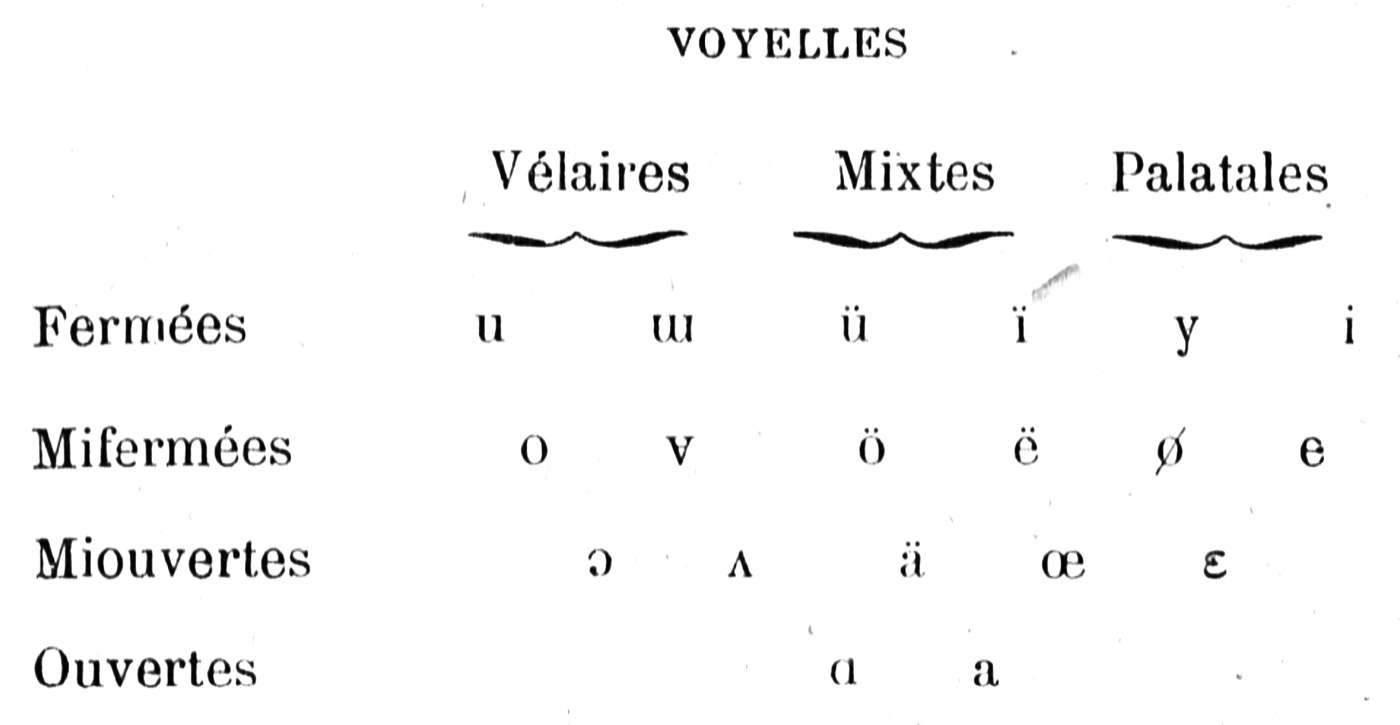
An aria in a language you do not speak needs a pronunciation plan before it needs a tempo. The IPA is how you write that plan down. This page sets out the choices you make when you transcribe, and the ready-made sources that save you the work. The full set of language guides is in the diction section.
Why singers transcribe
Classically trained vocalists use the IPA to assist with learning diction in languages other than their own (Ball State University Libraries guide)1. A transcription of the sung text turns spelling into sounds you can name. For most languages, phonetic transcription shows pronunciation with something much nearer to a one-to-one relationship between sound and symbol than the spelling allows2. It lets you step outside the spelling and examine differences in pronunciation between dialects of a language2. If you are new to the symbols, start with IPA for singers.
The International Phonetic Association promotes the scientific study of phonetics, including the development of the IPA1. The method below turns the principle into a score you can sing from.
How to write a phonetic transcription
Phonetic transcription, or phonetic notation, is the written representation of speech sounds2. The most common type uses a phonetic alphabet, such as the International Phonetic Alphabet2. Most phonetic transcription is based on the assumption that linguistic sounds are segmentable into discrete units that symbols can represent2. It indicates the articulatory and acoustic details of those sounds2.
A basic principle is that a phonetic transcription should apply to all languages2. A transcription devised for one individual language or group of languages is an orthography, not a phonetic transcription2. The steps below cover the choices that remain: how detailed to be, which brackets to use and where to start.
Step 1: choose the kind of transcription
Phonemic transcription distinguishes only the phonemes of the language, disregarding allophonic differences and differences between speakers2. Phonetic transcription lies on a continuum between broad and narrow2. Broad transcription indicates only the most salient phonetic features, and narrow transcription indicates additional phonetic details to varying degrees2. A transcription that gives only a basic idea of the sounds of a language in the broadest terms is a broad transcription2. A close transcription, indicating precise details of the sounds, is a narrow one2.
Two in-between types exist. A transcription that includes some allophonic detail but still closely follows the phonemic structure of an utterance is an allophonic transcription2. A transcription that accommodates the variation between the phonemic systems of different varieties of a language is a diaphonemic transcription2. A broad transcription may be considered one of several possible solutions for a phonemic representation2.
For a working score, choose broad. A narrow transcription is rarely representative of all dialects or speakers of a language, while broad transcription may cover multiple dialects2. Broad transcription is the better fit for the pronunciation data in ordinary dictionaries2. Narrow transcription may help learners produce proper pronunciation2.
Step 2: choose brackets
Square brackets are placed around phonetic representations, and slashes around phonemic representations2. The International Phonetic Association recommends that a phonetic transcription be enclosed in square brackets2. A transcription that specifically denotes only phonemic contrasts may be enclosed in slashes2. If you are unsure, use brackets: setting a transcription off with slashes makes a theoretical claim2. Every IPA table on this site uses brackets.
Step 3: start from a source, not a blank page
Several resources do the first draft for you.
- IPA Source. A fee-based service with literal translations and IPA transcriptions of songs and arias in Latin, Italian, German, French, Spanish and English3. You can view a preview sample for free, or pay to download an individual song or aria3. With it, educators and artists can skip the translating and phonetic work and sing with confidence and accuracy1. Its catalog has amassed 15,804 professionally translated and transcribed titles1.
- SingersBabel. It lets you hear a native speaker reciting the text while you see the original text, a word-for-word English translation and an IPA guide1.
- Published collections. Emory’s guide to translations lists online resources with word-for-word translations of art songs and opera arias, plus IPA transcriptions, some with spoken-word audio files of selected texts4. An anthology there gives IPA transcriptions uniquely designed to match the musical setting4. A book there includes multiple practical exercises in IPA transcription, covering vowels, diphthongs and fricatives4. Another book gives a thorough discussion of the method of transcription in its appendix4. Some song resources include enunciation and transcription charts for each language on a single page4. One title includes a glossary of phonetic and anatomical terms, tongue twister exercises and a suggested repertoire for lyric diction study4.
- Anthologies and series. The Diction Coach series includes recitation of texts, IPA and translations5. Leyerle song anthologies usually have texts, IPA and translations5.
- Pronunciation dictionaries. Pronunciation dictionaries give transcriptions for over 10,000 names of composers, poets, artists, roles, performers, characters and places1. The Longman Pronunciation Dictionary, third edition, gives over 225,000 pronunciations in both British and American English, in IPA5. One dictionary of musical terms gives phonetic readings but no IPA, so do not expect symbols from it5. A keyword search in the IPA collection finds transliterations of songs, arias or complete operas1.
- Software and fonts. PhoneticSoft is paid software to create IPA on your PC for Latin, Italian, German and French texts5. A free download of an IPA palette produces documents with IPA fonts5.
- Books by language. A book of phonetic readings covers 413 Italian, German and French lyrics1. A Czech diction book uses the IPA to take the reader systematically through each sound of the language, and covers approaches to singing double consonants, stress and length1. It includes texts to major song literature and opera excerpts by Smetana, Dvořák, Janáček, Martinů and Haas1. A choral primer brings together 30 essays by experts from around the world on how the symbols of the IPA can be used1. Its musical examples illustrate the rhythmic timing and release of consonants within the transcriptions1. Phrasal and emphatic stress are among the often-overlooked topics explored in one reference1.
- Library shelves. Browsing call number MT883 in a library turns up language-specific guides that give line-by-line IPA transcriptions, word-for-word translations and phonetic breakdowns for classical vocal literature3.
- The chart. The IPA chart of the International Phonetic Association is the reference for the symbols3, and the Association reissues it annually1.
Step 4: take care with automatic converters
A converter that provides IPA for Chinese, English, French, Italian, Japanese, Russian and Spanish gives it as spoken, not necessarily as sung1. An anthology on Emory’s list offers IPA uniquely designed to match the musical setting, which is a different job from converting spoken text4. Check converter output against a source made for singing, such as the libraries above1,3.
Step 5: apply the language’s rules
A transcription is only as good as the rules behind it. Italian gives a compact example from a Stanford primer for singers.
- Italian has only 7 vowel sounds6.
- Italian vowels are pure6. Unaccented English vowels tend to change toward a more neutral sound, and no Italian vowel ever makes the schwa sound6.
- Open e makes a sound similar to the English short e, and open o is like the vowel in awe6.
- Italian unstressed e and o are always closed6.
- Diphthongs are always written with two vowels and are frequent in Italian6.
- Double consonants take noticeably longer to say than single ones, and the vowel before them takes less time6.
- The r is flipped between two vowels6.
No Italian vowel ever makes the schwa sound, so a schwa in an Italian line is a mistake6. A doubled consonant in the spelling should show as a longer sound6. The full rule set is on the Italian diction page; the other languages are covered on their own pages in the diction section.
Step 6: check with an ear
SingersBabel pairs a native speaker’s recitation with the original text, a word-for-word English translation and an IPA guide1. Listen repeatedly and attentively to good spoken and sung Italian6. What a diction coach does explains what a coach adds to that work. For a worked language, see Italian diction for singers, where the rules behind each symbol are laid out.
Coursework and library guides
A university diction course teaches the same skill. The University of Arkansas - Fort Smith syllabus for Diction for Singers I lists reading IPA transcriptions of English and Italian words as a course outcome7. Another outcome is using the IPA as a tool to achieve clarity and accuracy of pronunciation in singing7. At the Musicians Institute library guide, IPA Source is listed as not free, with thousands of IPA transcriptions for primarily classical arias, as well as translations8.
A short checklist
Read next
IPA for singers: what the International Phonetic Alphabet is and how to use it
The International Phonetic Alphabet for singers: why one symbol equals one sound, the marks that matter, singers' charts and where to find IPA texts.
Lyric dictionItalian diction for singers: vowels, consonants, IPA and double-consonant rules
Italian lyric diction in one page: the 7 vowels, open and closed E and O, the c and g rules, gli, gn, sc, double consonants and the rolled r.
Lyric dictionWhat an opera diction coach does: lessons, preparation and how to use one
What an opera diction coach does: the training they bring, what a session covers, who needs one, how to find one and how a coach differs from a voice teacher.
Questions singers ask
How to transcribe one in IPA?
Choose broad transcription, set it in square brackets and start from a ready-made transcription of the sung text, not a blank page2,3. Check the result against a source made for singing, because some converters give IPA as spoken, not necessarily as sung1.
How to write transcription in phonetic?
Phonetic transcription is the written representation of speech sounds, enclosed in square brackets2. It shows pronunciation with something much nearer to a one-to-one relationship between sound and symbol than spelling allows2. Take the symbols from the IPA chart of the International Phonetic Association3.
Can I convert text to IPA automatically?
Online converters exist, but one that covers Chinese, English, French, Italian, Japanese, Russian and Spanish gives IPA as spoken, not necessarily as sung1. For arias, start from a library of transcriptions made for singers3.
What is the difference between broad and narrow transcription?
Broad transcription indicates only the most salient phonetic features and may cover several dialects, while narrow transcription adds detail and is rarely representative of all speakers2.
Sources
- Diction and Pronunciation: International Phonetic Alphabet (IPA) · Ball State University Libraries · bsu.libguides.com · checked 19 October 2026
- Phonetic transcription · Wikipedia · en.wikipedia.org · checked 19 October 2026
- Vocal Music: Diction and Pronunciation · The College of New Jersey, Gitenstein Library · libguides.tcnj.edu · checked 19 October 2026
- Find Translations (Singers guide) · Emory University Libraries · guides.libraries.emory.edu · checked 19 October 2026
- Diction for Singers: UNT music handbook · University of North Texas · music.unt.edu · checked 19 October 2026
- Italian Pronunciation: a Primer for Singers (Stanford) · Stanford University · web.stanford.edu · checked 19 October 2026
- Diction for Singers I (MUAC 21801) syllabus · University of Arkansas - Fort Smith · uafs.edu · checked 20 October 2026
- IPA Guide to Resources: Music-Related Resources (Books and Online) · Musicians Institute Library · library.mi.edu · checked 20 October 2026
Photos (1)
- International Phonetic Association (1893 chart), Public domain

Translations of libretto lines on this page are our own. How we check facts · Report an error.