Opera guides
Così fan tutte: synopsis, roles, arias and diction notes
Mozart and Da Ponte's Così fan tutte: premiere cast, voice types, synopsis by act, the famous arias with first lines and Italian diction notes.
Diction Desk editors · Checked 19 October 2026 against 7 sources
Così fan tutte is an opera buffa in two acts by Wolfgang Amadeus Mozart to a libretto by Lorenzo Da Ponte1. It was first performed on 26 January 1790 at the Burgtheater in Vienna1. Its best-known numbers include Fiordiligi's Come scoglio, Ferrando's Un aura amorosa and the trio Soave sia il vento1,2.
- Composer
- Wolfgang Amadeus Mozart1
- Librettist
- Lorenzo Da Ponte1
- Premiere
- 26 January 1790, Burgtheater, Vienna1
- Language
- Italian1
- Acts
- 21
- Genre
- Opera buffa1
Contents
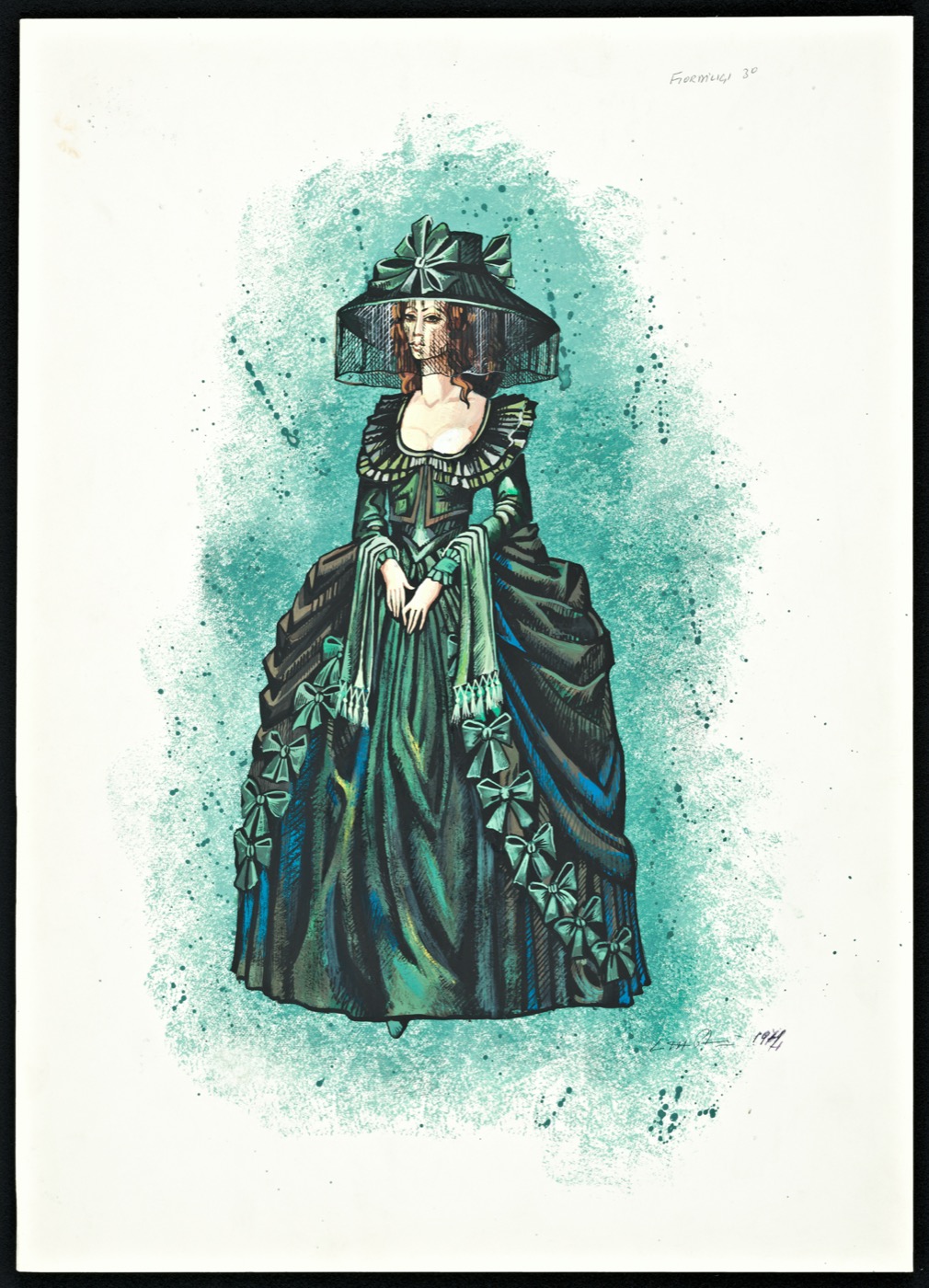
Così fan tutte is an Italian-language opera buffa by Mozart1. This page collects the facts to check before you open the score, one of many guides in the operas section.
At a glance
Mozart wrote the opera in two acts1, and the libretto was written by Lorenzo Da Ponte1. It premiered in Vienna on 26 January 1790 at the Burgtheater1,4. It was given only five times before the run was stopped by the death of Emperor Joseph II1.
Da Ponte had used the line “Così fan tutte le belle” earlier in Le nozze di Figaro1. The plot theme of fiancée swapping dates back to the 13th century1. Da Ponte was also Mozart’s librettist on The Marriage of Figaro and Don Giovanni4.
The score mixes arias, duets, trios, quartets and sextets, with the vocal lines closely interwoven4. Recitative, sung speech with continuo such as harpsichord, carries the plot between the arias4.
Who’s who
| Role | Voice type | Premiere singer | Notes |
|---|---|---|---|
| Fiordiligi | Soprano | Adriana Ferrarese1 | A lady from Ferrara, sister to Dorabella, living in Naples1 |
| Dorabella | Soprano (premiere); mezzo-soprano (usual today) | Louise (Luisa) Villeneuve1 | A lady from Ferrara, sister to Fiordiligi1 |
| Ferrando | Tenor | Vincenzo Calvesi1 | A soldier, lover of Dorabella1 |
| Guglielmo | Baritone | Francesco Benucci1 | The leader of the two young men5 |
| Despina | Soprano | Dorotea Bussani1 | A maid1 |
| Don Alfonso | Bass | Francesco Bussani1 | An old philosopher; the puppet-master who proposes the bet1,5 |
Dorabella is listed as a soprano in the premiere cast table, but she is almost always performed by a mezzo-soprano today1. Don Alfonso is sometimes performed by baritones1.
Ferrando and Fiordiligi can only be sung by a tenor and a soprano because of the high tessitura of their roles1. Mozart created Fiordiligi for Adriana Ferrarese del Bene, Da Ponte’s mistress4. Mozart disliked her1. He filled her showpiece aria Come scoglio with constant leaps from low to high and from high to low1.
Ferrando is a softer character than his friend Guglielmo, a heart-on-sleeve romantic5. No real hero exists in Così, but Ferrando comes close with his lovelorn sincerity5. Guglielmo moves from the assurance of “Non siate ritrosi” to the bitterness of “Donne mie”5.
Synopsis
Act 1
In a cafe, Ferrando and Guglielmo, two officers, express certainty that their fiancées, the sisters Dorabella and Fiordiligi, will stay faithful1,3. Don Alfonso lays a wager with the officers, claiming he can prove in a day’s time that the two women, like all women, are fickle1.
Dorabella bemoans the torment of having been left alone in her aria Smanie implacabili1. Don Alfonso bribes the maid Despina to help him introduce the sisters to two suitors3. Despina mocks the sisters and advises them to take new lovers while their betrotheds are away1. In scene 3 the Albanians burst in and threaten to poison themselves if they are not allowed to woo the sisters1. The young men pretend to take poison in order to gain the sisters’ sympathy3.
Act 2
Despina urges the sisters to succumb to the Albanians1. Dorabella and the disguised Guglielmo pair off, as do Ferrando and Fiordiligi1. Dorabella admits her indiscretion to Fiordiligi1.
Fiordiligi’s aria Per pietà, ben mio, perdona contains a rare instance of clarinets1. The final scene begins as a double wedding for the sisters and their Albanian grooms1. Despina, disguised as a notary, presents the marriage contract, which only the ladies sign1. Military music heard in the distance indicates the return of the officers1.
The famous arias
| Aria | Role | Act | First line |
|---|---|---|---|
| Soave sia il vento (trio) | Fiordiligi, Dorabella, Don Alfonso | 12 | Soave sia il vento1 |
| Smanie implacabili | Dorabella | 12 | Smanie implacabili che m’agitate2 |
| Come scoglio | Fiordiligi | 12 | Come scoglio immoto resta2 |
| Non siate ritrosi | Guglielmo | 12 | Non siate ritrosi2 |
| Un aura amorosa | Ferrando | 12 | Un aura amorosa2 |
| Per pietà, ben mio, perdona | Fiordiligi | 21 | Per pietà, ben mio, perdona1 |
Da Ponte died on 17 August 1838, so his text is in the public domain6. Here are lines in the original, each with our own plain translation:
| Original | Our translation |
|---|---|
| Soave sia il vento1 | Gentle be the breeze |
| Sento, o Dio, che questo piede è restio1 | I feel, O God, that this foot hangs back |
| Oh, poverini, per femmina giocare1 | Oh, poor fellows, to gamble on a woman |
| Per pietà, ben mio, perdona1 | Have pity, my love, forgive me |
Background and reception
The full title is Così fan tutte, ossia La scuola degli amanti4. The title literally means “so do they all”, with the feminine plural tutte indicating women1. Don Alfonso is the puppet-master of the romantic drama, proposing the bet that sets it moving5.
Mozart was born on 27 January 1756 in Salzburg and died on 5 December 1791 in Vienna7. Da Ponte, an Italian librettist, professor and Roman Catholic priest, lived from 1749 to 18386. His Mozart libretti include Così fan tutte (1790)6.
Language and diction notes
The libretto is in Italian1, so the rules in Italian diction for singers apply throughout.
Where to go next
Two more Mozart and Da Ponte comedies to study are Don Giovanni and The Marriage of Figaro4. For transcription practice, see how to transcribe an aria into IPA.
