Libretti
Singing translation vs literal translation: what opera singers need to know
The difference between a literal translation you study and a singing translation you perform: purpose, trade-offs, singability, surtitles, word-by-word texts.
By Diction Desk editors · Published · Updated · Checked against 9 sources
A literal translation preserves the meaning faithfully, 100%, and serves study1,2; a singing translation is written to be sung and heard, not read or said3. The translation approach depends on the reason for producing the target text1. In a sung translation the meaning of the target lyrics will not be the same as that of the source lyrics1.
- Singing translation
- Written to be sung and heard, not read or said3
- Surtitles
- Widespread since the 1990s4
- A translator must match
- Inflexion, sense, rhyme, clarity and singability5
- Five criteria for song translation
- Singability, sense, naturalness, rhythm and rhyme (Low, 2005)6
- One proposed scale
- Singable lyrics keep 91% or more of the meaning1
Contents
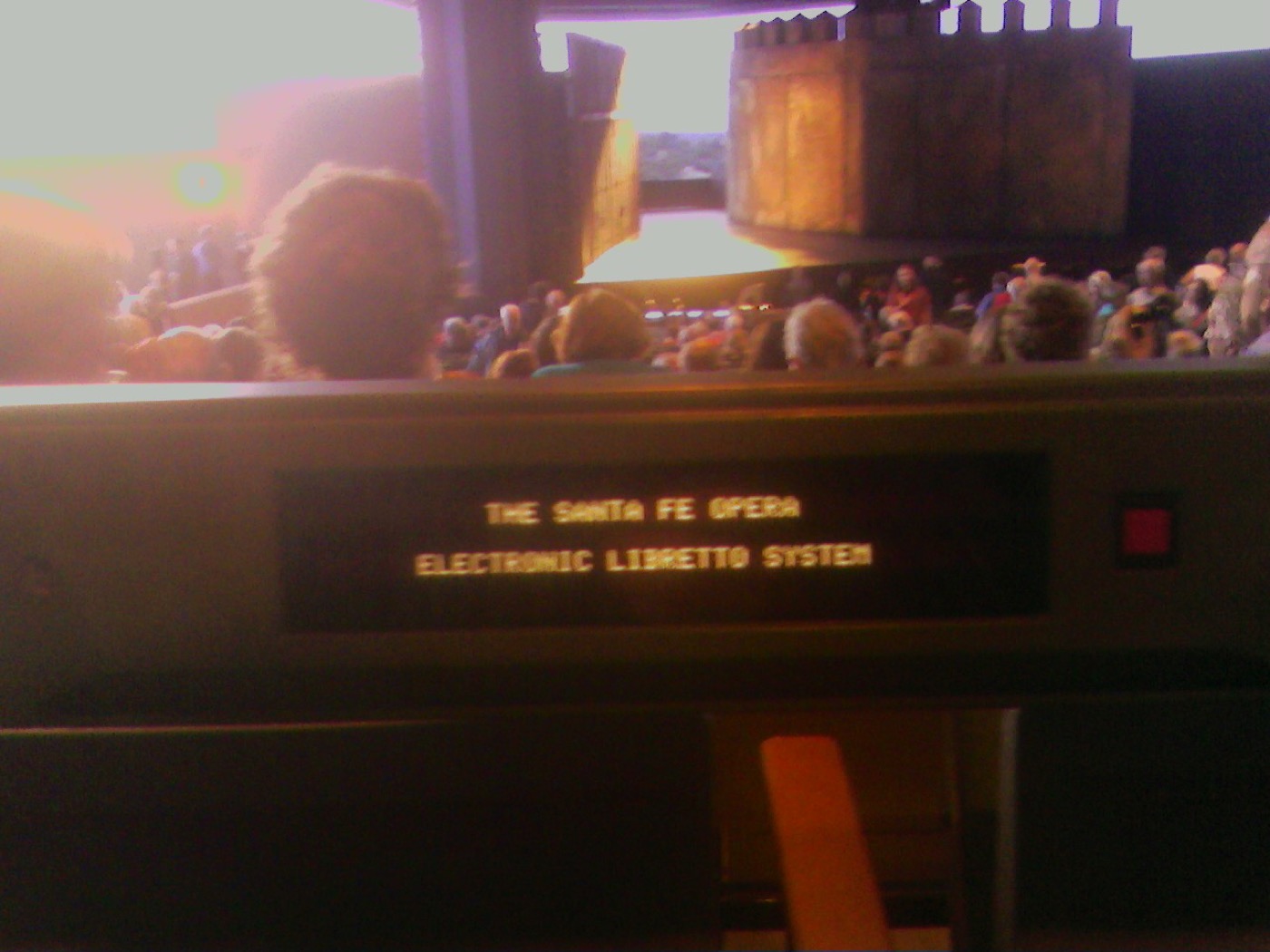
Singers meet translation in two forms: a literal text studied at the desk and a singing text an audience hears in the theater. They solve different problems1,3. This page is part of the libretti section.
Two purposes, two kinds of translation
Gene Hsu of the Chartered Institute of Linguists draws the line between lyrics and text. Lyrics are singable, while a song text may not be1. The translation approach will depend on the reason for producing the target text1.
When the purpose is to preserve the meaning without considering singability, the text must be translated faithfully, 100%1. That is the literal translation you study. When the purpose is singing, the meaning of the target lyrics will not be the same as that of the source lyrics1. One proposed scale holds that singable target lyrics retain 91% or more of the original meaning of the source lyrics1.
| Literal translation | Singing translation | |
|---|---|---|
| Purpose | Preserve the meaning1 | Be sung and heard, not read or said3 |
| Fidelity | Faithful to every word1 | Changes the meaning of the source lyrics1; one scale proposes 91% or more retained1 |
| Word order | — | Can be reordered so syllables fit the music1 |
| Used for | Study, diction work, paraphrase7 | Performance in the audience’s language5 |
What a singing translator does
Amanda Holden, an opera translator, writes that a translator must match the original’s inflexion, sense, rhyme, clarity and singability5. An opera translator must hear what is on the page before writing new words5. A translator must be ready to rewrite, because even one syllable can make all the difference3.
Singable lyrics should be possible to sing, suitable for singing and easy to sing1. Songwriters can adjust the order of the words in the target lyrics to adapt the syllables to the music1. Peter Low suggests translators pay attention to vowels in order to produce songs that rhyme when sung1. Singing translations are written to be sung and heard, not read or said3. Words for singing are written for the singers as much as for the audience3.
The audience will never be able to make out all the words in ensembles anyway3. Nobody needs to understand every word, whatever language it is in3. If earlier sung translations failed, it may have been because the words were old-fashioned and sounded clunky3.
Holden’s method
An obituary of Holden in The Telegraph records how she worked: she started with a literal translation, then shaped the rendition by echoing the original8. She made the vocal lines fit the music like a glove8. She told translators that they are writing words to be heard, not read8. She was known for a blessed ability to write words that are easily singable8.
How singability is defined
A University of Geneva paper on singability frames singability as a function of a complex interaction between music and language6. Melisma and prosodic constraints turn out to be stronger limits on singable lyrics than semantic ones6. Franzon proposes a layered view with prosodic, poetic and semantic-reflexive concerns6. The main argument is that the prosodic aspects pose the most essential constraints6.
Low (2005) sets out five criteria for song translation: singability, sense, naturalness, rhythm and rhyme6. Opera translators work against the notes as well. Notes of classical works may not be altered for translation purposes6, though Apter and Herman say adding and deleting notes is permissible for aesthetic effect6. For singable target lyrics, a translator may write new lyrics, adapt the translation to the music, or adapt the music6.
Opera in English, or the original with surtitles
English National Opera sticks to the vernacular policy established by its founder, Lilian Baylis5. Other companies have moved toward using original language with surtitles, which Holden calls an easier option5. Opera in English is unlikely to be phased out5. For a historical example, Verdi commissioned English translations of Otello and Falstaff for their London premieres3. Mozart wrote The Magic Flute in German for a popular audience in Vienna5; see the Magic Flute guide.
How surtitles work
Surtitles, also called supertitles, are translated or transcribed lyrics or dialogue projected above a stage or displayed on a screen4. They came into widespread use in the 1990s to translate the meaning of the lyrics into the audience’s language4. They are different from subtitles, which are more often used in filmmaking and television production4. Surtitles can be a distraction, focusing attention on the titles instead of the stage, so personal titling systems were developed4. The Metropolitan Opera installed the patented Met Titles, becoming the first house in the United States to use this system4. Titles in the theatre have proven a commercial success in areas such as opera4.
What this means for the practice room
Singers who perform in the original language still translate. At Opera Atelier, role learning includes phonetic transcription, translation, declamation and characterization7. The goals include correct and clear diction, paraphrase and word-by-word translation7. Translating happens alongside the other preparation steps; see how to learn a role.
- A literal translation serves to know what a phrase means: its purpose is to preserve the meaning1.
- A singing translation is its own text, because its meaning will not be the same as the source’s1.
Building your own study translation
Two kinds of study text exist. A poetic translation is loosely based on the original and captures the overall form and idea of the poem9. A word-for-word translation defines every word regardless of grammatical accuracy, so it will not make sense in the target language9.
Singers and teachers debate which to start with. Most start with the word-for-word, so the translator’s bias does not color the first reading9. If you know nothing of the original language, start with the poetic version and return to it after the word-for-word9.
Work the word-for-word text carefully. WordReference lacks the archaic words that turn up in art songs, and paper dictionaries fill those gaps9. Write down every possible translation of each target word9. Then read several poetic translations: different translators read the emotional nature of the same poem differently9. Research the poet, any proper nouns in the text and the period it was written9. Set the translation beside the original so each passage lines up with it; a translation that does not line up is harder to read9.
Where to find literal translations
The University of Hartford Libraries list IPA transcriptions and literal translations of opera arias and art song texts2. Its aria database gives translations as well as range, tessitura, setting and synopsis2. It also lists a book with texts and translations for over 150 famous arias, plus dramatic and musical context and interpretation advice2. Word-by-word translations of German, French and Italian songs and arias exist as reference books2.
For help reading the libretto itself, see how to read a libretto, and for texts you can reuse freely, public-domain libretti.
Read next
How to read an opera libretto: layout, cast list, stage directions and translation
How to read an opera libretto: what it contains, how an 1816 libretto is laid out, how verse and acts work, and where to find a text with translation.
LibrettiPublic-domain opera libretti: where to find free texts and what copyright allows
Where to find free public-domain opera libretti: Wikisource, IMSLP, Gutenberg, librettidopera.it and library scans, and what copyright still limits.
Role preparationHow to learn an opera role: a step-by-step method from working singers
A practical order for learning an opera role: edition, text and IPA, rhythms and notes, recordings, coaching, memorization and staging.
Questions singers ask
Do opera singers sing actual words?
Yes. The words are written as much for the actor-singers as for the audience, who will never be able to make out all the words in ensembles anyway3. Singers study the text in the original language through phonetic transcription, translation and diction7.
What is the difference between lyrics and a text?
Lyrics are singable, while a song text may not be1. The translation approach depends on why the target text is produced1. Where meaning matters more than singability, the text must be translated faithfully1.
How do singers use a literal translation?
As a study tool. Opera Atelier's role goals include correct and clear diction, paraphrase and word-by-word translation7. Libraries hold IPA transcriptions and literal translations of opera arias and art song texts2.
Why do some houses sing opera in English?
English National Opera sticks to the vernacular policy established by its founder, Lilian Baylis5. Other companies have moved toward original language with surtitles, an easier option5. Opera in English is unlikely to be phased out5.
What makes a translation singable?
Singability is a function of a complex interaction between music and language6. Melisma and prosodic constraints are stronger limits on singable lyrics than semantic ones6. Low (2005) sets out five criteria: singability, sense, naturalness, rhythm and rhyme6.
Can a translator change the notes?
For singable target lyrics a translator may write new lyrics, adapt the translation to the music, or adapt the music6. Notes of classical works may not be altered for translation purposes6, while Apter and Herman allow adding and deleting notes for aesthetic effect6.
Sources
- Make it sing? (Gene Hsu on song translation) · Chartered Institute of Linguists · ciol.org.uk · checked 19 October 2026
- Vocal Music Translations: General Resources · University of Hartford Libraries · libguides.hartford.edu · checked 19 October 2026
- Opera in english · Amanda Holden · amandaholden.org.uk · checked 19 October 2026
- Surtitles · Wikipedia · en.wikipedia.org · checked 19 October 2026
- Opera in english (The Stage, 12 April 2019, reposted) · Amanda Holden (translator) · amandaholden.org.uk · checked 19 October 2026
- Singable translation: the case of Handel duet (Paralleles, Universite de Geneve) · Université de Genève, Paralleles · paralleles.unige.ch · checked 20 October 2026
- Opera Role Preparation Program - Opera Atelier · Opera Atelier · theoperaatelier.org · checked 19 October 2026
- Amanda Holden, opera translator and librettist: obituary · The Telegraph (obituary, via amandaholden.org.uk) · amandaholden.org.uk · checked 20 October 2026
- 4 Tips for Writing a Great Song Translation · Operaversity · operaversity.com · checked 20 October 2026
Photos (1)
- BenFrantzDale, CC BY-SA 2.0

Translations of libretto lines on this page are our own. How we check facts · Report an error.