Opera guides
Nabucco: synopsis, roles, arias and the Va, pensiero chorus
Verdi's Nabucco in one page: librettist, premiere, voice types, the story act by act, the arias and choruses, Va, pensiero and Italian diction notes.
By Diction Desk editors · Published · Updated · Checked against 5 sources
Nabucco is an Italian-language opera in four acts that Verdi composed in 1841 to a libretto by Temistocle Solera1. It was first performed under the name Nabucodonosor at La Scala in Milan on 9 March 18421. Its best-known number is the Chorus of the Hebrew Slaves, regularly encored in opera houses today2.
- Composer
- Giuseppe Verdi1
- Librettist
- Temistocle Solera1
- Premiere
- 9 March 1842, La Scala, Milan1
- Acts
- 41
- Best-known number
- Chorus of the Hebrew Slaves2
- Title role
- Baritone, Verdi's first great role for the voice3
Contents
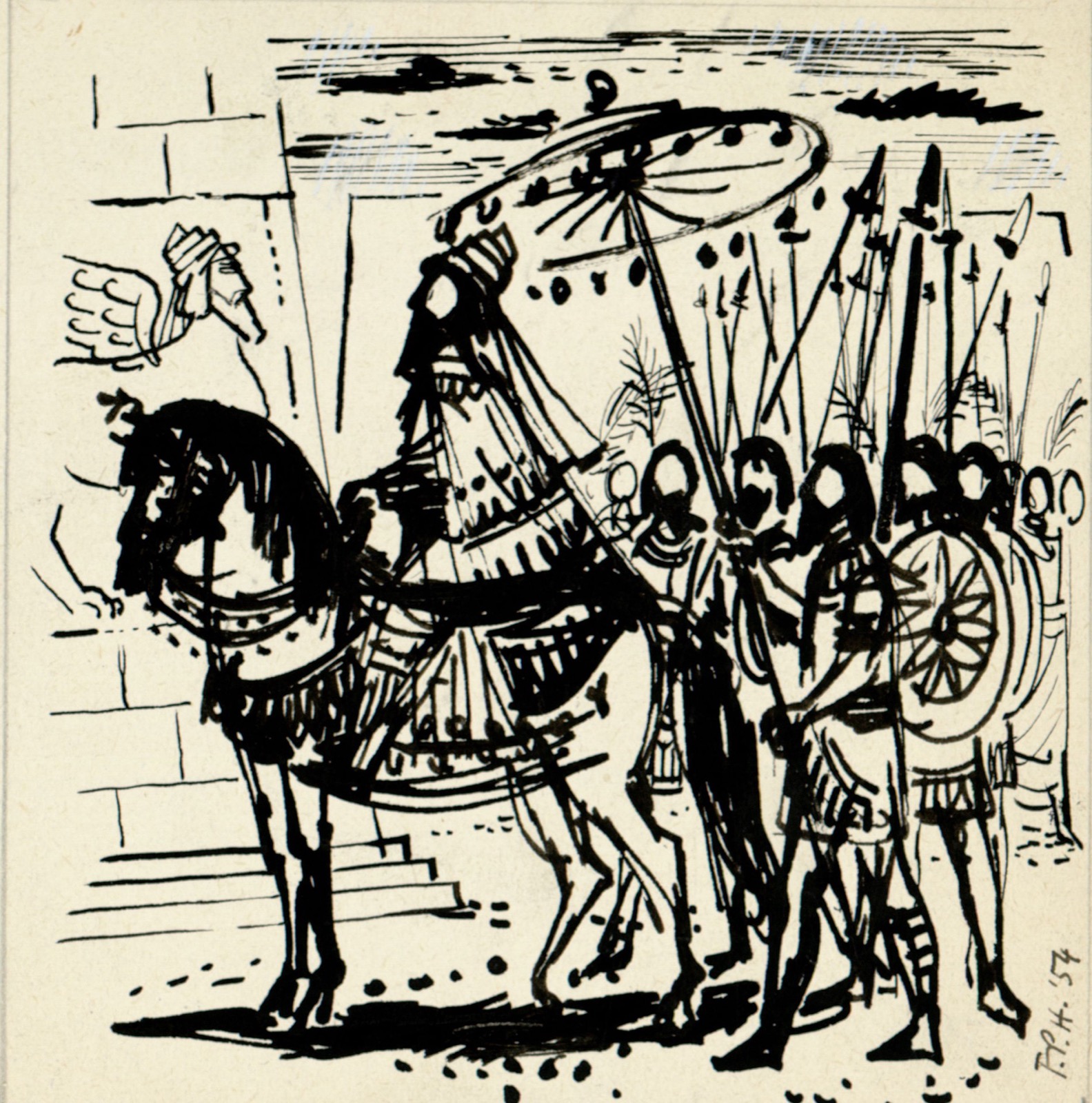
In Verdi’s own words, Nabucco is the opera with which his artistic career really begins1. It followed the loss of his family and the failure of his second opera1. More than any of the soloists, the piece that carries it is the chorus1. This page gives the cast, the story act by act, the numbers worth knowing and the history behind them; it is one of many guides in the operas section.
At a glance
Temistocle Solera wrote the Italian libretto1. It is based on the biblical books of 2 Kings, Jeremiah, Lamentations and Daniel1. Antonio Cortese’s ballet adaptation of a play, given at La Scala in 1836, was a more important source for Solera than the play itself1. The setting is Jerusalem and Babylon1.
The opera has four acts1. The Kennedy Center Education overview gives the same basic description: an Italian-language opera in four acts, composed by Verdi in 1841 to Solera’s libretto2. The best-known number is the Chorus of the Hebrew Slaves, which is regularly given an encore in many opera houses when Nabucco is performed today2.
Roles and voice types
Nabucco is built around a baritone king, a soprano rival and a bass prophet, with the tenor in a supporting position1,3,4. Vocal demands by role are laid out in the Lyric Opera of Chicago cast notes3.
| Role | Voice type | What to know |
|---|---|---|
| Nabucco, King of Babylon | Baritone | Verdi’s first great role for baritone; Giorgio Ronconi sang it at the 1842 premiere1,3 |
| Abigaille | Soprano | Giuseppina Strepponi was the first Abigaille1 |
| Zaccaria, high priest of the Hebrews | Bass | One of Verdi’s few roles for a truly virtuoso bass3 |
| Fenena, Nabucco’s younger daughter | Mezzo-soprano | Nabucco’s gentle daughter, held hostage in Act 11,3 |
| Ismaele, nephew of the King of Jerusalem | Tenor | A comparatively minor tenor role, unusual for a Verdi opera1,2 |
Abigaille’s music is extremely demanding and requires a soprano who can sing both very low and very high with dramatic force1. She sails up to high Cs at the slightest provocation3. The first Abigaille was an advocate for the opera: Giuseppina Strepponi (1815-1897) was immediately enthusiastic about it4. She persuaded Merelli to stage it and to give her the female lead role of Abigaille4. It is said that she thrilled the La Scala audience in her debut in the role4.
The title role is a king whose sweep is compared to Shakespeare’s King Lear3. The protagonist is the first of Verdi’s great baritones4. Zaccaria is the other major male voice, a bass part with real virtuoso demands3.
The tenor is the surprise. A tenor who would have played the lead for Bellini or Donizetti became a secondary character here, Ismaele4.
Synopsis
The libretto tells how Nabucco seizes Jerusalem, destroys the temple and enslaves the Israelites in Babylon5.
Act 1
The Israelites pray as the Babylonian army advances on their city1. The scene is the interior of the Temple of Solomon, where Zaccaria entrusts Fenena to Ismaele, nephew of the King of Jerusalem and a former envoy to Babylon2. The prophet Zaccaria brings in Nabucco’s daughter Fenena, who is his hostage3. The presence of a hostage may yet secure peace1.
Abigaille invades the temple at the head of a group of warriors3. If Ismaele returns Abigaille’s love, she will petition Nabucco on the Israelites’ behalf2. Ismaele intervenes to save Fenena, which removes any impediment from Nabucco destroying the temple1. Zaccaria defies Nabucco, threatening to kill Fenena if Nabucco attacks the temple1. Nabucco enters with his warriors1.
Act 2
Nabucco has appointed Fenena regent and guardian of the Israelite prisoners1. Abigaille has discovered a document that proves she is not Nabucco’s real daughter, but the daughter of slaves1. She determines to seize the throne1. The High Priest of Bel informs Abigaille that Fenena has released the Israelite captives2. Abdallo, a soldier, announces the death of Nabucco and warns of the rebellion instigated by Abigaille2.
Fenena reveals that she has embraced the Jewish religion and will share the Israelites’ fate2. Nabucco then pushes through the crowd, seizes the crown and declares himself not only king of the Babylonians but also their god1. A crashing thunderbolt strikes him down, and he promptly loses his senses1.
Act 3
Though his consent to the death warrant is no longer necessary, Abigaille tricks Nabucco into signing it1. The High Priest of Bel presents her with the death warrant for the Israelites as well as for Fenena2. Realizing his powerlessness, Nabucco pleads for Fenena’s life1. He tells Abigaille that he is not in fact her father2.
By the banks of the Euphrates the Hebrews long for their homeland3. The high priest Zaccaria once again exhorts them to have faith: God will destroy Babylon1.
Act 4
Nabucco is a prisoner in his own palace, where he suddenly awakens after the horrors of a nightmare3. He wakes still confused and raving2. In despair, he prays to the God of the Hebrews1. He asks for forgiveness and promises to rebuild the temple in Jerusalem and convert to Judaism if his prayers are answered1. At his word, the idol falls to the ground of its own accord and shatters into pieces1.
Abigaille enters, supported by soldiers. She has poisoned herself1. She begs forgiveness of Fenena, prays for God’s mercy, and dies2. The opera closes with Zaccaria proclaiming Nabucco the servant of God and king of kings1.
The famous arias and choruses
The chorus is at the center of the opera, so the table lists ensembles beside the arias1.
| Number | Character | Act | What happens |
|---|---|---|---|
| Gli arredi festivi (chorus) | The Hebrews | 1 | The Hebrews beg their god, Jehovah, not to let them fall prey to Nabucco1,3 |
| Io t’amavo (trio) | Abigaille | 1 | She reminds Ismaele that if he loved her, she could save his people3 |
| Viva Nabucco | Nabucco and his warriors | 1 | Nabucco enters with his warriors1 |
| Anch’io dischiuso un giorno (cavatina) | Abigaille | 2 | She vows her anger will destroy Nabucco, then pauses to think sadly of her love for Ismaele1,3 |
| S’apressan gl’istanti d’un ira fatale (finale) | Nabucco and his soldiers | 2 | The finale begins as Nabucco appears with his soldiers3 |
| Salgo già dal trono aurato (cabaletta) | Abigaille | 2 | She proclaims that Fenena will soon be begging a slave for mercy3 |
| Tu sul labbro (prayer) | Zaccaria | 2 | He meditates on the greatness of Jehovah’s law3 |
| Il maledetto non ha fratelli (chorus) | The Levites | 2 | They curse Ismaele furiously for his supposed betrayal3 |
| Va, pensiero (chorus) | The Hebrews | 3 | The Hebrews long for their homeland3 |
| Del futuro nel buio discerno (aria with chorus) | Zaccaria | 3 | He prophesies the destruction of Babylon3 |
| Oh di qual onta aggravasi questo mio crin canuto | Nabucco | 3 | His plea for Fenena’s life, within the duet with Abigaille that begins Donna, chi sei?1,3 |
| Va! La palma del martirio | Fenena and the prisoners | 4 | They are led in to be sacrificed1 |
| Dio di Giuda (aria) | Nabucco | 4 | He swears that the temple will rise once more1,3 |
| O dischiuso è il firmamento (aria) | Fenena | 4 | She offers a final prayer1,3 |
Abigaille’s Act 2 scene is a two-part number. The cavatina Anch’io dischiuso un giorno turns inward to her love for Ismaele, and the cabaletta Salgo già dal trono aurato turns to triumph3. In the cavatina she vows that her anger will destroy Nabucco before turning to sadness3.
Zaccaria’s prayer is Tu sul labbro in Act 23. Vieni o Levita, another prayer for the bass, is a quiet piece with the unusual accompaniment of six cellos1. In Act 3 Zaccaria sings Del futuro nel buio discerno, prophesying the destruction of Babylon to the Hebrews, who have just been singing of their homeland3.
Nabucco has two solo moments of weight. In Act 3 his plea for Fenena is Oh di qual onta aggravasi questo mio crin canuto, and it comes within his duet with Abigaille; she is unrelenting1,3. In Act 4 Dio di Giuda is the prayer for forgiveness in which he promises to rebuild the temple in Jerusalem1.
Va, pensiero
Va, pensiero is the chorus in which the Hebrews long for their homeland in Act 33. One of the most famous interpretations of Psalm 137 comes from this opera; the Aria Code episode on Nabucco walks through the score5. The chorus sings in unison, doubled by the strings and the woodwinds5. At the words “Golden harp of the prophetic bard,” the chorus sings in harmony for the first time5. The basses go down the octave5.
It has been proposed as the national anthem of Italy5. The audience has almost been trained to demand an encore of it5. The Chorus of the Hebrew Slaves is regularly given an encore in many opera houses today1,2.
The sources conflict on the premiere, and the press account takes precedence over the reference one. Va, pensiero was encored at the La Scala premiere4. The reference account holds that the encore the audience demanded was for the hymn Immenso Jehova, sung by the Hebrew slaves in Act 4 to thank God for saving his people, and calls the Va, pensiero encore a myth1.
The audience heard itself in the libretto: the Italians, then under Austrian domination, saw themselves in the Hebrews enslaved by the Assyrians4. As the curtain fell at the premiere, the audience shouted “Freedom for Italy” and booed the Austrian oppressors4. The chorus kept that weight. Verdi died on 27 January 1901, and 900 chorus members led his funeral procession, with Arturo Toscanini conducting, singing Va, pensiero4.
Libretto
Solera’s libretto is in the public domain. The short lines below are the opening words of the numbers above; the English is our own gloss, not a stage translation.
| Original | Our translation |
|---|---|
| Gli arredi festivi3 | The festive trappings |
| Anch’io dischiuso un giorno3 | I, too, once let joy in |
| Salgo già dal trono aurato3 | Now I rise to the golden throne |
| Tu sul labbro3 | You, on the lips |
| Del futuro nel buio discerno3 | In the dark of the future I discern |
| Va, pensiero3 | Go, thought |
| Oh di qual onta aggravasi questo mio crin canuto1 | Oh, what shame weighs on this gray head of mine |
| Dio di Giuda1 | God of Judah |
| O dischiuso è il firmamento3 | The heavens stand open |
| Va! La palma del martirio1 | Go, the martyr’s crown is yours |
The libretto sat on a composer’s desk before Verdi saw it. The impresario Merelli gave Verdi a copy of Solera’s libretto, which had been rejected by the composer Otto Nicolai1. Nicolai, who judged Verdi’s operas really horrible, passed on the text1. The libretto draws its story from the biblical books of 2 Kings, Jeremiah, Lamentations and Daniel1.
How Verdi came to Nabucco
Verdi lost both of his infant children and then his 26-year-old wife in the years before Nabucco1. The success of his first opera, Oberto, led Bartolomeo Merelli, La Scala’s impresario, to offer him a contract for three more works1. After the failure of his second opera, Verdi vowed never to compose again1.
Merelli gave Verdi the Solera libretto Nicolai had rejected1. In Verdi’s account, the score was complete by autumn 18411. Merelli still quibbled over it, as the Opera Online history recounts4. The result is the opera that Verdi’s own words mark as the start of his career1. No fewer than eleven works followed it in eight years4.
Premiere and first run
The score was complete by autumn 1841, and the first performances followed on 9 March 18421. The opening performances, limited to only eight because the season was coming to an end, were a colossal success1. Though only eight performances were planned, Nabucco was performed fifty-seven times at La Scala in three months4. The critics tempered their approval of the opera, but the public went mad with enthusiasm1.
Giorgio Ronconi, a baritone, sang the title role1. Giuseppina Strepponi, a soprano, was the first Abigaille1. Strepponi is said to have thrilled the audience, though the effort cost her her voice4.
The title changed as the opera traveled. The name Nabucco was first used at a performance at the San Giacomo Theatre of Corfu in September 18441. When the opera reached London in 1846 it was given under the name Nino, since the depiction of biblical characters on stage was not considered proper1.
Is Nabucco a good opera?
Nabucco is the opera that is considered to have permanently established Verdi’s reputation as a composer1. The reception at La Scala set the pattern: the critics tempered their approval, while the public went mad with enthusiasm1. Nabucco is one of Verdi’s most popular works, though it is not his best known4.
The proof is in the repertoire. Houses return to it: the Metropolitan Opera since the 1960/61 season, the Arena di Verona regularly, and Seattle Opera for its first-ever staging in August 20151. The chorus is the draw, and the audience expects its encore2,5. The score asks for a soprano who can sing both very low and very high, a baritone in a role compared to King Lear, and a virtuoso bass1,3.
Performance history
Nabucco has been on the Metropolitan Opera’s roster since it was first presented there in the 1960/61 season1. It was performed at the Royal Opera House, Covent Garden, in 1972 with Colin Davis1. It is also regularly performed at the Arena di Verona1. Seattle Opera produced its first-ever staging in August 20151. The Israeli Opera performed it in June 2019, accompanied by the Jerusalem Symphony Orchestra, in the Sultan’s Pool outside the Old City walls of Jerusalem1.
Is it history?
Only Nabucco is an actual historical figure; Ismaele, Fenena and Abigaille are invented characters4. The historical Nebuchadnezzar II (c. 634-562 BC) took Jerusalem in 597 BC1. In the Book of Daniel, his madness lasts for seven years before his conversion to Judaism1. The Jews were freed and their temple rebuilt not by the Babylonians but by Cyrus the Great following his conquest of Babylon in 539 BC1.
The opera compresses all of this into four acts. Nabucco is struck down in Act 2 and recovers in Act 4, where the idol falls at his word1.
The score
More than any of the soloists, the chorus, used in a new and dramatic fashion, is at the center of the opera1. A stage band is used extensively1. The orchestra calls for two flutes (one doubling piccolo), two oboes (one doubling English horn) and two clarinets, among other forces1.
The soloists get their own distinct writing. The music for Abigaille is extremely demanding1. The tenor role of Ismaele is comparatively minor, unusual for a Verdi opera1. Zaccaria’s Vieni o Levita is a quiet piece with six cellos as accompaniment1.
Language and diction notes
The libretto is in Italian, so the rules in Italian diction for singers apply throughout1. The Hebrews’ chorus is the clearest case of what the language demands. It is sung in unison, doubled by the strings and the woodwinds5. The harmony opens out at “Golden harp of the prophetic bard”5. Rigoletto and La traviata are the nearest Verdi companions for the same language work: see Rigoletto and La traviata.
