Opera guides
Gianni Schicchi: synopsis, roles, arias and O mio babbino caro
Puccini's Gianni Schicchi in one page: the Dante story behind it, voice types, the plot, O mio babbino caro, premiere and Italian diction notes.
By Diction Desk editors · Published · Updated · Checked against 4 sources
Gianni Schicchi is a comic opera in one act by Giacomo Puccini to an Italian libretto by Giovacchino Forzano, composed in 1917-181. The libretto is based on an incident mentioned in Dante's Divine Comedy1. It is the third and final part of Puccini's Il trittico and has become the most-performed part of it1.
- Composer
- Giacomo Puccini1
- Librettist
- Giovacchino Forzano1
- Premiere
- 14 December 1918, Metropolitan Opera, New York1
- Length
- One act, third part of Il trittico1
- Source
- A real story mentioned in Dante's Inferno2
- Chorus
- None3
Contents
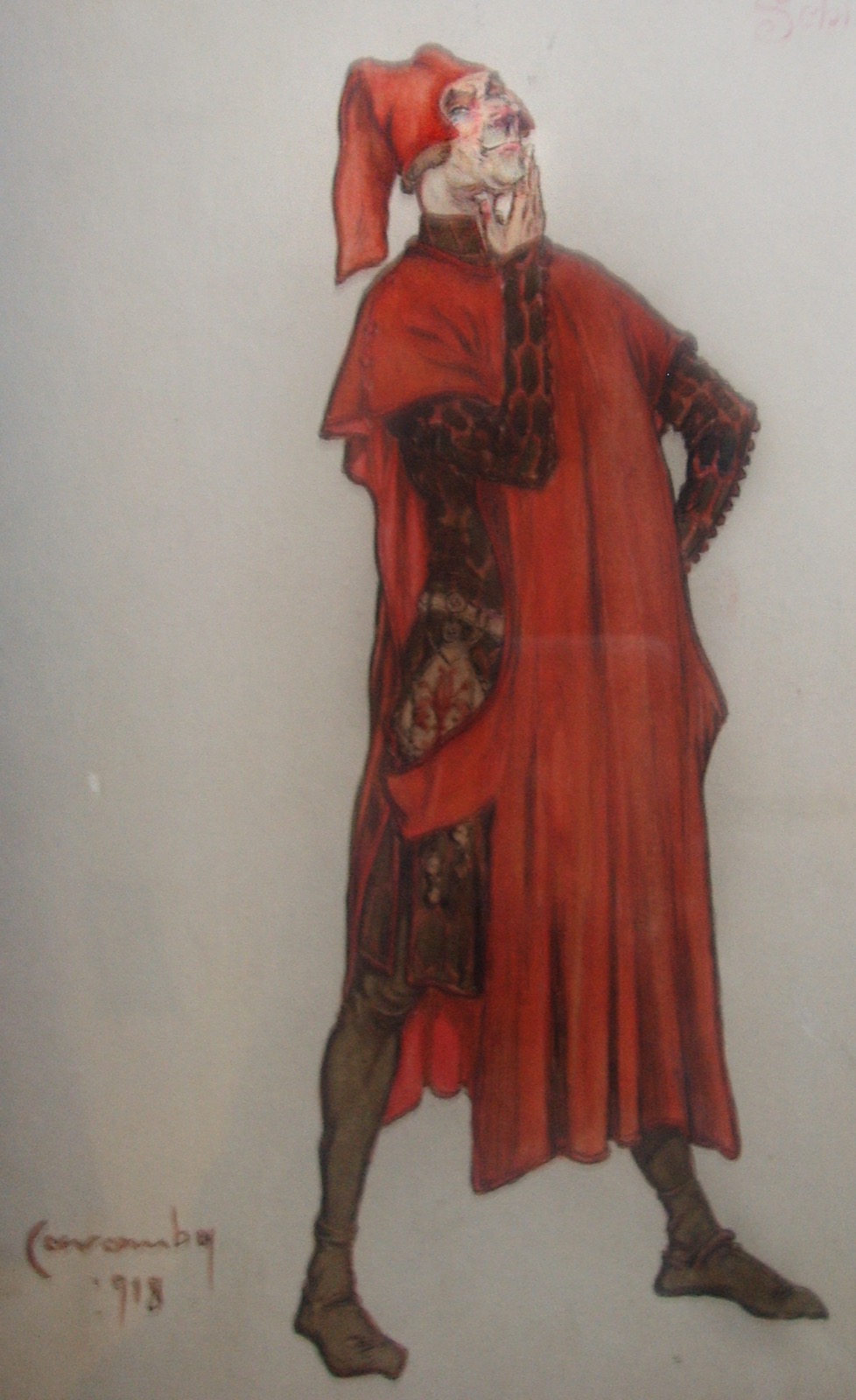
Gianni Schicchi is Puccini’s first setting of a comic text, and it proved to be the last opera he completed1. The comedy runs on a legal trick, a dead man and a dowry1. Critic Ernest Newman holds that the music keeps us perpetually suspended between the comic and the tragic1. This page gives the cast, the story, the numbers worth knowing and the history; it is one of many guides in the operas section.
At a glance
Gianni Schicchi is a comic opera in one act with an Italian libretto by Giovacchino Forzano, composed in 1917-181. The libretto is based on an incident mentioned in Dante’s Divine Comedy1. The work is the third and final part of Puccini’s Il trittico1. It has since become the most-performed part of the triptych1.
It is a dark satire based on a real story mentioned in Dante’s Inferno, as the San Diego Opera program page frames it2. The story takes place in Florence in 12991. The first draft was completed on 20 April 19181. The opera has no chorus3.
Gianni Schicchi is now more frequently staged either alone or with short operas by other composers, although it continues to be performed with one or both of the other trittico operas1. The score combines Puccini’s modern style of harmonic dissonance with lyrical passages reminiscent of Rossini1.
Roles and voice types
Gianni Schicchi has no chorus, so every singer on stage is a named character3. The table gives the voice types, the ages in the role list and the cast of the world premiere on 14 December 1918, with Roberto Moranzoni conducting1.
| Role | Voice type | Age | Premiere cast |
|---|---|---|---|
| Gianni Schicchi | Baritone | 501 | Giuseppe De Luca |
| Lauretta, his daughter | Soprano | 211 | Florence Easton |
| Zita, cousin of Buoso Donati | Contralto | 601 | Kathleen Howard |
| Rinuccio, Zita’s nephew | Tenor | 241 | Giulio Crimi |
| Gherardo, Buoso’s nephew | Tenor | 401 | Angelo Bada |
| Nella, Gherardo’s wife | Soprano | 341 | Marie Tiffany |
| Gherardino, their son | Soprano or treble | 71 | Mario Malatesta |
| Betto di Signa, Buoso’s brother-in-law | Bass | uncertain1 | Paolo Ananian |
| Simone, cousin of Buoso | Bass | 701 | Adamo Didur |
| Marco, Simone’s son | Baritone | 451 | Louis D’Angelo |
| La Ciesca, Marco’s wife | Mezzo-soprano | 381 | Marie Sundelius |
| Maestro Spinelloccio, a doctor | Bass | not given | Pompilio Malatesta |
| Ser Amantio di Nicolao, a notary | Baritone | not given | Andres de Segurola |
| Pinellino, a cobbler | Bass | not given | Vincenzo Reschiglian |
| Guccio, a dyer | Bass | not given | Carl Schlegel |
Betto is poor and shabbily dressed, and Simone is a former mayor of Fucecchio1. Pinellino and Guccio are the two witnesses to the signing of the will3.
The title role is traditionally a baritone role2. In the 1950s and 1960s Tito Gobbi was particularly prominent in it1. Bryn Terfel sang the title role in the 2007 Royal Opera House production1. In 2023 mezzo-soprano Stephanie Blythe performed the baritone title role at San Diego Opera, becoming the first woman to do so1.
At the Rome premiere in 1919 the part of Rinuccio was sung by the Canadian tenor Edward Johnson1. The American soprano Marie Tiffany was the only singer to appear in all three operas of Il trittico at the New York premiere, as one of the lovers in Il tabarro, a lay sister in Suor Angelica and Nella in Gianni Schicchi1.
Synopsis
The story takes place in Florence in 12991. The opening scene shows the bed-chamber of Buoso Donati, a wealthy citizen of Florence3. As Buoso Donati lies dead in his curtained four-poster bed, his relatives gather round to mourn his passing1. The comic opera begins with the death of the wealthy Florentine and his distraught family2.
The will
The mourning has a comic edge from the first bars. Betto’s lament for his brother-in-law is interrupted when Gherardino knocks over a chair3. Betto mentions a rumor he has heard that Buoso has left everything to a monastery1. The rumor comes from Signa, and the local monks, it goes, will think it is Christmas3. The others turn to Simone, the oldest, because he was once the mayor of Fucecchio3.
A frantic search for the will begins4. When the search resumes, Betto pockets the knife and scissors3. It is Rinuccio who finds the will3. He asks Zita to allow him to marry Lauretta, daughter of Gianni Schicchi, a newcomer to Florence1. If Zita agrees, the wedding can take place on Calendimaggio, the first day of May3. Rinuccio fervently hopes for his inheritance, because he is relying on it to marry Lauretta3.
Zita rips off the ribbon, and a second parchment is found: the will3. The relatives’ worst fears are realized: Buoso has indeed bequeathed his fortune to the monastery1. The PBS and Wikipedia synopses name a monastery1,4; the San Diego Opera synopsis says the church2. Simone, the oldest present and a former mayor of Fucecchio, can offer no help1.
Rinuccio, Lauretta and Schicchi
Rinuccio suggests that Lauretta’s father, Gianni Schicchi, can help them4. Rinuccio calls Schicchi clever and astute, and says he knows every legal trick there is3. Schicchi is a shrewd, self-made man4. The young man compares Florence to a tree in full flower, and he calls the peasant-turned-businessman a new breed that will invigorate it4. The aria is Avete torto, and it names Arnolfo with his magnificent tower, the painter Giotto and the merchant Medici1,3.
Schicchi arrives with Lauretta, and he is disgusted by the hypocrisy and avarice of the aristocratic family4. He decides to stay when Lauretta proclaims her intention to marry Rinuccio4. Lauretta pleads with him in one of the most beloved Puccini arias3. If she cannot have him, she says, she will go to the Ponte Vecchio and throw herself into the river Arno3. Her plea moves Schicchi, and he agrees to look at the will1.
He reads the will twice and finds nothing can be done1. Lauretta and Rinuccio bid farewell to their May-day wedding3. Then an idea occurs to him1. Schicchi sends his daughter outside so that she will be innocent of what is to follow1. She is told to wait on the terrace and feed the birds3.
The impersonation
Schicchi first establishes that no one other than those present knows that Buoso is dead1. He tells Marco and Gherardo to take the body into the adjoining room3. The doctor, Spinelloccio, arrives at the door3. Schicchi conceals himself behind the bed curtains, mimics Buoso’s voice and declares that he is feeling better1. He greets the doctor, says he has risen from the dead but needs to rest, and asks him to come back that evening3. The doctor boasts that no patient of his has ever died, and all credit must go to the medical school at Bologna3. Boasting that he has never lost a patient, Spinelloccio departs1.
Schicchi then unveils his plan in the aria Si corre dal notaio1. Whoever goes to the notary is to tell him to hurry to Buoso Donati’s house3. The aria climbs until the whole orchestra is playing very loud and Schicchi sings a high G3.
All are delighted with the scheme, and they importune Schicchi with requests for Buoso’s possessions1. They agree on the farms first: Simone wants the farm at Fucecchio, Zita wants Figline, Betto asks for Prato and Gherardo wants the lands at Empoli3. The most treasured bequests are the mule, the house and the mills at Signa1. Zita reminds them that those three are not among the farms3.
A church bell tolls off stage, and everyone fears that the news of Buoso’s death has emerged1,3. It turns out to toll for someone else: a military accident in the Utah Symphony & Opera program note, a neighbor’s Moorish servant in the Wikipedia synopsis1,3. The company source ranks higher, so the military accident is the version given here3. The relatives agree to leave the disposition of the mule, the house and the mills to Schicchi, though each, in turn, offers him a bribe1. Zita offers 30 florins and Simone a hundred3.
The women help him to change into Buoso’s clothes as they sing the lyrical trio Spogliati, bambolino1. Schicchi warns the relatives that falsifying a will is punished by amputation of one hand and then exile from Florence1. The relatives are warned that they face the same punishment as accessories to a fraud4.
The new will
The notary arrives, and Schicchi starts to dictate the new will, declaring any prior will null and void1. He keeps the funeral modest, at no more than 2 florins, and leaves 5 lire to the Friars Minor3. The farms go to the relatives as agreed: Fucecchio to Simone, Figline to Zita, Prato to Betto, Empoli to Nella and Gherardo, Quintole to Ciesca and Marco3. That leaves the mule, the house and the mills3.
In the will the mule, which cost 300 florins and is the best in Tuscany, goes to Schicchi’s friend Gianni Schicchi, which is to say Schicchi himself3. The new will leaves the house they are all in, with the rest, to his good friend Gianni Schicchi4. Incredulous, the family can do nothing while the lawyer is present1. Zita is ordered to pay 20 florins to the witnesses and a hundred to the notary3.
The ending
When the notary leaves, the family’s outrage turns to a frenzy of looting as Schicchi chases them out of what is now his house1. They take the linen, the silver and as much else as they can carry3. The balcony windows open to show Florence bathed in sunshine3.
Lauretta and Rinuccio sing a love duet, now that Schicchi can provide a dowry1. Although the poet Dante has condemned him to Hell for this trick, Schicchi asks the audience to forgive him in light of extenuating circumstances1. He turns to the audience and pleads that he not be judged too harshly2.
The famous arias and numbers
The score is through-composed, but within the general structure of the opera there are several identifiable numbers1. They are four solos given to the three main characters, a trio and a brief love duet1. Titles only are listed here; the libretto is still in copyright, so no lines are quoted.
| Number | Character | What happens |
|---|---|---|
| Avete torto | Rinuccio | He defends Schicchi against his family; the arioso was later set in a higher pitch to suit the tenor voice1 |
| O mio babbino caro | Lauretta | Her plea moves Schicchi to agree to look at the will1,3 |
| Si corre dal notaio | Schicchi | He unveils his plan and summons the notary1,3 |
| Prima un avvertimento | Schicchi | His warning before he takes the bed1 |
| Spogliati, bambolino (trio) | Nella, La Ciesca, Zita | They dress Schicchi in Buoso’s clothes1 |
| Lauretta mia, staremo sempre qui (duet) | Rinuccio and Lauretta | They sing once Schicchi can provide a dowry1 |
Rinuccio’s Avete torto is also where the best-known theme of the opera is introduced: the theme associated with Lauretta appears in the second part of this aria1. The theme is briefly played on clarinet and violin as Lauretta enters with Schicchi, before its full expression in O mio babbino caro1. Schicchi’s own personal motif is a jaunty four-note phrase first sung by Rinuccio1.
Only Lauretta’s O mio babbino caro is separable from its context and can be sung as a concert piece1. The trio for three female voices is, in the judgment of Charles Osborne, equal to anything in Falstaff1.
Schicchi’s Si corre dal notaio is a showpiece for the singer, and the orchestra piles on instrument after instrument beneath his high G3. The breathless summons to the notary is typical operatic hurry-up music3.
O mio babbino caro
O mio babbino caro is one of Puccini’s best-known arias and one of the most popular in opera1. The aria is separable from its context and can be sung as a concert piece1. In context, Lauretta pleads with her father in what is one of the most beloved Puccini arias3. The Ponte Vecchio and the Arno carry the threat: if she cannot have Rinuccio, she will throw herself into the river3.
The aria’s position at the turning point of the action is precisely calculated to provide a welcome moment of lyrical repose, as Julian Budden judges1. Budden dismisses the view that the aria, at the midpoint of the opera, was a concession to popular taste1. At the New York premiere it was repeated through popular insistence, despite a public notice forbidding encores1. W.J. Henderson called it the pearl of the evening1. Frances Alda recorded it in 19191.
The title means, in our gloss, “Oh, my dear daddy”.
The real Schicchi and Dante
Gianni Schicchi de’ Cavalcanti was a 13th-century Italian knight1. In the Inferno, Dante visits the Circle of Impersonators and sees a man savagely attacking another1. Schicchi is condemned to Hell for impersonating Buoso Donati and making Donati’s will highly favorable to Schicchi1. Dante’s verses, and the opera, are based on an actual incident that took place in 13th century Florence1.
The plot used in the opera derives from an 1866 edition of The Divine Comedy by the philologist Pietro Fanfani1. In that commentary, Buoso wishes to make a will but is put off doing so by his son, Simone1. Simone calls on Schicchi for advice, and Schicchi has the idea of impersonating Buoso and making a new will1. Schicchi makes the bequests conditional on Simone’s distributing the estate within 15 days; otherwise everything will go to charity1.
Dante had several reasons for his harsh treatment of Schicchi1. His wife, Gemma, was of the Donati family1. He despised members of the peasant class such as Schicchi1.
The opera ends on that Hell: Dante has condemned Schicchi for the trick, so his last plea is to the audience1.
Commedia dell’arte
Puccini and Forzano borrowed heavily from the commedia dell’arte tradition in Gianni Schicchi, according to Burton Fisher1. Schicchi himself recalls the roguish Harlequin1. His daughter Lauretta, whose romance is nearly foiled by Buoso’s relatives, resembles Columbina1. Simone is drawn from Pantaloon, while the poverty-stricken Betto recalls the buffoonish valet Zanni1. Doctor Spinelloccio recalls the classic doctor from the commedia dell’arte, Balanzone, even to his Bolognese origin1.
On stage, with the commedia dell’arte references, a humorous atmosphere is established from the very beginning1. Several critics have likened Gianni Schicchi to Verdi’s Falstaff, as both are masterpieces of operatic comedy from composers more usually associated with tragedy1. Both composers chose a baritone for the principal role, set the tenor-soprano love story against family opposition to the marriage, and constructed a hoax that permits the happy ending1.
From one-act ideas to Il trittico
The one-act opera genre had become increasingly popular in Italy following the 1890 competition sponsored by the publisher Edoardo Sonzogno for the best such work, which was won by the young Pietro Mascagni’s Cavalleria rusticana1. Puccini had long considered writing a set of one-act operas to be performed together in a single evening, but a lack of suitable subjects and opposition from his publisher led him to put the project aside repeatedly1. He first considered three works by the French dramatist Alphonse Daudet as a trilogy of one-act operas1. In March 1907 he proposed three one-act operas based on scenes from stories by the Russian novelist Maxim Gorky1.
His publisher, Giulio Ricordi, was firmly opposed to such a project, convinced that it would be expensive to cast and produce1. By November 1916 Puccini had completed the tragic element, which became Il tabarro1. By then the plan had grown to include a solemn, religious, all-female opera, Suor Angelica1. Finally, the librettist Giovacchino Forzano presented the composer with two works of his own, which became Suor Angelica and Gianni Schicchi1. The latter would be Puccini’s first setting of a comic text1.
Puccini was at first less than enthusiastic about the idea for this comic opera1. Florence as a setting did not appeal to him1. The religious-themed opera was completed in September 1917, and Puccini turned his full attention to Gianni Schicchi1. The war news and the 1918 influenza pandemic, in which Puccini lost a sister, distracted him from his work1. The first draft was completed on 20 April 1918, and he continued to refine and orchestrate it through the summer of 19181. Gianni Schicchi proved to be the last opera completed by Puccini1.
With the trilogy complete, Puccini had to decide on a place for the premiere. He refused an offer from Buenos Aires1. He finally agreed that the premiere could take place at the Metropolitan Opera in New York, without his being there, on the basis of performing instructions which he supplied to the conductor1.
The three one-acts are a study in contrast. Il tabarro is a one-act tragedy, Suor Angelica a solemn, religious, all-female opera, and Gianni Schicchi a comedy that completes the triptych with a further contrast of mood1. The Met’s synopsis of Suor Angelica sets the story in a convent, where a nun waits seven years for word from her family4.
Premiere and first stagings
Gianni Schicchi was first performed at the Metropolitan Opera on 14 December 1918, as the final part of Il trittico1. The house was sold out1. It showed polite enthusiasm for Il tabarro and Suor Angelica, while Gianni Schicchi was received with uproarious delight, in the words of the New-York Tribune’s critic1. The undoubted pearl of the evening, W.J. Henderson wrote, was Lauretta’s aria, which was repeated through popular insistence despite a public notice forbidding encores1. Il trittico was performed at the Met’s Philadelphia opera house on 17 December with the same cast1.
At the time, Il trittico was in rehearsal in Rome in preparation for an Italian premiere at the Teatro Costanzi1. The Italian premiere, more important to Puccini than the New York world premiere, took place on 11 January 19191. Gianni Schicchi was again warmly received, more so than the first two operas of Il trittico1. Arturo Toscanini, in the audience, was disgusted by the verismo of Il tabarro and left after the first curtain1. Edward Johnson later recalled that, at the composer’s request, he had dragged a mock-reluctant Puccini from the wings to acknowledge the house’s applause1.
The London premiere at Covent Garden took place on 18 June 1920, with King George V and Queen Mary present1. Puccini hoped that Sir Thomas Beecham would conduct, but he declined and Gaetano Bavagnoli conducted1. Once again, only Gianni Schicchi was received with real warmth1. In October 1920 the Vienna State Opera produced Il trittico in German1.
In the years after the premiere Puccini made modifications to the three operas, but Gianni Schicchi required few1. The principal change was to Rinuccio’s arioso, Avete torto, which was set in a higher pitch to take better advantage of the tenor voice1.
The three operas were not always kept together. By 1920 Puccini was facing pressure to allow Il trittico to be broken up, and he had given his reluctant consent to separate performances1. At Covent Garden the director, Henry V. Higgins, removed Suor Angelica, feeling that the audience disliked it1. He then decided to remove Il tabarro and stage Gianni Schicchi together with a Russian ballet presentation1. Puccini retorted that this was a real betrayal, but in the end he gave in and permitted the performance1. He remained convinced that his original conception was being brutally torn to pieces1. The Metropolitan Opera joined in the dismemberment: after 1920 it would not again present the three operas together until 19751.
Later productions
Gianni Schicchi returned to the Met in 1926, after Puccini’s death, mated to Leoncavallo’s two-act Pagliacci1. The 1926 production was by Wilhelm von Wymetal, with sets by Joseph Novak1. In 1974 the Met gave the opera its first new production since 19261. The 1975 performance featured Renata Scotto as Lauretta1. When the production was revived again in 1989, Teresa Stratas sang the trittico hat-trick1.
Tito Gobbi first sang the role of Schicchi in the Rome production in 19511. In 1969 he directed and sang in the production at the Teatro Comunale di Firenze, and later that year he performed in and directed the same version at the August 1969 Edinburgh Festival1.
Glyndebourne Festival Opera put on a 2004 double bill of Gianni Schicchi and Rachmaninoff’s The Miserly Knight1. Reviewer Edward Seckerson called the pairing flip sides of the same coin and found the Schicchi a triumph of ensemble directing and playing1.
Woody Allen made his operatic directing debut in Gianni Schicchi in Los Angeles, with Sir Thomas Allen, Laura Tatulescu and Saimir Pirgu in the cast1. In Allen’s 2008 staging, set in a crowded tenement, Schicchi is stabbed by Zita as he addresses the audience1. The Los Angeles Times named it one of the top ten moments in classical music for 20081. A 2015 performance starring Placido Domingo in the title role was filmed for television in association with various international broadcasters1.
The 2007 Royal Opera House production by Richard Jones updated the action to a shabby 1940s Italy, with Bryn Terfel in the title role1. In the 2009 revival Schicchi was sung by Thomas Allen, while Gwynne Howell, as Simone, celebrated 40 years with the Royal Opera1.
San Diego Opera cast mezzo-soprano Stephanie Blythe in the title role, traditionally sung by a baritone, for an opera first2. Yves Abel conducted and Kyle Lang directed2.
Critical reception
In reviewing the New York premiere, the critics greeted Gianni Schicchi warmly, and most reviewers found it the best of the three operas1. The New York Times reviewer James Huneker called the opera a rollicking, madcap scherzo1. Huneker praised De Luca as a most engaging rascal, fit for a minor niche in Moliere’s gallery1.
Rome’s critics gave Il trittico as a whole a warmer reception, but still saw Gianni Schicchi as the best of the three1. Alberto Gasco of La tribuna wrote that while many critics were waiting for the first two operas with their fists drawn, Gianni Schicchi disarmed these hired assassins with a single glance1.
Modern productions, including those in an updated context, have been generally well received1. The New York Times gave a positive review to the Woody Allen 2008 production1. The Los Angeles Times critic Mark Swed praised its hilarious wit and engaging musicality1.
The score
The orchestra for Puccini’s only comedy is a standard one3. The 1918 Ricordi edition calls for piccolo, two flutes, two oboes and cor anglais, among other forces1. The full list runs to piccolo, 2 flutes, 2 oboes, English horn, 2 clarinets, bass clarinet, 2 bassoons, 4 horns, 3 trumpets, 3 trombones, bass trombone, timpani, percussion, celesta, harp and strings, with a low church bell off stage3. A reduced arrangement by the Argentine conductor and composer Ettore Panizza was published in 19541.
The opening motif is a rapid burst of rhythmic music1. In the 7th measure Puccini adds the direction tumultuoso3. It quickly transforms into a mock-solemn dirge depicting the hypocritical grief of the Donati relatives1. A funereal drum is heard and continues throughout the opening scene3. This juxtaposition of the humorous and the solemn runs through the opera1.
Other motifs follow. The theme of the lovers Rinuccio and Lauretta is introduced in Rinuccio’s first solo, Salvati! Salvati!1. A short, formal woodwind statement represents Donati’s will1. Rinuccio sings the name Gianni Schicchi to a jaunty four-note phrase that becomes Schicchi’s personal motif1. The best-known theme, that of Lauretta, is introduced in the second part of Avete torto1.
The music itself is of the 20th century: Edward Greenfield refers to its dissonant modernity, with clashing chords suggesting that Puccini was beginning to think in bi-tonal terms1. Alongside these dissonant passages are others that Julian Budden calls bland, schoolroom diatonism1. With the fast-moving pace of the work, the set pieces are given a simpler melodic structure than those in the other two parts of the triptych1. The doctor’s dissonant harmonies contrast sharply with the scena music for Schicchi and mark Spinelloccio as an outsider to the action1.
Early in Puccini’s career, Verdi judged that the symphonic element dominates in him1. Later analysts have compared Gianni Schicchi to the final presto movement of a three-movement symphony1. Grout judged Puccini’s comic skill to be seen at its most spontaneous in this opera, incorporating smoothly all the characteristic harmonic devices of his later period1.
Recordings
Gianni Schicchi was not available as a recording until after the Second World War, a neglect a Gramophone reviewer called extraordinary1. One of the earliest recordings, a Turin Radio broadcast of 1950 conducted by Alfredo Simonetto, drew praise for its lively presentation1. The critic Philip Hope-Wallace found it too rough a piece of recording to be warmly recommended1.
The 1958 recording under Gabriele Santini, with a cast including Tito Gobbi and Victoria de los Angeles, was still being discussed nearly 50 years later as the classic performance1. Gobbi’s singing in it is at a standard rarely equalled1. The complete Trittico with the London Symphony Orchestra under Antonio Pappano, recorded in 1998, is generally recommended1.
Language and diction notes
The libretto is in Italian, so the rules in Italian diction for singers apply throughout1. The title is pronounced [ˈdʒanni ˈskikki]1. Because the opera has no chorus, every line belongs to a named character3.
The story plays in Florence1. The Utah Symphony & Opera program note and the PBS synopsis both cover the will scene, the florin amounts and the house in the bequest3,4.
Where to go next
Two more Puccini operas to study next are Tosca and Turandot.
Read next
Tosca: synopsis, roles, arias and diction notes
Puccini's Tosca in one page: librettists, premiere, voice types, who the villain is, the famous arias and Italian diction notes for singers.
Opera guidesTurandot: synopsis, roles, arias and history of the unfinished score
Puccini's Turandot for singers: composition history, voice types, act-by-act synopsis, the arias with act and character, Alfano's ending and reception.
Lyric dictionItalian diction for singers: vowels, consonants, IPA and double-consonant rules
Italian lyric diction in one page: the 7 vowels, open and closed E and O, the c and g rules, gli, gn, sc, double consonants and the rolled r.
Questions singers ask
What is the role of Gianni Schicchi in Puccini's opera (il ruolo di Gianni Schicchi)?
Gianni Schicchi is the title role, a newcomer to Florence listed at age 50 and the father of Lauretta1. He mimics the dead Buoso's voice and dictates a new will in his own favor1. The part is traditionally sung by a baritone2.
What does "O mio babbino caro" mean in Gianni Schicchi (il significato di O mio babbino caro)?
It is Lauretta's plea to her father, one of the most beloved Puccini arias3. If she cannot have Rinuccio, she says, she will go to the Ponte Vecchio and throw herself into the Arno3. The plea moves Schicchi to agree to look at the will1.
What is the plot of Gianni Schicchi (la trama dell'opera)?
Buoso Donati lies dead and his relatives learn he has left his fortune to a monastery1. Schicchi hides behind the bed curtains, mimics Buoso's voice and dictates a new will that leaves the mule, the house and the mills at Signa to Schicchi himself1.
What is the true story behind Gianni Schicchi (la vera storia di Gianni Schicchi)?
Gianni Schicchi de' Cavalcanti was a 13th-century Italian knight1. Dante condemned him to Hell for impersonating Buoso Donati and making Donati's will highly favorable to Schicchi1.
Sources
- Gianni Schicchi - Wikipedia · Wikipedia · en.wikipedia.org · checked 20 October 2026
- The Puccini Duo: Suor Angelica & Gianni Schicchi - San Diego Opera · San Diego Opera · sdopera.org · checked 20 October 2026
- The Musical Story of Gianni Schicchi - Utah Symphony & Opera · Utah Symphony & Opera · usuo.org · checked 20 October 2026
- GP at The Met: Il Trittico - Introduction - PBS Great Performances · PBS · pbs.org · checked 20 October 2026
Image credits (1)
- Costume design by Luigi Sapelli; photograph by Sailko, Wikimedia Commons · CC BY 2.5 · source

Translations of libretto lines on this page are our own. How we check facts · Report an error.