Libretti
Opera terms glossary: forms, genres, voices, technique and theater roles
A working glossary of opera terms for singers: aria, recitative, cadenza, coloratura, opera buffa, voice types, periods and the people in a production.
By Diction Desk editors · Published · Updated · Checked against 15 sources
An aria is a piece for one voice in an opera, a song for a solo singer1. Recitative is a style of vocal music that follows the rhythms and pitches of ordinary speech1. This glossary defines the terms you meet in rehearsal, program notes and audition lists.
- Aria
- A piece for one voice in an opera1
- Recitative
- Vocal style that follows the rhythms and pitches of ordinary speech1
- Opera buffa
- Light-hearted genre originating in the 18th century1
- Soprano
- The highest and most common female singing voice1
- Tenor
- The highest natural adult male singing voice1
- Libretto
- Literally little book, the text sung in an opera or oratorio1
Contents
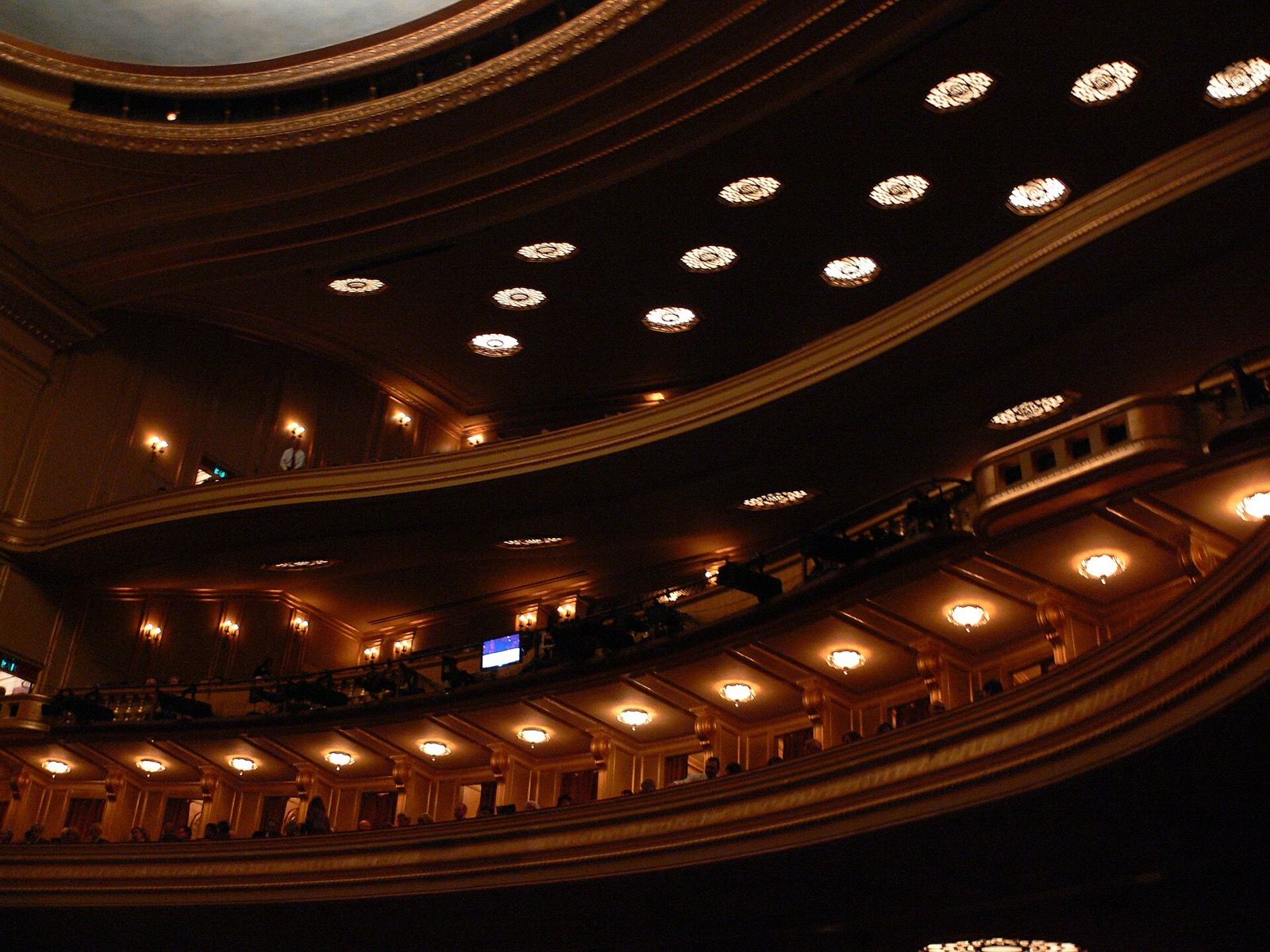
Rehearsals, program notes and audition lists use the same core vocabulary. This glossary groups it by what each term describes: forms, genres, voices, technique, the orchestra and the people in the house. For the texts behind these terms, start in the libretti section.
Solo forms
Aria
Aria: a number for one voice within an opera, in effect a solo song1. In an aria the action stops and the character expresses feelings3. Arias do not drive the plot forward; they are moments of reflection5. A famous example is Nessun Dorma from Puccini’s Turandot5. Several named shapes sit around it.
- Da capo aria: an aria form built from three sections3.
- Arioso: a solo vocal piece, usually from an opera or oratorio, whose style lies between recitative and aria2.
- Cavatina: originally a brief, simple song with no second strain and no repeat of the melody7.
- Cabaletta: the livelier section that comes after the songlike cantabile8. It is a two-part form that composers favored for arias in Italian bel canto opera, until about the 1860s8.
- Tempo di mezzo: the middle section of a double aria, common in Italian bel canto operas9.
- Scena: a sequence within an aria10.
Recitative sits at the speech end of this scale1. Arioso falls between recitative and aria2. The cavatina is the short, simple form, and the cabaletta follows the cantabile with more animation7,8.
Cadenza
Cadenza: a passage, usually near the end of a number, where the singer improvises a few measures of showy vocal music1. Fioritura is florid ornamentation of a melodic line, written by the composer or improvised in performance9. Ornamentation means decorative notes that enhance a melodic line, often on its repeat6.
Recitative and ensembles
Recitative
Recitative: vocal music that follows the rhythms and pitches of ordinary speech1. It comes in two kinds. Recitativo secco, the dry recitative, is syllabic, has only continuo accompaniment and moves the action forward1. Recitativo accompagnato, the accompanied recitative, is more emotional and has the full orchestra1. Continuo accompanies secco recitative and is written for a harpsichord or other keyboard instrument together with a bass instrument1.
Ensembles, chorus and finale
- Ensemble: a number sung by more than one member of the cast5.
- Duet: a song for two voices5.
- Chorus: a body of singers with several people on each part, like a choir5.
- Unison: singing or playing together at the same time6.
- Act: a division of the story’s sections, like acts in a play6.
- Finale: the closing part of an opera or of one of its acts5.
- Finale concertato: a kind of finale found in the penultimate acts of operas11.
Genres and styles
Opera buffa
Opera buffa: light-hearted opera that began in the 18th century1. Dramma giocoso is a sub-category of opera buffa that arose in the mid-18th century1. Opera seria is the serious counterpart, with weighty or historical subjects and usually a tragic ending4.
Other genres
- Opera: a dramatic work in one or more acts, set to music for singers and instrumentalists6.
- Opéra comique: a French work with spoken dialogue, the counterpart of German Singspiel and English ballad opera3.
- Singspiel: German-language music drama of the late 18th and early 19th centuries, with spoken dialogue alternating with musical ensembles5.
- Ballad opera: opera that combines spoken dialogue, dance and popular songs built on the airs of old ballads3. Opéra comique, Singspiel and ballad opera all mix sung numbers with spoken dialogue3,5.
- Operetta: light opera that is shorter and funnier than the regular kind4.
- Zarzuela: Spanish popular theater that blends dialogue and music in skits and dramas6.
- Musical comedy: a theatrical work descended from operetta, with music, songs and dances3. Musical theatre is a genre in which singing and dancing are essential6.
- Oratorio: a work for chorus, orchestra and soloists, usually on a religious, serious or philosophical text6.
- Grand opera: mainly the 19th-century operas, such as those by Verdi and Meyerbeer5.
- Bel canto: a lyrical singing style with a full, rich, broad tone and smooth phrasing6.
- Verismo: a late-1800s style that put ordinary, everyday characters in melodramatic situations6.
- Gesamtkunstwerk: Wagner’s term for a total work of art6.
Voices and voice types
- Soprano: the highest and most common female voice1.
- Mezzo-soprano: the middle female voice1.
- Contralto: the lowest female voice1.
- Countertenor: a male voice that matches the female contralto and mezzo-soprano voices5.
- Tenor: the highest natural adult male voice1.
- Baritone: the middle male voice, between bass and tenor1.
- Bass: the lowest male voice1.
- Castrato: a male singer castrated in boyhood to keep a soprano or alto voice6.
- Trouser role: a young male character, generally, sung by a woman dressed as a man4.
- Falsetto: a light, heady voice common in men6.
- Heldentenor: a powerful tenor voice for heroic roles6.
- Spinto: a lyric soprano who can lean toward a heavier, dramatic quality, as in lyrico spinto6.
Fach classifies singers, primarily opera singers, by the range, weight and color of their voices12. The Fach system page lays out the categories.
Range and register
- Range: the distance from the lowest to the highest pitch of an instrument or a singer6.
- Tessitura: the span of pitches a singer can cover easily, without extremes3. It is also the most comfortable pitch range, used to identify the most prominent range within a piece of music9. Range is the full distance; tessitura is the comfortable part of it6,3,9.
- Passaggio: the transition area between vocal registers in classical singing13.
- Diction: the style of enunciation in singing6. The IPA for singers page covers the symbols used to notate it.
Singing technique
Coloratura
Coloratura: richly embellished vocal music with many fast notes, runs, trills and wide melodic leaps on each syllable4. The word comes from the Italian for colouring5. It usually shows a character’s high emotional state and the singer’s vocal ability4, and it is usually written for and performed by sopranos4. Trill is very rapid alternation between two adjacent pitches, used as a virtuosic vocal effect1.
Line, color and dynamics
- Legato: smooth, connected singing and playing6. Staccato is the opposite: short, clipped and rapid6.
- Portamento: sliding continuously from one pitch to the next instead of jumping between two notes4.
- Messa di voce: a controlled swell, crescendo then diminuendo, on one long held note, especially in Baroque music and the bel canto period9.
- Mezza voce: a composer’s marking that a passage should be sung more quietly4.
- Sotto voce: in an undertone, quietly9.
- Vibrato: a gentle vibration from slight variations of pitch in a singing voice1.
- Dynamics: how loud or quiet the music is, another word for volume6. Forte means loudly6 and piano means softly and quietly6.
- Warm up: preparing to sing by practicing gently through the full vocal range6.
Overture, orchestra and score
Obbligato
Obbligato: a solo instrumental section during a vocal number4.
Instrumental numbers and the score
- Overture: the number that opens the opera, often introducing its main themes3.
- Prelude: an introductory piece, most commonly an orchestral opening to an act of an opera6.
- Interlude: a short instrumental passage or self-contained piece, often covering a change of scene5.
- Intermezzo: a short composition usually offered between the acts of a longer operatic work6.
- Ritornello: a theme that returns between different musical sections, with or without variations3.
- Barcarolle: a Venetian gondoliers’ song with a rhythm that imitates the rocking of boats3.
- Leitmotif: a short, recurring musical phrase tied to a character, theme, idea or emotion in an opera4.
- Score: the musical notation of a piece, printed on large sheets of paper5.
- Repertoire: the operas that a company or performer is prepared to perform6.
Text, theater and rehearsal
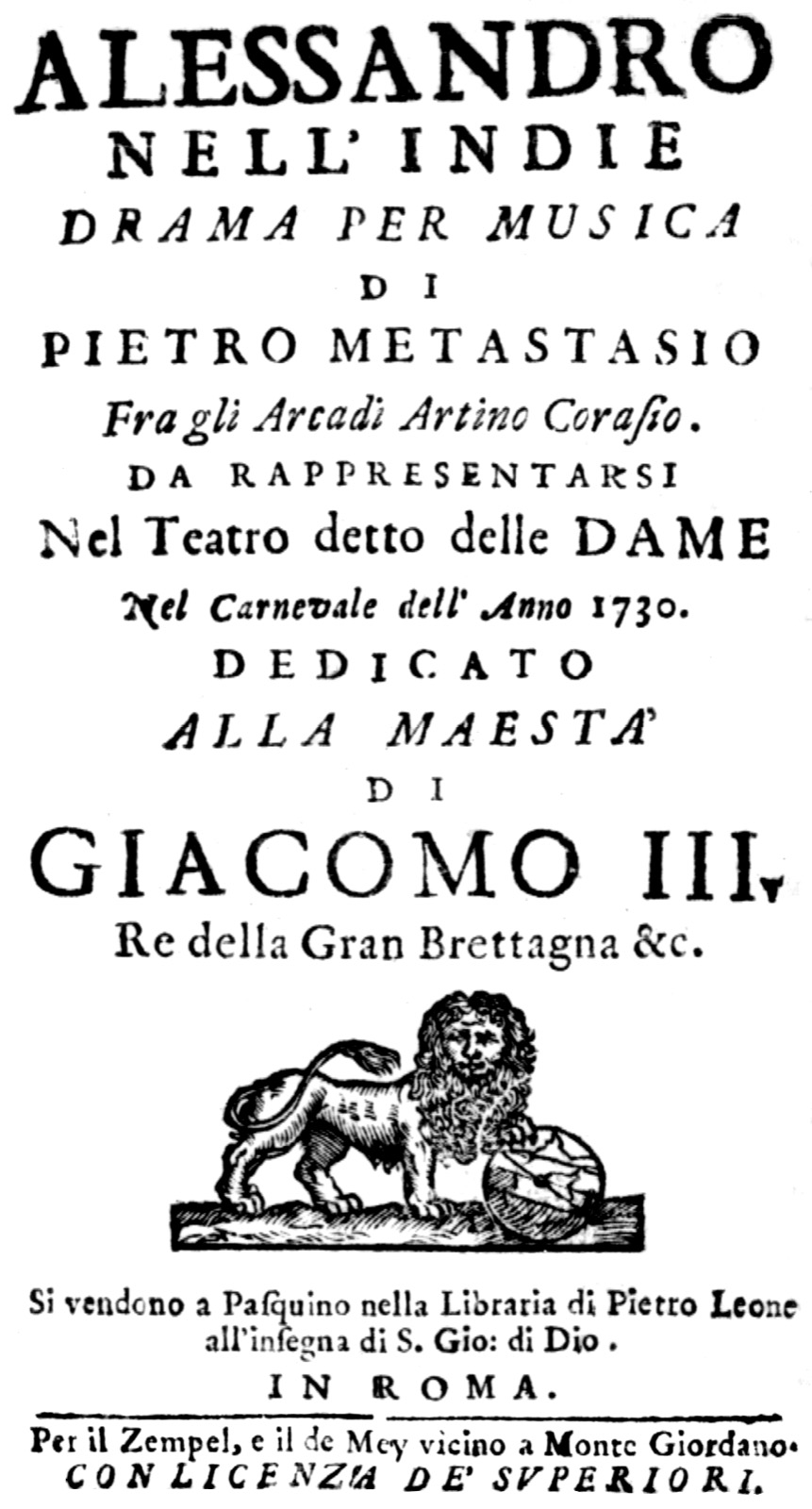
- Libretto: literally little book, the text sung in an opera or oratorio1. See how to read a libretto for its layout.
- Synopsis: the story of an opera3.
- Surtitles: a caption projected on a screen above the stage that shows the text being sung6.
- Pit: the part of a theater where the orchestra plays, typically in front of the stage and on a lower level6.
- Proscenium: the part of the stage between the curtain and the orchestra pit6.
- Sitzprobe: a German term for a seated rehearsal6.
The people in a production
- Prima donna: the leading lady, who sings the principal role in the opera3. In a company, she is the leading female singer9.
- Diva: literally goddess, an important female opera star1.
- Comprimario: a small supporting role in an opera14.
- Répétiteur: the person who coaches singers and plays piano for music and production rehearsals15.
- Conductor: the person who directs the live performance from the front of the stage with the orchestra6.
- Director: the person who supervises the singers and the general production6.
- Impresario: the person who runs an opera company4.
- Choreographer: the person who creates and plans the dance movements for dances in the opera6.
At the performance
Brava is for female performers, bravo for male performers and bravi for the whole ensemble6. Encore is a repeat performance at the end of a concert, called for by the audience6. Toi toi toi is what people say before an opera performance instead of good luck6.
Periods
- Baroque: a style of European music of the 17th and 18th centuries, marked by ornate detail6.
- Classical: music of the European tradition from approximately 1730 to 18206.
- Romantic: an era of Western classical music dating from 1780 to 19106.
Definitions draw on glossaries from Glyndebourne, San Francisco Opera, OperaVision, English National Opera and Scottish Opera.
Read next
How to read an opera libretto: layout, cast list, stage directions and translation
How to read an opera libretto: what it contains, how an 1816 libretto is laid out, how verse and acts work, and where to find a text with translation.
Role preparationThe Fach system: voice types for opera singers explained
What Fach means, how opera houses use it to cast roles, the main soprano and mezzo categories, and how to use the system without being limited by it.
Lyric dictionIPA for singers: what the International Phonetic Alphabet is and how to use it
The International Phonetic Alphabet for singers: why one symbol equals one sound, the marks that matter, singers' charts and where to find IPA texts.
Questions singers ask
What is an aria?
An aria is a piece for one voice in an opera, a song for a solo singer1. Two named shapes sit around it: arioso falls between recitative and aria in style2, and the da capo aria is built from three sections3.
What does libretto mean?
Libretto means little book, and it is the text sung in an opera or oratorio1. A synopsis is something else: it tells the story of an opera3.
What is the difference between opera seria and opera buffa?
Opera seria is serious opera on weighty or historical subjects, and it usually ends in tragedy4. Opera buffa is a light-hearted genre that originated in the 18th century1. Dramma giocoso is a sub-category of opera buffa that arose in the mid-18th century1.
What is coloratura?
Coloratura is richly embellished vocal music with many fast notes, runs, trills and wide melodic leaps on each syllable4. A trill is very rapid alternation between two adjacent pitches, used as a virtuosic vocal effect1.
Sources
- A glossary of opera terms · Glyndebourne · glyndebourne.com · checked 20 October 2026
- Arioso · Wikipedia · en.wikipedia.org · checked 20 October 2026
- Opera Glossary · OperaVision · operavision.eu · checked 20 October 2026
- From Aria to Vibrato: A Glossary of Opera Terms · San Francisco Opera · sfopera.com · checked 20 October 2026
- The A to Z of Opera · Scottish Opera · scottishopera.org.uk · checked 20 October 2026
- Opera Glossary · English National Opera · eno.org · checked 20 October 2026
- Cavatina · Wikipedia · en.wikipedia.org · checked 20 October 2026
- Cabaletta · Wikipedia · en.wikipedia.org · checked 20 October 2026
- Glossary of musical terms · Wikipedia · en.wikipedia.org · checked 20 October 2026
- Scena (disambiguation) · Wikipedia · en.wikipedia.org · checked 20 October 2026
- Concertato (disambiguation) · Wikipedia · en.wikipedia.org · checked 20 October 2026
- Fach · Wikipedia · en.wikipedia.org · checked 20 October 2026
- Passaggio · Wikipedia · en.wikipedia.org · checked 20 October 2026
- Comprimario · Wikipedia · en.wikipedia.org · checked 20 October 2026
- Répétiteur · Wikipedia · en.wikipedia.org · checked 20 October 2026
Image credits (2)


Translations of libretto lines on this page are our own. How we check facts · Report an error.